

Galaxy Tab A9 (8.7", 2023) Vs iPad Pro (2020, A12 series)

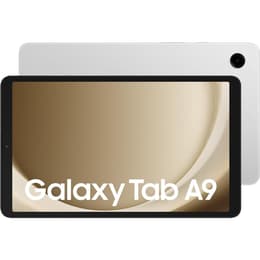
Galaxy Tab A9 (8.7", 2023)
Starting at

Refurbished price:153.00

Versus €255.86 new

See options
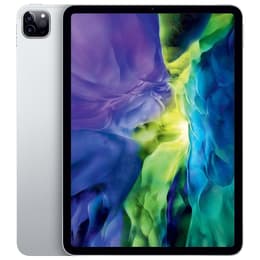
iPad Pro (2020, A12 series)
Starting at

Refurbished price:379.00

Versus €1,019.00 new

See options

Ratings

The Samsung Galaxy Tab A9, released in late 2023, and the Apple iPad Pro 2020, launched in early 2020, represent distinct approaches to tablet computing. While the Tab A9 operates on Android, offering a compact and user-friendly experience, the iPad Pro runs on iPadOS, providing a more powerful and feature-rich environment. These devices cater to different user needs, primarily differing in their processing capabilities, display technology, and overall ecosystem integration.

Scores

Durability

The longevity of a tablet is often determined by its build quality and the duration of software support. These two tablets, released three years apart, offer different expectations in this regard.

  • Release Timeline: The Galaxy Tab A9 was released in October 2023, making it a newer device compared to the iPad Pro 2020, which launched in March 2020 [6, 8, 11, 23, 36]. This difference in release dates inherently means the Tab A9 will receive software updates for a longer period from its initial release.
  • Software Support: The Galaxy Tab A9 is expected to receive three major Android OS upgrades, bringing it up to Android 16, and four years of security patches until 2027 [10, 20]. The iPad Pro 2020, running iPadOS, typically receives 5-6 years of major OS updates from its release, suggesting its software support cycle is nearing its end or has recently concluded, depending on Apple's ongoing policy.
  • Build and Repairability: The Galaxy Tab A9 features a sturdy metal body, contributing to its durability [29]. The iPad Pro 2020 also boasts a robust aluminum back and frame [23]. While specific repairability scores differ, both devices are designed with a certain level of resilience for everyday use.

Year of Release

2023

2020

Compatible with latest Update

Yes

Yes

OS

Android

iPadOS

Performance

The performance capabilities of these tablets vary significantly, impacting how they handle demanding applications and multitasking.

  • Processing Power: The iPad Pro 2020 is equipped with a powerful processor designed for intensive tasks, enabling smooth operation for professional applications, complex graphic design, and high-fidelity gaming [1, 4]. The Galaxy Tab A9 features a capable processor that handles everyday tasks, web browsing, and light gaming efficiently [13, 33].
  • Multitasking and Responsiveness: Users of the iPad Pro 2020 can expect fluid multitasking and rapid app loading, even with several applications running simultaneously, due to its robust internal architecture and 6GB of RAM [3, 4, 7]. The Galaxy Tab A9, particularly models with 8GB of RAM, offers smooth navigation and can manage basic multitasking, though it may show limitations with numerous demanding apps open concurrently [13, 18].
  • Storage Options: The iPad Pro 2020 offers a wide range of storage configurations, from 128GB up to 1TB, catering to users with extensive storage needs [1, 3]. The Galaxy Tab A9 provides 64GB or 128GB of internal storage, with the added flexibility of expandable storage via a microSD card up to 1TB, which is beneficial for media consumption and document storage [11, 39].

Memory (GB)

4 GB

6 GB

Screen quality

The visual experience on these tablets is a key differentiator, with each offering distinct display technologies and features.

  • Display Technology and Resolution: The iPad Pro 2020 features an 11-inch Liquid Retina IPS LCD with a resolution of 2388 x 1668 pixels, providing sharp images and vibrant colors [3, 8, 23]. The Galaxy Tab A9 comes with an 8.7-inch TFT LCD display with a resolution of 1340 x 800 pixels, offering a clear viewing experience for general use [6, 39].
  • Refresh Rate and Smoothness: A notable feature of the iPad Pro 2020 is its ProMotion technology, which provides an adaptive refresh rate up to 120Hz, resulting in exceptionally smooth scrolling and responsive interactions [3, 7]. The Galaxy Tab A9 has a standard 60Hz refresh rate, which is suitable for most daily tasks but does not offer the same level of fluidity [10, 13].
  • Brightness and Viewing Experience: The iPad Pro 2020 offers a bright display with 600 nits of typical brightness, along with True Tone and Wide Color (P3) support, enhancing color accuracy and visibility in various lighting conditions [3]. The Galaxy Tab A9's display can reach up to 570 nits of brightness, providing good visibility, though some users have noted that the lower pixel density can make text appear less sharp [29, 19].

Resolution

800 x 1340

2388 x 1668

Screen type

TFT LCD

Liquid Retina display

Pixel density

180ppp

264ppp

Audiovisual

While tablets are not typically primary photography devices, their camera systems are important for video calls, document scanning, and augmented reality applications.

  • Rear Camera System: The iPad Pro 2020 features a dual-camera setup on the rear, including a 12MP Wide camera and a 10MP Ultra-Wide camera, capable of recording 4K video at up to 60fps [1, 3, 30]. It also includes a LiDAR Scanner, which enhances augmented reality experiences and depth sensing [1, 30]. The Galaxy Tab A9 has a single 8MP rear camera with autofocus, suitable for basic photography and document scanning, and records video at FHD 30fps [17, 39].
  • Front Camera Performance: For video conferencing and selfies, the iPad Pro 2020 is equipped with a 7MP TrueDepth front camera [1, 3]. The Galaxy Tab A9 features a 2MP front camera [17, 39]. The iPad Pro's front camera generally offers higher quality for video calls.
  • User Experience with Cameras: User feedback suggests that the iPad Pro's cameras, while not on par with contemporary iPhone models, are good for a tablet and excel in video conferencing [14, 32]. The LiDAR scanner is primarily for AR applications rather than photographic enhancements [14, 26]. The Galaxy Tab A9's cameras are generally considered basic, with some users finding them adequate mainly for tasks like scanning QR codes [2, 13].

Miscellaneous

Beyond core specifications, several practical features contribute to the overall user experience and versatility of these tablets.

  • Connectivity: The iPad Pro 2020 supports Wi-Fi 6, offering faster and more reliable wireless connections, and Bluetooth 5.0 [3]. The Galaxy Tab A9 supports Wi-Fi 802.11 a/b/g/n/ac (Wi-Fi 5) and Bluetooth 5.3 [38]. Both offer optional LTE connectivity for mobile data access [1, 11, 15].
  • Ports and Biometrics: The iPad Pro 2020 utilizes a USB-C port for charging and data transfer, which also allows for connection to various accessories [3, 7]. It features Face ID for secure biometric authentication [7]. The Galaxy Tab A9 also uses a USB-C 2.0 port [38]. It does not include a fingerprint sensor or facial recognition for unlocking.
  • Design and Handling: The iPad Pro 2020, with its 11-inch display, weighs around 471g (Wi-Fi model) and has a slim profile of 5.9mm [3, 23]. The Galaxy Tab A9 is a more compact device with an 8.7-inch screen, weighing approximately 332g (Wi-Fi model) and measuring 8mm thick, making it lighter and easier for one-handed use [6, 17, 29].

Weight

332 g

471 g

Width

21,1 cm

17.85 cm

Height

12,47 cm

24.76 cm

Depth

0,8 cm

0.59 cm

Screen size (in)

8.7

11

Network

Wi-Fi

Wi-Fi

Carrier compatibility

Without SIM Port

Without SIM Port

Choosing between the Samsung Galaxy Tab A9 and the Apple iPad Pro 2020 depends heavily on individual priorities and intended use. Users often praise the Galaxy Tab A9 for its compact size, solid build quality, and capable performance for everyday tasks and media consumption, especially considering its accessible nature [13, 29, 31]. Common criticisms include its basic camera quality, 60Hz display, and slower charging speeds [10, 13].

The iPad Pro 2020 is frequently lauded for its powerful performance, vibrant Liquid Retina display with ProMotion, and robust software ecosystem that supports demanding creative and productivity applications [1, 4, 7]. User feedback sometimes points to its cameras not being on par with contemporary iPhones, and the LiDAR scanner's utility being niche for many users [14, 34].

Users prioritizing a highly portable tablet for casual browsing, media streaming, and light productivity, who value expandable storage and a more recent release date for software updates, may find the Galaxy Tab A9 well-suited to their needs. Conversely, users who require a more powerful device for intensive tasks like video editing, graphic design, or advanced gaming, and who benefit from a high refresh rate display and a mature app ecosystem, will likely lean towards the iPad Pro 2020. Both devices offer a quality-assured refurbished option, providing an eco-friendly alternative for consumers looking to make an informed and sustainable choice.


See all articles

Our recent comparisons