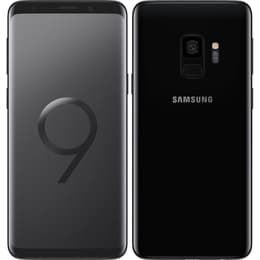
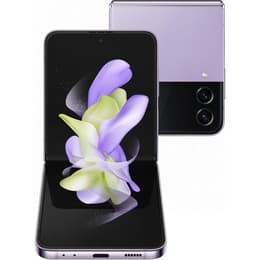


Galaxy S9 Vs Galaxy Z Flip4

Galaxy S9
Galaxy S9
Starting at

Refurbished price:131.41

Versus €499.00 new

See options
Galaxy Z Flip4
Galaxy Z Flip4
Starting at

Refurbished price:288.00

Versus €1,289.99 new

See options

Ratings

The Samsung Galaxy S9, released in March 2018, and the Samsung Galaxy Z Flip4, launched in August 2022, represent distinct eras and design philosophies within Samsung's smartphone lineup. While the Galaxy S9 offers a traditional smartphone experience, the Galaxy Z Flip4 introduces a unique foldable clamshell design. These devices differ significantly in their form factor, processing capabilities, and software longevity, catering to users with varied preferences for device interaction and modern features.

Scores

Durability

When considering the practical lifespan of these two devices, their respective release timelines and software support play a crucial role.

  • Release Timeline: The Galaxy S9 was introduced in March 2018, making it a device from an earlier generation. The Galaxy Z Flip4, released in August 2022, benefits from a more recent launch, offering a longer potential period of relevance.
  • OS Support: The Galaxy S9 concluded its major operating system updates with Android 10. In contrast, the Galaxy Z Flip4 received Android 16 as its final major OS update in October 2025, with security updates expected to continue for a longer duration, potentially until 2027. This difference means the Z Flip4 will receive critical security patches and compatibility with newer applications for a significantly longer time.
  • Expected Practical Lifespan: Users prioritizing extended software support and access to the latest Android features will find the Galaxy Z Flip4 to be a more future-proof option. The Galaxy S9, while still functional for basic tasks, will increasingly encounter limitations with newer apps and security standards due to its older software.

Year of Release

2018

2022

Compatible with latest Update

No

Yes

OS

Android

Android

Foldable

No

Yes

Performance

The performance capabilities of the Galaxy S9 and Galaxy Z Flip4 reflect the advancements in mobile technology over several years.

  • Overall System Responsiveness: The Galaxy Z Flip4 delivers a noticeably smoother and more responsive user experience, handling demanding applications and multitasking with greater ease due to its more advanced internal components. The Galaxy S9, with its older processor and less RAM, is suitable for everyday tasks but may show slowdowns with intensive applications or numerous apps running simultaneously.
  • Multitasking Efficiency: With 8GB of RAM, the Galaxy Z Flip4 allows for seamless switching between multiple applications and keeps more apps active in the background without needing to reload them. The Galaxy S9, typically equipped with 4GB of RAM, may require more frequent app reloads when juggling several tasks.
  • Storage Options: The Galaxy Z Flip4 offers storage configurations up to 512GB, providing ample space for apps, photos, and videos, though it does not support expandable storage. The Galaxy S9 typically came with 64GB of internal storage but offered the flexibility of expanding storage via a microSD card, which can be beneficial for users with large media libraries.

Memory (GB)

4 GB

8 GB

Screen quality

The display technologies and viewing experiences offered by these two Samsung smartphones present distinct characteristics.

  • Display Technology and Clarity: The Galaxy S9 features a 5.8-inch Super AMOLED display with a Quad HD+ resolution (2960 x 1440 pixels), providing a sharp and vibrant viewing experience. The Galaxy Z Flip4 boasts a 6.7-inch Foldable Dynamic AMOLED 2X main display with a Full HD+ resolution (2640 x 1080 pixels) when unfolded, alongside a 1.9-inch Super AMOLED cover screen for quick notifications and interactions.
  • Refresh Rate and Smoothness: The Galaxy Z Flip4's main display offers a 120Hz refresh rate, resulting in smoother scrolling and more fluid animations compared to the Galaxy S9's standard 60Hz refresh rate.
  • Brightness and Outdoor Visibility: Both devices feature AMOLED technology, known for deep blacks and high contrast. The Galaxy Z Flip4's Dynamic AMOLED 2X display can achieve higher peak brightness levels, which can enhance visibility in bright outdoor conditions.
  • Form Factor Impact: The Galaxy Z Flip4's foldable design allows for a larger screen in a more compact, pocketable form factor when closed, while the Galaxy S9 offers a traditional, rigid display.

Resolution

1440 x 2960

1080 x 2640

Screen type

Super AMOLED

Foldable Dynamic AMOLED 2X

Audiovisual

Both the Galaxy S9 and Galaxy Z Flip4 offer capable camera systems, though with different strengths and features reflecting their respective generations.

  • Rear Camera System: The Galaxy S9 features a single 12-megapixel rear camera with a variable aperture (f/1.5 and f/2.4), designed to adapt to different lighting conditions. The Galaxy Z Flip4 comes with a dual-camera setup on the rear, including a 12-megapixel wide-angle lens and a 12-megapixel ultra-wide-angle lens, offering more versatility for different types of shots.
  • Low-Light and Everyday Photography: The Galaxy Z Flip4's main camera benefits from a larger sensor and improved low-light processing, leading to better performance in challenging lighting conditions and enhanced detail in everyday photos. The S9's variable aperture was innovative for its time, providing good low-light capability for a single lens system.
  • Video Recording Quality: Both devices are capable of recording 4K video. The Galaxy Z Flip4 offers more advanced video stabilization and features, while the S9 introduced super slow-motion video recording at 960 frames per second.
  • Front Camera: The Galaxy S9 has an 8-megapixel front camera, while the Galaxy Z Flip4 features a 10-megapixel front camera, both suitable for video calls and selfies.

Main camera

12 megapixels

12 megapixels

Front camera

8 megapixels

10 megapixels

Miscellaneous

Beyond core specifications, several practical elements differentiate the user experience between the Galaxy S9 and the Galaxy Z Flip4.

  • Connectivity Options: The Galaxy Z Flip4 supports 5G connectivity, Wi-Fi 6, and Bluetooth 5.2, offering faster network speeds and more efficient wireless connections. The Galaxy S9 supports 4G LTE, Wi-Fi 5, and Bluetooth 5.0.
  • Port Types: The Galaxy S9 includes a 3.5mm headphone jack, a feature absent on the Galaxy Z Flip4. Both devices utilize a USB-C port for charging and data transfer.
  • Biometric Security: The Galaxy S9 offers multiple biometric options, including a rear-mounted fingerprint sensor and an iris scanner. The Galaxy Z Flip4 features a side-mounted fingerprint sensor integrated into the power button and supports face recognition.
  • Physical Design and Handling: The Galaxy S9 has a traditional glass and aluminum slab design, weighing 163 grams. The Galaxy Z Flip4, at 187 grams, is a foldable device that becomes significantly more compact when closed, making it highly portable. Its unique form factor allows for features like Flex Mode, where the phone can be partially folded and used hands-free. The Z Flip4 also carries an IPX8 water resistance rating.

Weight

163 g

187 g

Screen size (in)

5.8

6.7

Network

4G

5G

SIM card

Physical SIM

Physical SIM + eSIM

Carrier compatibility

Unlocked

Unlocked

Connector

USB-C + Jack 3.5mm

USB-C

The Samsung Galaxy S9 and Galaxy Z Flip4 cater to different user needs, largely due to the significant technological advancements and design evolution between their release dates. Users frequently praise the Galaxy S9 for its traditional smartphone form factor, still-capable display, and the inclusion of a headphone jack. However, common criticisms often revolve around its limited software support in the current landscape and its battery performance compared to newer devices. The Galaxy Z Flip4, on the other hand, is often lauded for its innovative foldable design, which offers a large screen experience in a compact package, its enhanced performance, and its improved camera capabilities, particularly in low light. Some users may express concerns about the long-term durability of a foldable screen or the battery life compared to non-foldable flagships of its generation, though it represents an improvement over its direct predecessor.

Users prioritizing a familiar, non-folding design and who may still value a 3.5mm headphone jack might find the Galaxy S9 suitable for basic communication and media consumption. Conversely, individuals seeking a modern device with a unique, compact form factor, extended software support, superior performance for demanding applications, and advanced camera features will find the Galaxy Z Flip4 better aligned with their needs. The Z Flip4 is particularly well-suited for those who appreciate innovative design and the convenience of a smaller footprint when not in use. For those considering either device, exploring quality-assured refurbished options can provide an eco-friendly alternative to extend the lifecycle of these smartphones.

See all articles

Our recent comparisons