


Compare models

Galaxy A14 5G Vs Google Pixel 9a

  • 1-year minimum warranty
  • Free delivery on all orders
  • Free 30-day returns
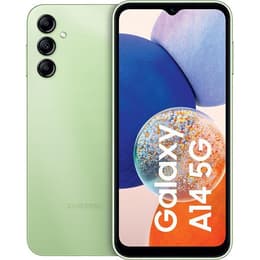
Galaxy A14 5G
Starting at

Refurbished price:132.00

Versus €289.00 new

See options
Google Pixel 9a
Starting at

Refurbished price:348.00

Versus €586.09 new

See options

Differences at a glance

The Samsung Galaxy A14 5G (2023) and the Google Pixel 9a (2025) are popular choices for users seeking reliable everyday smartphone capabilities without moving into top-tier flagship lines. While both devices support modern mobile networks, they stem from different release years and follow distinct software and hardware philosophies. The Galaxy A14 5G runs on Samsung's customized interface built over Android, whereas the Pixel 9a utilizes a clean, manufacturer-standard version of the operating system.

Available Models

Colour

Storage (GB)

Scores

Durability

Evaluating the lifespan and durability of these models reveals notable differences in release timelines, software maintenance schedules, and physical resilience standards.

  • Software support timeline: The Pixel 9a benefits from an extensive multi-year update schedule covering software and security patches for up to seven years. In contrast, the Galaxy A14 5G operates on a shorter update window reflecting its earlier release year.
  • Build protection: The Pixel 9a features an advanced dust and water resistance rating alongside modern glass protection. The Galaxy A14 5G offers a standard plastic build and lacks official high-level water resistance certifications.
  • Expected longevity: Users seeking long-term system freshness will find the Pixel 9a better equipped for extended ownership, while the Galaxy A14 5G serves well for shorter upgrade cycles.

Year of Release

2023

2025

Compatible with latest Update

Yes

Yes

OS

Android

Android

Foldable

No

No

Performance

Daily responsiveness and multitasking capabilities vary significantly due to the processing hardware and memory allocations packed into each device.

  • Multitasking efficiency: The Pixel 9a handles heavy app switching and demanding software smoothly thanks to its higher RAM capacity and current-generation processor architecture. The Galaxy A14 5G manages everyday messaging, web browsing, and casual tasks adequately with its entry-level processor and standard memory configurations.
  • Battery endurance: Both models house large battery capacities capable of lasting through a standard day of mixed use, though charging speeds lean slightly faster on the Pixel model.
  • Storage flexibility: The Galaxy A14 5G includes a microSD card slot for expandable storage, whereas the Pixel 9a relies entirely on its fixed internal storage capacity.

Screen quality

Viewing experiences differ noticeably based on the display technologies and refresh capabilities integrated into each smartphone.

  • Display technology: The Pixel 9a utilizes an OLED panel delivering deep black levels, high contrast, and vibrant colors. The Galaxy A14 5G employs a standard LCD panel that offers clear visuals but lacks the contrast depth of organic displays.
  • Motion smoothness: While both screens support high refresh rates for smoother scrolling through web pages and menus, the Pixel 9a features a faster variable refresh rate for enhanced fluidity.
  • Outdoor visibility: The Pixel 9a achieves higher peak brightness levels for comfortable reading under direct sunlight, whereas the Galaxy A14 5G requires shade during bright outdoor conditions.

Resolution

1080 x 2408

2424 x 1080

Audiovisual

Media creation and consumption hardware vary, impacting photography outcomes, video recording, and audio output during daily use.

  • Camera capabilities: The Pixel 9a features advanced computational photography algorithms paired with a capable primary sensor and ultra-wide lens, excelling in low-light environments. The Galaxy A14 5G provides a basic multi-lens setup that captures sharp daytime photos but struggles with dark scenes and lacks an ultra-wide option.
  • Video and audio: Video stabilization and clarity are more refined on the Pixel 9a. Built-in speaker output provides clear dialogue for media consumption on both models, though the Galaxy A14 5G retains a traditional headphone jack.

Front camera

13 megapixels

13 megapixels

Miscellaneous

Practical everyday features, physical dimensions, and connectivity options shape how each device fits into routine handling.

  • Physical build: The Galaxy A14 5G is slightly heavier and thicker, featuring a textured plastic back panel. The Pixel 9a presents a slimmer, lighter profile with a smooth finish.
  • Biometric security: The Pixel 9a utilizes modern facial recognition and an in-display fingerprint scanner, while the Galaxy A14 5G relies on a side-mounted fingerprint sensor embedded in the power button.
  • Connectivity: Both phones offer 5G capabilities and Wi-Fi connectivity, though the Pixel 9a supports newer Wi-Fi standards for faster local network data transfers.

Weight

201 g

186 g

Screen size (in)

6.6

6.3

Network

5G

5G

SIM card

Dual Physical SIM

Physical SIM + eSIM

Carrier compatibility

Unlocked

Unlocked

What the community thinks

User feedback from online communities highlights distinct preferences for each device depending on daily priorities. Owners of the Galaxy A14 5G frequently praise its dependable battery life, expandable storage support, and straightforward interface for basic tasks. However, some users note occasional slowdowns during heavy multitasking and limitations with night photography. Conversely, Pixel 9a users frequently commend its high-end camera quality, bright display, and fluid system performance, though a few mention the lack of expandable storage as a drawback.

Users prioritizing high-end photography, vibrant display technology, and long-term software updates will find the Google Pixel 9a well-suited to their needs. On the other hand, users focusing on expandable storage, a traditional headphone jack, and basic communication tools may prefer the Samsung Galaxy A14 5G. For those looking at a quality-assured refurbished option, both models offer reliable performance as sustainable choices that minimize electronic waste.