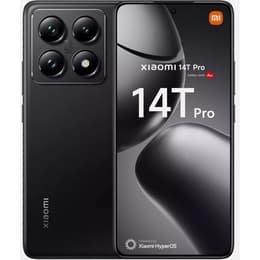



Xiaomi 14T Pro Vs Xiaomi Redmi Note 13 Pro+

Xiaomi 14T Pro
Xiaomi 14T Pro
Starting at

Refurbished price:394.00

Versus €900.00 new

See options
Xiaomi Redmi Note 13 Pro+
Starting at

Refurbished price:198.00

Versus €449.00 new

See options

Ratings

The Xiaomi 14T Pro, released in late 2024, and the Xiaomi Redmi Note 13 Pro+, launched in January 2024, represent distinct offerings within Xiaomi's smartphone lineup. While both devices operate on the Android platform with Xiaomi's HyperOS interface, the 14T Pro introduces a more advanced camera system and a newer generation of internal components, setting it apart from its slightly older counterpart.

Scores

Durability

When considering the long-term usability of these devices, their release timelines and software support policies are key factors.

  • Release Timeline: The Xiaomi 14T Pro, being a newer device from late 2024, benefits from a more recent starting point for software updates and overall technological relevance. The Redmi Note 13 Pro+, released in January 2024, is still a current model but has a shorter remaining window for major OS upgrades compared to the 14T Pro.
  • Software Longevity: The Redmi Note 13 Pro+ is expected to receive three years of major Android OS updates and four years of security patches. The Xiaomi 14T Pro, due to its later release, is anticipated to receive an additional year of major Android upgrades, extending its software support and ensuring access to newer features and security enhancements for a longer period.
  • Physical Durability: Both devices offer robust protection with an IP68 rating for dust and water resistance, indicating a high level of resilience against environmental elements. The Redmi Note 13 Pro+ features Corning Gorilla Glass Victus on its display for enhanced scratch and drop resistance, alongside internal reinforcements for shock absorption. The Xiaomi 14T Pro also boasts a sturdy build with an aluminum frame and a 3D curved back, contributing to its overall durability.

Year of Release

2024

2023

Compatible with latest Update

Yes

Yes

OS

Android

Android

Foldable

No

No

Performance

Both smartphones are equipped with capable processors designed to handle daily tasks and more demanding applications, though they differ in their underlying architecture and overall responsiveness.

  • Processing Power: The Xiaomi 14T Pro features a newer generation processor that delivers enhanced performance, particularly noticeable in intensive applications and multitasking scenarios. This results in quicker app loading times and smoother transitions between tasks. The Redmi Note 13 Pro+ is powered by a processor that provides a fluid experience for everyday use and is capable of managing advanced tasks and gaming effectively.
  • Multitasking and Storage: The 14T Pro utilizes LPDDR5X RAM and UFS 4.0 storage, offering faster data access and improved efficiency for multitasking and handling large files. The Redmi Note 13 Pro+ comes with LPDDR5 RAM and UFS 3.1 storage, which still provides a responsive experience for most users. The 14T Pro also offers higher maximum storage configurations.
  • Thermal Management: The Xiaomi 14T Pro incorporates an advanced cooling system, which helps maintain consistent performance during extended periods of heavy use, such as gaming or video editing. While the Redmi Note 13 Pro+ also manages heat effectively for its performance tier, the 14T Pro's system is designed for more demanding workloads.

Memory (GB)

16 GB

12 GB

Screen quality

Both devices offer vibrant AMOLED displays, but they present differences in brightness, refresh rate, and physical design.

  • Display Technology and Clarity: Both phones feature AMOLED panels, known for their deep blacks and vibrant colors. The Xiaomi 14T Pro's display has a resolution of 1220 x 2712 pixels, resulting in a pixel density of 446 PPI, providing sharp and clear visuals. The Redmi Note 13 Pro+ matches this resolution and pixel density, ensuring a similarly crisp viewing experience.
  • Brightness and Outdoor Visibility: The Xiaomi 14T Pro offers a significantly higher peak brightness of up to 4000 nits, which translates to exceptional visibility even in bright outdoor conditions. The Redmi Note 13 Pro+ reaches a peak brightness of up to 1800 nits, which is still ample for most outdoor scenarios but less intense than the 14T Pro.
  • Refresh Rate and Design: The 14T Pro boasts a 144Hz adaptive refresh rate, providing an exceptionally smooth scrolling and gaming experience, and features a flat display. The Redmi Note 13 Pro+ has a 120Hz adaptive refresh rate, which also offers a very fluid visual experience, and it features a curved display, which some users may find enhances the immersive feel.

Resolution

1220 x 2712

1220 x 2712

Screen type

AMOLED

AMOLED

Audiovisual

The camera systems on both smartphones are designed to capture high-quality images and videos, though they approach imaging with different hardware and software philosophies.

  • Main Camera Capabilities: The Xiaomi 14T Pro features a Leica co-engineered triple camera system, with a 50MP main sensor that emphasizes light gathering and detailed image capture, supported by optical image stabilization (OIS). The Redmi Note 13 Pro+ sports a 200MP main camera with OIS, which utilizes pixel-binning technology to produce detailed images and offers in-sensor zoom capabilities for up to 4x lossless zoom.
  • Versatility in Photography: The 14T Pro includes a dedicated 50MP telephoto lens, providing true optical zoom for distant subjects and enhanced portrait photography. It also has a 12MP ultrawide lens. The Redmi Note 13 Pro+ includes an 8MP ultrawide camera and a 2MP macro lens, offering a different range of photographic options. The 14T Pro also benefits from Leica photographic styles, allowing for distinct aesthetic choices.
  • Video Recording and Front Camera: The Xiaomi 14T Pro supports video recording up to 8K at 30 frames per second, offering high-resolution video capture. Its front camera is a 32MP sensor. The Redmi Note 13 Pro+ records video up to 4K at 30 frames per second and features a 16MP front camera.

Main camera

50 megapixels

200 megapixels

Front camera

32 megapixels

16 megapixels

Miscellaneous

Beyond their core functionalities, both devices offer a range of features that enhance user experience, from connectivity to physical design elements.

  • Battery and Charging: Both smartphones are equipped with a 5000mAh battery capacity, designed to provide ample power for a full day of use. Both support 120W wired HyperCharge for rapid recharging. A notable difference is that the Xiaomi 14T Pro also supports 50W wireless charging, offering more flexible charging options, while the Redmi Note 13 Pro+ does not.
  • Connectivity and Ports: The Xiaomi 14T Pro supports the newer Wi-Fi 7 standard, offering potentially faster and more stable wireless connections, alongside Bluetooth 5.4 and 5G. The Redmi Note 13 Pro+ features Wi-Fi 6, Bluetooth 5.3, and 5G connectivity. Both devices utilize a USB Type-C port for charging and data transfer.
  • Design and User Interaction: The 14T Pro has a weight of 209g and dimensions of 160.4 x 75.1 x 8.39mm, featuring a flat display. The Redmi Note 13 Pro+ is slightly lighter at 204.5g and measures 161.4 x 74.2 x 8.9mm, with a curved display. Both include in-display fingerprint sensors for secure unlocking and offer dual speakers for an enhanced audio experience.

Weight

209 g

204 g

Screen size (in)

6.67

6.67

Network

5G

5G

SIM card

Dual Physical SIM

Dual Physical SIM

Carrier compatibility

Unlocked

Unlocked

User feedback for the Xiaomi 14T Pro frequently highlights its impressive display quality, with many appreciating the high refresh rate and exceptional brightness for various viewing conditions. The Leica-tuned camera system is often praised for its versatility and image quality, particularly the dedicated telephoto lens. Some users have noted the absence of a charger in the box as a minor inconvenience, and while performance is generally strong, some power users suggest that gaming performance, while good, might not always match the absolute top-tier flagships. Battery life is generally considered reliable, with the fast charging capabilities being a significant advantage.

For the Xiaomi Redmi Note 13 Pro+, common praise points include its striking design, the vibrant and bright curved AMOLED display, and the rapid 120W charging, with the charger often included in the box. The 200MP main camera is frequently lauded for its detail and the effectiveness of its in-sensor zoom. However, some users have expressed concerns about the consistency of camera processing, particularly in challenging lighting, and the overall software experience with HyperOS, mentioning occasional bloatware or less intuitive aspects. The battery life is generally considered good, often lasting a full day or more for moderate users.

Users prioritizing a cutting-edge camera system with a dedicated telephoto lens, the absolute brightest display, and the latest Wi-Fi standard may find the Xiaomi 14T Pro to be a more suitable choice. Its extended software support also offers a longer period of up-to-date features. Conversely, individuals who value a slightly more compact design with a curved display, a charger included in the box, and a high-resolution main camera with effective in-sensor zoom might lean towards the Xiaomi Redmi Note 13 Pro+. Both devices offer robust durability with IP68 ratings, making them resilient choices. For those seeking an eco-friendly alternative, both models are available as quality-assured refurbished options, providing a sustainable choice for consumers.


See all articles

Our recent comparisons







