

Galaxy S25 Ultra Vs Xiaomi 14T Pro

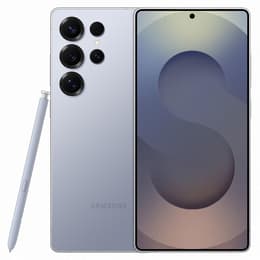
Galaxy S25 Ultra
Galaxy S25 Ultra
Starting at

Refurbished price:735.00

Versus €1,408.78 new

See options
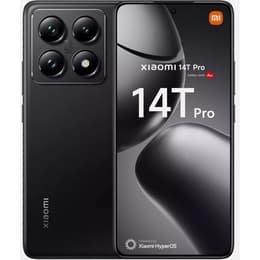
Xiaomi 14T Pro
Xiaomi 14T Pro
Starting at

Refurbished price:394.00

Versus €900.00 new

See options

Ratings

The Samsung Galaxy S25 Ultra, released in February 2025, and the Xiaomi 14T Pro, launched in September 2024, represent high-end Android smartphones from their respective manufacturers. Both devices operate on the Android platform, with the Galaxy S25 Ultra featuring Android 15 and One UI 7, while the Xiaomi 14T Pro runs on Android 14 with Xiaomi's HyperOS. A primary distinction lies in their software support timelines and camera philosophies, with Samsung offering extended updates and Xiaomi emphasizing Leica-tuned optics.

Scores

Durability

When considering the longevity of these devices, both offer robust software support and physical durability features designed for extended use.

  • Software Updates: The Samsung Galaxy S25 Ultra is set to receive an impressive seven years of both Android operating system upgrades and security updates, extending its support until approximately 2032 and covering up to Android 22. In contrast, the Xiaomi 14T Pro is promised four years of Android updates, reaching up to Android 18, and five years of security patches, ensuring protection until at least 2029.
  • Physical Durability: Both smartphones feature an IP68 rating for dust and water resistance, indicating they can withstand submersion in fresh water under specific conditions. The Galaxy S25 Ultra further enhances its screen protection with Corning Gorilla Armor 2, which offers improved scratch resistance and durability. The Xiaomi 14T Pro utilizes Gorilla Glass 5 on the front and Panda X Glass on the back, alongside an aluminum frame for its construction.
  • Expected Lifespan: Users prioritizing the longest possible software support and cutting-edge screen protection may find the Galaxy S25 Ultra more aligned with their needs, while the Xiaomi 14T Pro still offers a substantial period of updates and solid physical resilience.

Year of Release

2025

2024

Compatible with latest Update

Yes

Yes

OS

Android

Android

Foldable

No

No

Performance

Both the Galaxy S25 Ultra and the Xiaomi 14T Pro are equipped with powerful internal components designed to handle demanding applications and multitasking with ease.

  • Processing Power: The Galaxy S25 Ultra is powered by a high-performance processor, enabling ultra-smooth operation and efficient handling of complex tasks and AI features. This results in responsive app loading and seamless transitions between applications. The Xiaomi 14T Pro features a capable MediaTek processor, which provides strong performance for everyday use, gaming, and multitasking.
  • Multitasking and Storage: The Galaxy S25 Ultra offers configurations with 12GB or 16GB of RAM, paired with storage options ranging from 256GB to 1TB. The Xiaomi 14T Pro also comes with generous RAM options, typically 12GB or 16GB, and storage capacities up to 1TB, facilitating smooth multitasking and ample space for files and applications.
  • Battery Behavior: The Galaxy S25 Ultra includes a 5000mAh battery, with user experiences suggesting it provides sufficient power for a full day of moderate to heavy use, though some heavy users might find themselves needing to conserve power by day's end. The Xiaomi 14T Pro also houses a 5000mAh battery, and reviews indicate it offers great battery life, capable of lasting through entire days of use.

Memory (GB)

12 GB

16 GB

Screen quality

The visual experience on both devices is a highlight, with each offering advanced display technologies for vibrant and clear imagery.

  • Display Technology and Clarity: The Galaxy S25 Ultra features a 6.9-inch Dynamic LTPO AMOLED 2X display with a QHD+ resolution (3120x1440 pixels), delivering exceptional sharpness and detail. The Xiaomi 14T Pro sports a 6.67-inch AMOLED display with a 1.5K resolution (2712x1220 pixels), providing a visually immersive experience with sharp visuals.
  • Brightness and Refresh Rate: Samsung's offering boasts a peak brightness of up to 2600 nits, ensuring excellent visibility even in bright outdoor conditions, and an adaptive refresh rate that scales from 1Hz to 120Hz for smooth scrolling and power efficiency. The Xiaomi 14T Pro impresses with a peak brightness of 4000 nits (1600 nits HBM) and a 144Hz refresh rate, which can also adapt dynamically, offering an exceptionally fluid visual experience, particularly noticeable in gaming and fast-paced content.
  • Special Features: The Galaxy S25 Ultra's display includes an anti-reflective coating and Corning Gorilla Armor 2 for reduced glare and enhanced durability. Both displays support HDR10+ and offer vibrant color reproduction, with the Xiaomi 14T Pro also featuring Dolby Vision.

Resolution

1080 x 2340 pixels

1220 x 2712

Audiovisual

Both smartphones offer advanced camera systems, catering to different preferences in mobile photography and videography.

  • Rear Camera Systems: The Galaxy S25 Ultra is equipped with a versatile quad-camera setup, including a 200-megapixel main sensor, a 50-megapixel ultrawide, a 50-megapixel telephoto with 5x optical zoom, and a 10-megapixel telephoto with 3x optical zoom. This configuration provides flexibility across various photographic scenarios. The Xiaomi 14T Pro features a Leica-tuned triple-camera system, comprising a 50-megapixel main sensor with optical image stabilization, a 50-megapixel telephoto lens with 2.6x optical zoom, and a 12-megapixel ultrawide lens.
  • Photography Performance: The Galaxy S25 Ultra's camera system is noted for producing bright and detailed images, with an improved 50MP ultrawide camera. Its telephoto capabilities are particularly strong for close-up photography. The Xiaomi 14T Pro's Leica collaboration results in quality images with good color science, and its telephoto camera excels at capturing distant features or creating background blur in portraits.
  • Video and Selfie Capabilities: Both devices offer high-quality video recording, with the Galaxy S25 Ultra featuring a Pro Video mode with LOG capture. The Xiaomi 14T Pro supports 8K video recording at 30 frames per second. For selfies, the Galaxy S25 Ultra has a 12-megapixel front camera with autofocus, while the Xiaomi 14T Pro features a 32-megapixel front camera capable of 4K video recording.

Front camera

8K@24/30fps

32 megapixels

Miscellaneous

Beyond core performance, several practical elements differentiate the user experience of these two devices.

  • Connectivity and Ports: Both the Galaxy S25 Ultra and the Xiaomi 14T Pro support 5G connectivity, along with modern Wi-Fi standards and Bluetooth for wireless connections. Both devices utilize a USB-C port for charging and data transfer. The Galaxy S25 Ultra notably includes an integrated S Pen stylus, enhancing productivity and creative input.
  • Biometric Security: For secure unlocking, the Galaxy S25 Ultra incorporates an ultrasonic in-screen fingerprint sensor. The Xiaomi 14T Pro also features an under-display optical fingerprint sensor. Both devices likely offer face recognition as an alternative.
  • Design and Handling: The Galaxy S25 Ultra has dimensions of 162.8 x 77.6 x 8.2 mm and weighs 218 grams. It features a minimalist and industrial design with flatter edges and rounded corners for an improved in-hand feel compared to its predecessor. The Xiaomi 14T Pro measures 160.4 x 75.1 x 8.39 mm and weighs 209 grams, offering a comfortable grip with an aluminum frame and a matte finish on its glass back.

Weight

2 g

209 g

Screen size (in)

6.9

6.67

Network

5G

5G

SIM card

Physical SIM + eSIM

Dual Physical SIM

Carrier compatibility

Unlocked

Unlocked

The Samsung Galaxy S25 Ultra and the Xiaomi 14T Pro each present compelling packages for users seeking a high-performance Android smartphone, though they cater to slightly different priorities. User feedback for the Galaxy S25 Ultra often praises its exceptional display quality, robust software support, and the versatility of its camera system, particularly the improved ultrawide lens. Some users, however, have noted that its battery life, while adequate, might not be as extended as some rivals for very heavy usage.

The Xiaomi 14T Pro receives commendation for its vibrant, high-refresh-rate display, efficient performance, and its fast charging capabilities, which allow for quick power replenishment. Its Leica-tuned cameras are also frequently highlighted for their quality. A common point of discussion for Xiaomi devices can sometimes revolve around the consistency of software updates, though the 14T Pro has a clear commitment for several years.

Users prioritizing the absolute longest software support and a highly refined, feature-rich ecosystem with an integrated stylus may find the Galaxy S25 Ultra well-suited to their needs. Conversely, individuals who value a slightly more compact design, exceptionally fast charging, and a display with a higher peak brightness and refresh rate might lean towards the Xiaomi 14T Pro. Both devices offer a quality-assured refurbished option, providing an eco-friendly alternative for consumers.


See all articles

Our recent comparisons