


iPhone 17 Pro Vs Xiaomi 14T Pro

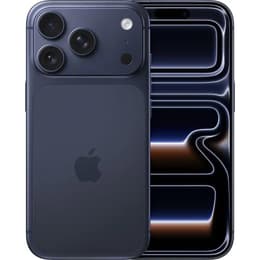
iPhone 17 Pro
iPhone 17 Pro
Starting at

Refurbished price:1,064.00

Versus €1,339.00 new

See options
Xiaomi 14T Pro
Xiaomi 14T Pro
Starting at

Refurbished price:395.00

Versus €1,500.00 new

See options

Ratings

The iPhone 17 Pro, released in September 2025, and the Xiaomi 14T Pro, launched in September 2024, represent high-end smartphones from their respective ecosystems. While both devices offer premium experiences, they cater to slightly different user priorities through their distinct operating systems and hardware philosophies. The iPhone 17 Pro operates on Apple's iOS, emphasizing a tightly integrated ecosystem and advanced computational features, whereas the Xiaomi 14T Pro runs on Android with Xiaomi's HyperOS, often focusing on raw specifications and extensive customization options.

Scores

Durability

When considering the long-term usability of these devices, several factors contribute to their expected practical lifespan, including software support and physical resilience.

  • Software Longevity: The iPhone 17 Pro is anticipated to receive major iOS updates for approximately five to seven years from its release, with security patches extending even further, ensuring a prolonged period of new features and protection. The Xiaomi 14T Pro typically receives four years of Android operating system updates and five to seven years of security updates, providing a substantial, though potentially shorter, support window compared to its Apple counterpart.
  • Physical Durability: The iPhone 17 Pro features Ceramic Shield 2 on both its front and back, offering enhanced scratch resistance and improved anti-reflection properties. It also utilizes a unibody aluminum chassis. The Xiaomi 14T Pro comes with an IP68 rating for water and dust resistance, indicating robust protection against environmental elements, and features a metal frame.
  • Repairability: While specific repairability scores are not detailed for these newer models, Apple generally designs its Pro models with certain repair considerations, and the iPhone 17 Pro's unibody construction may influence repair processes. Xiaomi devices typically offer a range of repair options, though availability of parts and service can vary by region.

Year of Release

2025

2024

Compatible with latest Update

Yes

Yes

OS

iOS

Android

Foldable

No

No

Performance

Both the iPhone 17 Pro and Xiaomi 14T Pro are engineered to deliver high-level performance, handling demanding applications and multitasking with ease, though they achieve this through different hardware configurations.

  • Processing Power: The iPhone 17 Pro is equipped with Apple's A19 Pro chip, built on a 3-nanometer process. This processor features a 6-core CPU and a 6-core GPU with integrated Neural Accelerators, providing substantial power for complex tasks, advanced gaming, and on-device artificial intelligence processing. The Xiaomi 14T Pro is powered by the MediaTek Dimensity 9300+ processor, an octa-core chip also built on a 4-nanometer process, featuring an All-Big-Core CPU architecture and a 12-core Immortalis-G720 MC12 GPU, designed for intensive gaming and efficient multitasking.
  • Multitasking and Responsiveness: The iPhone 17 Pro includes 12GB of RAM, contributing to smooth application switching and efficient handling of multiple open programs. The Xiaomi 14T Pro offers configurations with up to 12GB of RAM and up to 1TB of internal storage, allowing for extensive app usage and large file storage without performance bottlenecks. Both devices incorporate advanced cooling systems, with the iPhone 17 Pro featuring vapor chamber cooling, to maintain consistent performance during prolonged heavy use.
  • Storage Options: The iPhone 17 Pro starts with 256GB of storage, with higher options available. The Xiaomi 14T Pro offers flexible storage solutions, ranging up to 1TB, catering to users with significant storage needs for media and applications.

Memory (GB)

12 GB

12 GB

Screen quality

The visual experience on both smartphones is a highlight, with each device featuring advanced display technologies designed for clarity, brightness, and smooth interactions.

  • Display Technology and Resolution: The iPhone 17 Pro features a 6.3-inch Super Retina XDR OLED display, offering a resolution of 2622x1206 pixels, resulting in a pixel density of 460 pixels per inch. The Xiaomi 14T Pro sports a 6.67-inch AMOLED display with a 1.5K resolution (2712x1220 pixels), also providing a sharp visual experience with 446 pixels per inch.
  • Brightness and Clarity: Both devices offer impressive brightness levels for visibility in various lighting conditions. The iPhone 17 Pro can reach a peak outdoor brightness of 3,000 nits. The Xiaomi 14T Pro boasts an even higher peak brightness of 4,000 nits, which contributes to excellent readability even in direct sunlight. The iPhone 17 Pro also includes a new anti-reflective display coating for reduced glare.
  • Refresh Rate and Smoothness: The iPhone 17 Pro incorporates a 120Hz ProMotion refresh rate, which dynamically adjusts to content for fluid scrolling and responsive interactions. The Xiaomi 14T Pro offers a 144Hz refresh rate, providing an exceptionally smooth visual experience, particularly beneficial for gaming and fast-paced content. Both displays support HDR10+ and Dolby Vision for enhanced color and contrast in compatible content.

Resolution

2622x1206

1220 x 2712

Screen type

Super Retina XDR

AMOLED

Audiovisual

Both the iPhone 17 Pro and Xiaomi 14T Pro offer sophisticated camera systems, each with unique strengths in capturing photos and videos across various scenarios.

  • Rear Camera Systems: The iPhone 17 Pro features a triple 48-megapixel camera system, including a 48MP Fusion Main camera with a wide aperture and optical image stabilization, a 48MP Fusion Ultra-Wide camera with a 120-degree field of view, and a 48MP Tetraprism Telephoto camera capable of 8x optical zoom. The Xiaomi 14T Pro also comes with a Leica-tuned triple rear camera setup, comprising a 50MP Light Fusion 900 main sensor with a wide aperture and OIS, a 50MP telephoto lens offering 2.6x optical zoom, and a 12MP or 13MP ultra-wide camera.
  • Photography Features: The iPhone 17 Pro excels in computational photography, offering features like ProRes RAW and Apple Log 2 for professional-grade video editing, alongside improved low-light performance. The Xiaomi 14T Pro benefits from its collaboration with Leica, providing distinct photographic styles, filters, and advanced portrait modes, enhancing color science and depth. Both devices are designed to capture detailed images in various lighting conditions.
  • Video Capabilities and Front Camera: For video, the iPhone 17 Pro supports 8K video recording and dual video recording, allowing simultaneous capture from front and rear cameras. The Xiaomi 14T Pro offers features like Movie mode and Director mode, supporting 10-bit videos in Rec. 2020 and up to 4K at 60 frames per second, with some sources mentioning 8K/30p. The iPhone 17 Pro has a 24-megapixel front-facing camera, while the Xiaomi 14T Pro features a 32-megapixel selfie camera.

Main camera

48 megapixels

50 megapixels

Front camera

18 megapixels

32 megapixels

Miscellaneous

Beyond core performance and camera capabilities, both the iPhone 17 Pro and Xiaomi 14T Pro offer a range of features that enhance daily usability and connectivity.

  • Connectivity and Ports: The iPhone 17 Pro includes a USB-C port, aligning with modern connectivity standards. It supports Wi-Fi 7 and Bluetooth 6 through an Apple-designed networking chip. The Xiaomi 14T Pro also features a USB-C port and supports Wi-Fi 7 and Bluetooth 5.4, ensuring fast and reliable wireless connections.
  • Biometrics and Navigation: The iPhone 17 Pro relies on Face ID for secure facial recognition. It also features an Action Button, which can be customized for quick access to various functions. The Xiaomi 14T Pro incorporates an in-display fingerprint sensor for biometric security, alongside face unlock capabilities.
  • Design and Build: The iPhone 17 Pro features a unibody aluminum chassis, contributing to its overall feel and durability. The Xiaomi 14T Pro has a metal frame and a 3D Curved Back design, aiming for a comfortable in-hand feel. Both devices are designed to be robust for daily use.

Weight

206 g

209 g

Screen size (in)

6.3

6.67

Network

5G

5G

SIM card

Physical SIM + eSIM

Dual Physical SIM

Carrier compatibility

Unlocked

Unlocked

Choosing between the iPhone 17 Pro and the Xiaomi 14T Pro depends largely on individual priorities and ecosystem preferences. Users frequently praise the iPhone 17 Pro for its seamless integration within the Apple ecosystem, its advanced computational photography, and its extended software support, which ensures a long lifespan for the device. Some common discussions around iPhones often revolve around the closed nature of iOS compared to Android's flexibility.

On the other hand, the Xiaomi 14T Pro is often lauded by users for its vibrant, high-refresh-rate display, rapid charging capabilities, and the versatility offered by its Android-based HyperOS, which allows for extensive customization. Potential concerns sometimes mentioned for Android devices can include the fragmentation of updates, though Xiaomi has made strides in extending its software support.

Users prioritizing a highly integrated software and hardware experience with long-term software updates and advanced video capabilities may find the iPhone 17 Pro well-suited to their needs. Conversely, those who value a highly customizable operating system, exceptionally bright displays, and very fast charging speeds might lean towards the Xiaomi 14T Pro. Both devices offer robust camera systems, though with different photographic philosophies. For those seeking a more sustainable choice, considering a quality-assured refurbished option for either model can be an eco-friendly alternative.


See all articles

Our recent comparisons