


Compare models

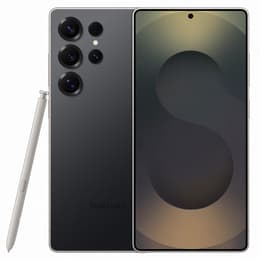
Galaxy S25 Ultra Vs Google Pixel 9a

  • 1-year minimum warranty
  • Free delivery on all orders
  • Free 30-day returns
Galaxy S25 Ultra
Starting at

Refurbished price:€682.00

Versus €1,460.37 new

See options
Google Pixel 9a
Starting at

Refurbished price:€360.00

Versus €586.09 new

See options

Differences at a glance

The Samsung Galaxy S25 Ultra (2025) and the Google Pixel 9a (2025) represent two different tiers and philosophies within the modern smartphone landscape. The Galaxy S25 Ultra serves as a feature-packed powerhouse equipped with integrated stylus capabilities and an expansive screen, whereas the Google Pixel 9a focuses on streamlined daily efficiency, clean software integration, and a comfortable handheld footprint. Both models operate on the Android platform while catering to distinct hardware preferences and productivity styles.

Available Models

Colour

Storage

Scores

Durability

Evaluating the long-term utility of these devices involves examining their software longevity, hardware build quality, and expected update support cycles.

  • Software longevity and updates: Both manufacturers provide extensive multi-year support commitments, ensuring that both devices receive regular operating system upgrades and security patches for many years following their initial release.
  • Build materials and repairability: The Galaxy S25 Ultra employs titanium and reinforced glass construction designed for structural rigidity, while the Pixel 9a balances an aluminum frame with a durable composite back, both offering solid resistance to daily wear.
  • Expected practical lifespan: Thanks to current-generation internal components and robust update timelines, both smartphones are well-equipped to maintain reliable performance over several years of continuous daily use.

Year of Release

2025

2025

Compatible with latest Update

Yes

Yes

OS

Android

Android

Foldable

No

No

Performance

Daily operation, multitasking smoothness, and energy management differ notably based on internal hardware architecture and battery capacities.

  • Multitasking and app responsiveness: Both devices handle demanding productivity applications, web browsing, and casual gaming smoothly, ensuring quick app launching and seamless switching between multiple active tasks.
  • Battery behavior: The Galaxy S25 Ultra manages power efficiently through advanced thermal controls and a high-capacity cell, while the Pixel 9a utilizes a large battery that comfortably sustains a full day of mixed browsing, messaging, and media playback.
  • Memory and storage configurations: Generous random access memory allocations on both models support fluid background task handling and effortless multitasking for active users.

Screen quality

Visual output and display responsiveness vary between the two models in terms of size, technology, and outdoor visibility.

  • Display technology: Both smartphones feature vibrant OLED panels that deliver deep contrast levels, rich colors, and sharp text rendering for reading and media consumption.
  • Brightness and outdoor clarity: High peak brightness levels on both screens ensure that content remains legible and clear even when used directly under bright sunlight.
  • Refresh rate and smoothness: Fluid high refresh rate capabilities on both displays provide seamless scrolling through web pages and smooth animation transitions throughout the interface.

Resolution

1440x3120

2424 x 1080

Audiovisual

Imaging hardware and audio reproduction cater differently to multimedia enthusiasts and everyday content creators.

  • Camera versatility: The Galaxy S25 Ultra incorporates a multi-lens array including specialized telephoto zoom options for distant subjects, whereas the Pixel 9a utilizes a streamlined dual-camera setup backed by sophisticated computational photography for clear everyday shots.
  • Low-light and video capture: Both devices capture detailed low-light images and stable video recordings, with reliable autofocus and effective stabilization for handheld shooting.
  • Media and audio output: Stereo speaker setups on both models deliver clear sound reproduction for hands-free calls, podcasts, and casual video viewing.

Front camera

12

13 megapixels

Miscellaneous

Practical day-to-day usability factors such as connectivity, physical dimensions, and biometric security shape the overall handling experience.

  • Connectivity and ports: Both models support rapid 5G networks, modern Wi-Fi standards, and Bluetooth connectivity, utilizing reversible USB-C ports for charging and data transfer.
  • Biometrics and handling: Secure fingerprint recognition and facial scanning come standard on both devices, though they differ significantly in physical footprint, with the Pixel 9a offering a lighter, more compact build compared to the larger frame of the Galaxy S25 Ultra.
  • Design ergonomics: The Galaxy S25 Ultra incorporates built-in stylus functionality for precise note-taking, whereas the Pixel 9a focuses on a smooth, flush rear surface profile that rests comfortably in smaller hands.

Weight

218 g

186 g

Screen size (in)

6.9

6.3

Network

5G

5G

SIM card

Dual Physical SIM

Physical SIM + eSIM

Carrier compatibility

Unlocked

Unlocked

Connector

USB-C

USB-C

What the community thinks

User discussions across various technology forums frequently highlight the Galaxy S25 Ultra for its expansive workspace, versatile multi-lens camera system, and integrated stylus utility, making it a favorite for productivity-focused individuals. At the same time, community feedback praises the Google Pixel 9a for its streamlined interface, reliable battery endurance, and comfortable, lightweight form factor that appeals to users seeking straightforward daily reliability.

Users prioritizing advanced telephoto photography, a large canvas for media consumption, and built-in stylus tools will find the Galaxy S25 Ultra well-suited to their workflow. Conversely, users who prefer a compact footprint, clean software, and dependable everyday efficiency may lean toward the Google Pixel 9a. Choosing a quality-assured refurbished option through sustainable platforms like Back Market offers an eco-friendly alternative that extends device lifecycles while supporting conscious consumer choices. Ultimately, the decision depends on whether large-scale productivity features or streamlined everyday handling better matches your personal daily routine.