

Galaxy S25 Ultra Vs Google Pixel 8

Galaxy S25 Ultra
Galaxy S25 Ultra
Starting at

Refurbished price:735.00

Versus €1,408.78 new

See options
Google Pixel 8
Google Pixel 8
Starting at

Refurbished price:235.00

Versus €999.00 new

See options

Ratings

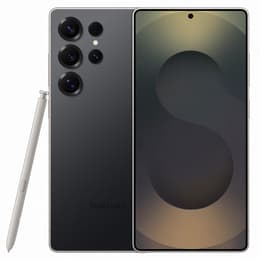
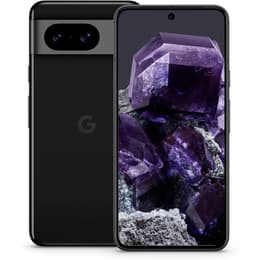
The Samsung Galaxy S25 Ultra, released in February 2025, and the Google Pixel 8, launched in October 2023, represent distinct approaches to the premium smartphone experience. While both devices operate on the Android platform and integrate advanced AI capabilities, the Galaxy S25 Ultra emphasizes a larger, more feature-rich display and a versatile camera system, whereas the Pixel 8 offers a more compact design with a focus on Google's software and computational photography.

Scores

Durability

When considering the long-term usability of these devices, several factors contribute to their expected practical lifespan, including software support and repairability.

  • Software Longevity: Both the Galaxy S25 Ultra and the Google Pixel 8 offer an impressive seven years of operating system and security updates. The Galaxy S25 Ultra, released in early 2025, is expected to receive updates until approximately 2032, starting with Android 15. The Pixel 8, launched in late 2023, is guaranteed updates until October 2030, beginning with Android 14. This extended support ensures both phones remain secure and functional for a considerable period.
  • Repairability: The Google Pixel 8 generally receives a moderate repairability score, with some assessments placing it around 6 or 7 out of 10. Its screen can be removed with heat, though the battery can be tricky due to adhesives. The Galaxy S25 Ultra, while showing significant improvement over previous Samsung flagships, earned a provisional iFixit score of 5 out of 10. It features easier battery removal with pull tabs and modular camera components, but screen replacement remains a challenge.
  • Expected Lifespan: Given their robust software support, both devices are designed for extended use. The Galaxy S25 Ultra's newer release date provides a slightly longer window for the latest software features, while the Pixel 8's design is noted for being moderately repairable, potentially aiding in extending its physical lifespan through component replacement.

Year of Release

2025

2023

Compatible with latest Update

Yes

Yes

OS

Android

Android

Foldable

No

No

Performance

The performance of a smartphone is crucial for daily tasks, from navigating apps to demanding gaming sessions. Both the Galaxy S25 Ultra and the Pixel 8 are equipped with powerful processors designed for smooth operation.

  • Processing Power: The Galaxy S25 Ultra features a current-generation processor, enabling it to handle demanding applications and multitasking with efficiency. Users report smooth performance, even during gaming, with improved thermal management compared to previous models. The Pixel 8 is powered by Google's Tensor G3 chip, which provides solid performance for everyday tasks and is optimized for the device's AI features.
  • Multitasking and Storage: The Galaxy S25 Ultra offers more generous RAM configurations, typically starting at 12GB and going up to 16GB, alongside various storage options from 256GB to 1TB. This allows for extensive multitasking and ample space for applications and media. The Pixel 8 comes with 8GB of RAM and storage options of 128GB or 256GB, which is sufficient for most users but offers less headroom for heavy multitasking or large media libraries.
  • Battery Behavior: The Galaxy S25 Ultra houses a 5000 mAh battery, providing impressive endurance, with some tests showing over 17 hours of usage and users reporting up to 1.5 days on a single charge with moderate use. It supports 45W wired fast charging and wireless charging. The Pixel 8 has a 4575 mAh battery, which users describe as average, though adaptive battery features can improve longevity over time. It supports 27W wired and 18W wireless charging.

Memory (GB)

12 GB

8 GB

Screen quality

The display is a primary interface for smartphone interaction, and both devices offer high-quality viewing experiences with distinct characteristics.

  • Display Technology and Clarity: The Galaxy S25 Ultra features a large 6.9-inch Dynamic LTPO AMOLED 2X display with a QHD+ resolution (3120x1440 pixels), resulting in exceptional clarity where individual pixels are virtually invisible. The Pixel 8 has a 6.2-inch OLED display with an FHD+ resolution (1080x2400 pixels), offering a clear and vibrant viewing experience in a more compact form factor.
  • Brightness and Refresh Rate: The S25 Ultra boasts a peak brightness of up to 2600 nits, ensuring excellent visibility even in bright outdoor conditions, and an adaptive refresh rate that scales from 1Hz to 120Hz for smooth scrolling and power efficiency. It also includes Corning Gorilla Armor 2 with an anti-reflective coating to reduce glare. The Pixel 8 offers a peak brightness of up to 2000 nits and a variable refresh rate of 60-120Hz, providing a responsive and bright display for most environments.
  • Viewing Experience: Users prioritizing a larger screen for media consumption, productivity, or detailed viewing will find the Galaxy S25 Ultra's expansive, high-resolution display with advanced glare reduction particularly appealing. The Pixel 8, with its smaller screen, offers a comfortable one-handed experience while still delivering a high-quality, smooth display suitable for everyday use.

Resolution

1080 x 2340 pixels

1080 x 2400

Audiovisual

Both smartphones offer advanced camera systems, but they differ in their hardware configurations and photographic philosophies.

  • Camera System Capabilities: The Galaxy S25 Ultra features a comprehensive quad-camera setup on the rear, including a 200-megapixel main sensor, a 50-megapixel ultra-wide lens, a 10-megapixel telephoto lens with 3x optical zoom, and another 50-megapixel telephoto lens offering 5x optical zoom and up to 100x digital zoom. This provides extensive versatility for various photographic scenarios. The Pixel 8 employs a dual-camera system with a 50-megapixel wide-angle primary camera and a 12-megapixel ultra-wide camera.
  • Photography Performance: The S25 Ultra's camera system is designed for high detail and flexibility, with its multiple telephoto lenses excelling in zoom capabilities. It supports 8K video recording at 30 frames per second. The Pixel 8 is renowned for its computational photography, consistently producing excellent photos, particularly in low-light conditions, and offers 4K video recording at up to 60 frames per second.
  • Audio and Media: Both devices offer quality speaker output for media consumption. The S25 Ultra's microphone quality is generally robust for calls and recording. The Pixel 8 also provides good audio quality, with AI features potentially enhancing audio experiences.

Front camera

8K@24/30fps

10.5 megapixels

Miscellaneous

Beyond the core components, several practical features and design elements contribute to the overall user experience of these smartphones.

  • Connectivity and Ports: Both the Galaxy S25 Ultra and the Google Pixel 8 support 5G connectivity, Wi-Fi 7, and Bluetooth 5.3, ensuring fast and reliable wireless communication. Both devices utilize a USB-C port for charging and data transfer, with the Pixel 8 featuring USB Type-C 3.2. Neither phone includes a traditional 3.5mm headphone jack.
  • Security and Biometrics: The Galaxy S25 Ultra incorporates an ultrasonic in-screen fingerprint sensor for secure unlocking. The Pixel 8 features an optical under-display fingerprint sensor and also offers face recognition for convenient unlocking.
  • Design and Durability: The S25 Ultra has a sleek design with a thickness of 8.2mm and weighs 218 grams. It features Corning Gorilla Armor 2 for enhanced durability and an IP68 rating for dust and water resistance. The Pixel 8 is more compact, measuring 8.9mm thick and weighing 187 grams, and is protected by Corning Gorilla Glass Victus with an IP68 rating. The Galaxy S25 Ultra also uniquely supports the S Pen for note-taking and drawing.

Weight

2 g

187 g

Screen size (in)

6.9

6,2

Network

5G

5G

SIM card

Physical SIM + eSIM

Physical SIM + eSIM

Carrier compatibility

Unlocked

Unlocked

Connector

USB-C

USB-C

User sentiment for the Galaxy S25 Ultra often highlights its exceptional display, robust battery life, and versatile camera system as key strengths. Many users appreciate the comprehensive feature set and the inclusion of the S Pen, making it a powerful device for productivity and creative tasks. Criticisms sometimes point to the incremental nature of upgrades compared to its predecessor and the perceived lack of groundbreaking innovation in some areas. The Pixel 8 is frequently praised for its clean Android experience, excellent camera performance, especially in low light, and its comfortable, compact design. Users also value Google's commitment to long-term software updates. Some common concerns include average battery life for heavy users and occasional reports of the device warming up.

Users prioritizing a large, vibrant display, extensive camera versatility with advanced zoom capabilities, and integrated stylus functionality will likely find the Samsung Galaxy S25 Ultra well-suited to their needs. Its powerful performance and long software support make it a strong choice for those seeking a top-tier Android experience with a focus on hardware features. Conversely, individuals who prefer a more compact device, a streamlined Android interface, and a camera system that excels in computational photography will lean towards the Google Pixel 8. Its extended software support also makes it a compelling option for those who value longevity and consistent updates from Google. Both devices offer quality-assured refurbished options, providing an eco-friendly alternative for consumers seeking premium technology.


See all articles

Our recent comparisons