


Galaxy S23+ Vs Google Pixel 9 Pro XL

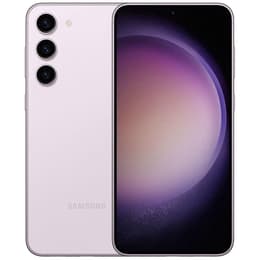
Galaxy S23+
Galaxy S23+
Starting at

Refurbished price:293.00

Versus €1,019.00 new

See options
Google Pixel 9 Pro XL
Starting at

Refurbished price:424.00

Versus €1,298.07 new

See options

Ratings

The Samsung Galaxy S23 Plus, released in February 2023, and the Google Pixel 9 Pro XL, launched in August 2024, represent two distinct approaches to the premium smartphone experience. While both devices operate on the Android platform, they offer different strengths in terms of hardware, software philosophy, and user experience. The Galaxy S23 Plus focuses on a balanced, high-performance package, whereas the Pixel 9 Pro XL emphasizes advanced computational photography and deep AI integration.

Scores

Durability

When considering the long-term usability of these devices, their respective release timelines and software support policies are key factors. The Google Pixel 9 Pro XL, being a more recent release, benefits from an extended period of software updates compared to its competitor.

  • Release Timeline: The Galaxy S23 Plus was released in February 2023, while the Pixel 9 Pro XL followed in August 2024. This difference in launch dates directly impacts their remaining support cycles. [2, 4, 6, 17, 19, 27]
  • Software Longevity: Google commits to seven years of operating system and security updates for the Pixel 9 Pro XL, extending its software support until Android 22. In contrast, Samsung typically provides four years of OS updates and five years of security updates for the Galaxy S23 Plus. [4, 31, 41, 42]
  • Practical Lifespan: Users prioritizing the longest possible software support and access to the latest Android features will find the Pixel 9 Pro XL offers a more extended practical lifespan. Both devices feature durable Gorilla Glass Victus 2, contributing to their physical resilience against daily wear and tear. [13, 27, 34, 40, 43]

Year of Release

2023

2024

Compatible with latest Update

Yes

Yes

OS

Android

Android

Foldable

No

No

Performance

Both smartphones deliver robust performance suitable for demanding applications and multitasking, though they achieve this through different underlying architectures. The Galaxy S23 Plus is known for its consistent speed, while the Pixel 9 Pro XL leverages its specialized processor for AI-centric tasks.

  • Everyday Responsiveness: The Galaxy S23 Plus provides a consistently smooth and fast user experience, handling web browsing, video streaming, and gaming without hesitation. Users report it breezes through all tasks with flawless performance. [12, 20, 26] The Pixel 9 Pro XL also offers a fast and smooth operating system, though some users have noted occasional animation stuttering or app optimization differences compared to other platforms. [18, 22, 23]
  • Multitasking Capabilities: The Pixel 9 Pro XL comes equipped with 16GB of RAM, offering substantial capacity for running numerous applications simultaneously and managing complex workflows. The Galaxy S23 Plus features 8GB of RAM, which is ample for most multitasking needs, ensuring smooth transitions between apps. [3, 6, 17, 25, 41]
  • Battery Behavior: The Pixel 9 Pro XL houses a 5060mAh battery, providing excellent endurance with reports of up to 49 hours of total usage and nearly 19 hours of continuous video playback. [5, 10, 41] The Galaxy S23 Plus has a 4700mAh battery, which also delivers strong battery life, often lasting a full day or even two for moderate users, with some initial reports of standby drain addressed by software updates. [1, 7, 11, 12, 16, 26]

Memory (GB)

8 GB

16 GB

Screen quality

The visual experience on both devices is vibrant and clear, though the Pixel 9 Pro XL offers a slightly more advanced display in terms of resolution and brightness.

  • Display Technology and Clarity: The Galaxy S23 Plus features a 6.6-inch Dynamic AMOLED 2X display with Full HD+ resolution (2340 x 1080 pixels), providing sharp images for everyday viewing. [1, 13, 33, 35] The Pixel 9 Pro XL boasts a larger 6.8-inch LTPO OLED display with a higher Quad HD+ resolution (1344 x 2992 pixels), resulting in a slightly higher pixel density and enhanced clarity. [4, 9, 14, 25, 41, 43]
  • Brightness and Outdoor Visibility: The Galaxy S23 Plus achieves a peak brightness of 1750 nits, ensuring good visibility in bright outdoor conditions. [1, 33, 35] The Pixel 9 Pro XL surpasses this with a peak brightness of 3000 nits, offering exceptional readability even under direct sunlight. [4, 14, 25, 41, 43]
  • Refresh Rate and Smoothness: Both phones feature adaptive refresh rates for smooth scrolling and responsive interactions. The Galaxy S23 Plus offers a refresh rate that adapts between 48Hz and 120Hz. [35] The Pixel 9 Pro XL provides a wider adaptive range, from 1Hz to 120Hz, which can contribute to power efficiency by lowering the refresh rate when static content is displayed. [4, 25, 41, 43]

Resolution

1080 x 2340

1344 x 2992

Screen type

Dynamic AMOLED 2X

LTPO OLED

Audiovisual

Both smartphones offer capable camera systems, but they approach photography with different philosophies, with the Pixel 9 Pro XL leaning heavily into computational photography and AI enhancements.

  • Camera System Capabilities: The Galaxy S23 Plus features a versatile triple-camera setup with a 50MP main sensor, a 12MP ultrawide, and a 10MP telephoto lens offering 3x optical zoom. [1, 3, 6, 15, 16, 35] The Pixel 9 Pro XL also has a triple-camera system, including a 50MP main, a 48MP ultrawide with macro autofocus, and a 48MP telephoto lens with 5x optical zoom, alongside a higher-resolution 42MP front camera with autofocus. [9, 14, 21, 25, 34, 41]
  • Photography Performance: The Galaxy S23 Plus delivers reliable and vibrant photos in various lighting conditions, with good detail and color reproduction. Some users note that Samsung's post-processing can sometimes lead to over-sharpening, particularly in distant shots. [1, 15, 26, 30] The Pixel 9 Pro XL excels in computational photography, offering features like Night Sight, Astrophotography, and AI-powered enhancements. User feedback indicates generally excellent image quality, though some have reported issues with portrait edge detection and overly smoothed skin tones in certain scenarios. [8, 9, 14, 18, 23, 24, 38]
  • Video Recording and Audio: Both devices support 8K video recording at 30fps, with the Pixel 9 Pro XL utilizing a cloud-based Video Boost feature for enhanced 8K output. [3, 14, 16, 21, 34, 41] The Galaxy S23 Plus offers improved video stabilization. [16] The Pixel 9 Pro XL's video quality is generally strong, though some users have experienced occasional video stabilization issues. [24] Both phones provide stereo speakers for media consumption. [4, 41]

Main camera

50 megapixels

50 megapixels

Front camera

12 megapixels

42 megapixels

Miscellaneous

Beyond core performance and imaging, several practical elements differentiate these two devices, impacting daily usability and interaction.

  • Connectivity and Ports: Both phones support 5G connectivity and offer dual SIM capabilities (Nano-SIM and eSIM). The Pixel 9 Pro XL supports the newer Wi-Fi 7 standard, while the Galaxy S23 Plus uses Wi-Fi 6E. Both feature USB-C 3.2 ports. [4, 6, 31, 34, 41] The Pixel 9 Pro XL also includes Ultra Wideband (UWB) support. [41]
  • Biometric Security and Sensors: Both devices incorporate in-display fingerprint sensors for secure unlocking. The Galaxy S23 Plus uses an ultrasonic sensor, while the Pixel 9 Pro XL also features an ultrasonic sensor and adds a skin temperature thermometer. [6, 41, 43]
  • Physical Design and Handling: The Galaxy S23 Plus measures 157.8 x 76.2 x 7.6 mm and weighs 196g, featuring a flat display. [31, 35] The Pixel 9 Pro XL is slightly larger and heavier at 162.8 x 76.6 x 8.5 mm and 221g. [4, 19, 34, 41] Both devices utilize Gorilla Glass Victus 2 for enhanced durability. [13, 27, 34, 40, 43]

Weight

168 g

221 g

Screen size (in)

6.6

6.8

Network

5G

5G

SIM card

Dual Physical SIM + eSIM

Physical SIM + eSIM

Carrier compatibility

Unlocked

Unlocked

Connector

USB-C

USB-C

User sentiment for the Samsung Galaxy S23 Plus often highlights its balanced performance, excellent battery life, and reliable camera system as key strengths. Many appreciate its consistent speed and the vibrant display. Some criticisms occasionally point to Samsung's image processing for certain photo types. [7, 12, 15, 20, 26, 29, 30, 37]

For the Google Pixel 9 Pro XL, users frequently praise its exceptional camera capabilities, particularly its computational photography features and AI integration. The extended software support and strong battery life are also commonly cited positives. However, some users have reported occasional software glitches, animation stuttering, or less polished app optimization compared to other platforms, and slower charging speeds. [18, 22, 23, 24, 28, 36]

Users prioritizing long-term software support, cutting-edge AI features, and advanced computational photography may find the Google Pixel 9 Pro XL well-suited to their needs. Its higher-resolution display and greater peak brightness also cater to those seeking a premium visual experience. Conversely, individuals who value a consistently smooth and reliable performance, a slightly lighter and more compact design, and a proven camera system without heavy reliance on AI post-processing might lean towards the Samsung Galaxy S23 Plus. Both devices offer a quality-assured refurbished option, providing an eco-friendly alternative for consumers.


See all articles

Our recent comparisons