

Compare models
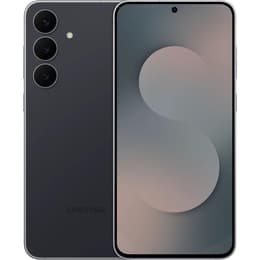
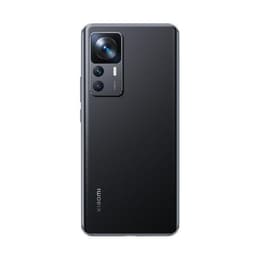
Galaxy S25 FE Vs Xiaomi 12T
- 1-year minimum warranty
- Free delivery on all orders
- Free 30-day returns
Differences at a glance
The Samsung Galaxy S25 FE (2025) and the Xiaomi 12T (2022) are capable smartphones designed to balance everyday usability with modern features. While they stem from different release years, both devices serve users looking for large displays and dependable core performance. The primary differentiators lie in their software lifespans, ecosystem integrations, and media handling profiles.
Available Models
Colour
Storage (GB)
Scores
Durability
Evaluating the lifecycle and durability of these devices reveals distinct differences rooted in their release timelines and manufacturer support policies.
- Release timeline and software support: The Galaxy S25 FE benefits from a newer launch window and an extended software update commitment, making it well-suited for long-term ownership. The Xiaomi 12T, released earlier, operates on an older software cycle with a shorter remaining window for major system updates.
- Build protection and repairability: The Galaxy S25 FE includes higher-tier dust and water resistance ratings alongside robust front and back glass protection. The Xiaomi 12T features standard splash resistance, with both models offering structured internal layouts that facilitate standard component repairs.
Year of Release
2025
2022
Compatible with latest Update
Yes
Yes
OS
Android
Android
Foldable
No
No
Performance
Both handsets handle daily workloads, web browsing, and multi-app switching smoothly, though their underlying processing hardware and power management differ.
- Multitasking and daily speed: Both devices come equipped with ample random access memory to keep background applications active without sudden reloads. Demanding mobile applications and graphic-heavy games load quickly and run with stable frame rates on both models.
- Battery behavior and storage: The Xiaomi 12T features a large capacity cell paired with high-wattage charging support for rapid power replenishment. The Galaxy S25 FE offers efficient power management that sustains a full day of mixed usage, alongside varied internal storage configurations to accommodate media files.
Screen quality
The viewing experience on both smartphones centers on large panels designed for media consumption, reading, and outdoor visibility.
- Display technology and clarity: Both models utilize vibrant panel technology with high resolutions that deliver sharp text and deep contrast. Content appears crisp, whether navigating user interfaces or streaming high-definition video.
- Refresh rate and brightness: A smooth 120Hz refresh rate ensures fluid scrolling and responsive touch interactions across both devices. Peak brightness levels allow for comfortable viewing under direct sunlight, though the newer Samsung panel maintains slightly higher outdoor legibility.
Audiovisual
Imaging capabilities on these devices cater to casual photography, travel recording, and everyday video calls.
- Main and supporting lenses: The Xiaomi 12T utilizes a high-resolution primary sensor designed to capture fine detail in bright environments. The Galaxy S25 FE employs a versatile triple-lens setup that includes a dedicated telephoto option for optical zoom flexibility.
- Video and audio output: Both smartphones record stable video clips with clear stereo sound separation. Media playback through the built-in dual speakers provides balanced audio output for podcasts and video watching without requiring external headphones.
Miscellaneous
Practical daily features shape how each device fits into distinct user routines and connectivity setups.
- Connectivity and ports: Both handsets support fast mobile data networks, modern wireless protocols, and reliable Bluetooth pairing, utilizing standard USB-C ports for charging and data transfer.
- Physical handling: The Galaxy S25 FE offers a slightly slimmer profile and lighter weight, whereas the Xiaomi 12T carries a marginally heavier footprint to accommodate its internal battery structure. Both feature secure under-display biometric sensors for quick unlocking.
Weight
190 g
220 g
Screen size (in)
6.7
6.67
Network
5G
5G
SIM card
Physical SIM + eSIM
Dual Physical SIM
Carrier compatibility
Unlocked
Unlocked
Connector
USB-C
USB-C
What the community thinks
User discussions highlight the Xiaomi 12T for its rapid charging speeds and fluid display, though some users note that its camera versatility is more limited compared to dedicated multi-lens alternatives. Conversely, the Galaxy S25 FE receives praise for its balanced camera array and long-term software support, while critics occasionally point out its standard charging speeds relative to competitors.
Users prioritizing extended software longevity and flexible optical zoom photography may prefer the Galaxy S25 FE. Meanwhile, users focusing on rapid power replenishment and media consumption on a bright screen often lean toward the Xiaomi 12T. For those seeking a quality-assured refurbished option, exploring sustainable choices on Back Market allows buyers to acquire either device with verified functional testing while reducing electronic waste.