

Galaxy S23 Ultra Vs Xiaomi Redmi Note 13

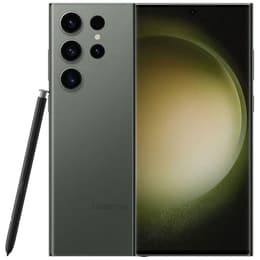
Galaxy S23 Ultra
Galaxy S23 Ultra
Starting at

Refurbished price:430.00

Versus €1,409.00 new

See options
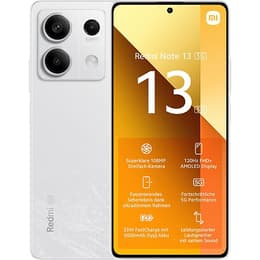
Xiaomi Redmi Note 13
Starting at

Refurbished price:137.00

Versus €340.00 new

See options

Ratings

The Samsung Galaxy S23 Ultra, released in early 2023, and the Xiaomi Redmi Note 13, launched in early 2024, represent distinct offerings in the smartphone market. While both operate on the Android platform, the Galaxy S23 Ultra is positioned as a high-end device with advanced features, whereas the Redmi Note 13 focuses on delivering a balanced experience for everyday use. The primary differentiators lie in their processing power, camera capabilities, and display technologies.

Scores

Durability

When considering the long-term usability of a smartphone, factors like release timeline, software support, and physical durability play a significant role. These two devices offer different profiles in these areas.

  • Release Timeline and Software Support: The Samsung Galaxy S23 Ultra, released in February 2023, benefits from Samsung's commitment to providing four years of Android operating system updates and five years of security patches. This extends its software longevity well into the future. The Xiaomi Redmi Note 13, launched in January 2024, is set to receive two to three major Android OS updates and four years of security patches, typically extending its support until 2028.
  • Physical Durability: The Galaxy S23 Ultra features Corning Gorilla Glass Victus 2 on both its front and back, offering enhanced scratch and drop resistance, alongside an IP68 rating for significant water and dust resistance. The Redmi Note 13, depending on the specific variant, often comes with Corning Gorilla Glass 3 for screen protection and an IP54 rating, indicating splash and dust resistance.
  • Repairability: The Galaxy S23 Ultra has shown improvements in repairability compared to its predecessors, with some assessments noting easier battery replacement due to design changes. Information on the Redmi Note 13's specific repairability score is less widely detailed, but its construction is generally considered standard for its category.

Year of Release

2023

2024

Compatible with latest Update

Yes

Yes

OS

Android

Android

Foldable

No

No

Performance

The performance of a smartphone is crucial for daily tasks, from navigating applications to engaging in demanding activities like gaming. The Galaxy S23 Ultra and Redmi Note 13 approach performance from different tiers.

  • Processing Power and Responsiveness: The Samsung Galaxy S23 Ultra is equipped with a high-performance processor designed for flagship devices, enabling it to handle demanding applications, intensive multitasking, and graphic-heavy games with smooth and consistent responsiveness. Users report a fluid experience even under heavy load. The Xiaomi Redmi Note 13, featuring a mid-range processor, provides capable performance for everyday use, social media, and moderate gaming, ensuring a generally smooth user experience for typical smartphone activities.
  • Multitasking and Storage: The Galaxy S23 Ultra offers configurations with substantial RAM, contributing to seamless multitasking and quick app switching. It also comes with fast internal storage options. The Redmi Note 13 provides various RAM and storage configurations, with some variants offering expandable storage, which can be beneficial for users who need more space for media and applications.
  • Battery Behavior: Both devices house a 5000 mAh battery. The Galaxy S23 Ultra is noted for its excellent battery endurance, often lasting a full day or more even with heavy usage, attributed to its efficient processor and software optimizations. The Redmi Note 13 also offers good battery life, with many users experiencing a full day of use and some reports suggesting up to 1.5 to 2 days on a single charge, supported by 33W fast charging.

Memory (GB)

8 GB

8 GB

Screen quality

The display is a primary interface for smartphone interaction, and both devices offer distinct visual experiences tailored to their respective categories.

  • Display Technology and Resolution: The Samsung Galaxy S23 Ultra features a 6.8-inch Dynamic AMOLED 2X display with a high resolution of 3088x1440 pixels (QHD+), resulting in exceptionally sharp and detailed visuals. The Xiaomi Redmi Note 13 comes with a 6.67-inch AMOLED display, offering a resolution of 2400x1080 pixels (FHD+), which provides clear and vibrant images for general viewing.
  • Brightness and Outdoor Visibility: The Galaxy S23 Ultra boasts a peak brightness of 1750 nits, with some reports suggesting up to 2200 nits, ensuring excellent visibility even in bright outdoor conditions. The Redmi Note 13 offers a local peak brightness of up to 1800 nits, with a typical peak brightness of 1000 nits, providing good readability in various lighting environments.
  • Refresh Rate and Smoothness: The Galaxy S23 Ultra features an adaptive refresh rate that can scale from 1Hz to 120Hz, optimizing power consumption while delivering very smooth scrolling and fluid animations. The Redmi Note 13 offers a consistent 120Hz refresh rate, contributing to a smooth and responsive user experience, particularly noticeable during scrolling and gaming.

Resolution

1440 x 3088

1080 x 2400

Screen type

Dynamic AMOLED 2X

AMOLED

Audiovisual

For many users, the camera system is a key decision-making factor, and these two smartphones offer different photographic capabilities.

  • Rear Camera System: The Samsung Galaxy S23 Ultra is equipped with a versatile quad-camera setup, including a 200-megapixel main sensor, a 12-megapixel ultrawide lens, and two 10-megapixel telephoto lenses offering 3x and 10x optical zoom. This configuration allows for detailed photos across various focal lengths and impressive zoom capabilities. The Xiaomi Redmi Note 13 features a triple-camera system, typically comprising a 108-megapixel main sensor, an 8-megapixel ultrawide lens, and a 2-megapixel macro lens.
  • Photography Performance: The Galaxy S23 Ultra excels in capturing highly detailed images, with strong performance in various lighting conditions, including low light, and its advanced zoom is a notable feature. The Redmi Note 13's 108-megapixel main camera performs well in daylight, producing balanced and clear images.
  • Video Recording and Front Camera: The Galaxy S23 Ultra supports high-resolution video recording, including 8K at 30 frames per second, and offers advanced stabilization. Its 12-megapixel front camera delivers detailed selfies. The Redmi Note 13 provides capable video recording for its class and typically includes a 13-megapixel or 16-megapixel front camera for selfies and video calls.

Main camera

200 megapixels

108 megapixels

Front camera

12 megapixels

16 megapixels

Miscellaneous

Beyond core specifications, several practical elements contribute to the overall user experience and differentiate these devices.

  • Connectivity and Ports: Both the Galaxy S23 Ultra and the Redmi Note 13 support 5G connectivity, along with modern Wi-Fi standards and Bluetooth for wireless connections. The Galaxy S23 Ultra uses a USB-C port, while the Redmi Note 13 also features a USB-C port for charging and data transfer.
  • Biometric Security and Sensors: The Galaxy S23 Ultra incorporates an ultrasonic in-screen fingerprint sensor and 2D face unlock for secure access. The Redmi Note 13 also includes an in-display fingerprint sensor for convenient unlocking. The Galaxy S23 Ultra also integrates the S Pen stylus, offering additional functionality for note-taking and navigation.
  • Design and Handling: The Galaxy S23 Ultra has a substantial build, weighing around 234 grams and featuring a large 6.8-inch display. Its design is often described as premium, though some users find its size and weight considerable for one-handed use. The Redmi Note 13 is lighter at approximately 188.5 grams and has a sleek, flat-frame design with a 6.67-inch display, making it generally easier to handle for extended periods.

Weight

233 g

175 g

Screen size (in)

6.8

6.67

Network

5G

5G

SIM card

Dual Physical SIM + eSIM

Dual Physical SIM

Carrier compatibility

Unlocked

Unlocked

Connector

USB-C

USB-C

User sentiment for the Samsung Galaxy S23 Ultra frequently highlights its exceptional battery life, often described as lasting well over a day even with intensive use, and its powerful performance that handles any task smoothly. The advanced camera system, particularly its zoom capabilities and low-light performance, receives consistent praise. Some users, however, note its large size and weight as a potential drawback for one-handed operation. The integrated S Pen is a unique feature appreciated by those who utilize it for productivity or creative tasks.

For the Xiaomi Redmi Note 13, common praise points revolve around its vibrant AMOLED display with a smooth 120Hz refresh rate and its reliable battery life, often extending beyond a single day of typical use. Users generally find its performance adequate for daily applications and moderate gaming. Criticisms are less prominent but typically relate to its mid-range processing power not matching flagship speeds, which is expected for its category.

Users prioritizing top-tier performance, advanced camera features (especially zoom and low-light photography), a high-resolution display, and the unique functionality of an integrated stylus may find the Samsung Galaxy S23 Ultra well-suited to their needs. This device is ideal for professionals, content creators, or power users who demand the utmost from their smartphone.

Conversely, individuals seeking a balanced smartphone experience with a smooth display, dependable battery life, and capable cameras for everyday photography will likely find the Xiaomi Redmi Note 13 to be a strong contender. It caters well to students, general users, or those who value a comfortable handling experience without needing the absolute highest specifications.

Both devices, whether new or as a quality-assured refurbished option, offer distinct advantages depending on individual priorities, allowing consumers to make an informed and sustainable choice.


See all articles

Our recent comparisons