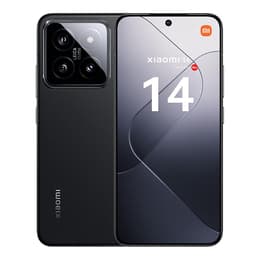


Galaxy S24 Vs Xiaomi 14

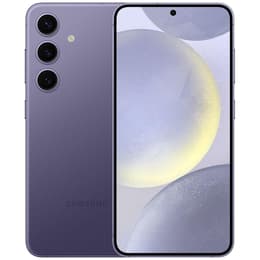
Galaxy S24
Galaxy S24
Starting at

Refurbished price:323.00

Versus €956.40 new

See options
Xiaomi 14
Xiaomi 14
Starting at

Refurbished price:384.00

Versus €1,099.00 new

See options

Ratings

The Samsung Galaxy S24 (2024) and the Xiaomi 14 (2023/2024) are both compact flagship smartphones offering a premium experience within a smaller form factor. While both devices run on the Android operating system, they differentiate themselves through their software interfaces, camera philosophies, and long-term support commitments. This comparison will explore their key features to help users determine which device best suits their needs.

Scores

Durability

The longevity of a smartphone is influenced by its release timeline, software support, and ease of repair.

  • Release and Software Support: The Samsung Galaxy S24, released in January 2024, benefits from an extensive software commitment, promising seven years of operating system upgrades and security updates. The Xiaomi 14, initially launched in China in October 2023 and globally in early 2024, typically receives four major Android updates and five years of security patches. This means the Galaxy S24 offers a significantly longer period of official software support.
  • Repairability: Both devices demonstrate a commendable approach to repairability. The Samsung Galaxy S24 has received high repairability scores, with some assessments giving it a 9 out of 10, noting features like easily removable batteries with pull tabs and well-organized internal components. The Xiaomi 14 also scores well, typically around 8 out of 10, with accessible internal components, though screen replacement can be challenging for both.
  • Practical Lifespan: Users aiming for the longest possible software longevity will find the Galaxy S24's extended update policy particularly appealing, ensuring access to new features and security for a prolonged period. The Xiaomi 14 still offers solid support, making it a viable option for several years of use.

Year of Release

2024

2023

Compatible with latest Update

Yes

Yes

OS

Android

Android

Foldable

No

No

Performance

Both the Galaxy S24 and Xiaomi 14 are equipped with powerful internal components designed for demanding tasks and smooth daily operation.

  • Processing Power: Both phones feature current-generation flagship processors, enabling them to handle intensive applications, complex multitasking, and graphic-heavy games with ease. Users can expect fluid navigation and quick app launches on either device.
  • Multitasking and Storage: The Galaxy S24 typically comes with 8GB of RAM, while the Xiaomi 14 offers configurations starting from 8GB and going up to 16GB of RAM, which can provide a slight edge in managing a very large number of background applications. Both offer ample storage options, ensuring space for apps, photos, and videos.
  • Battery Behavior: The Xiaomi 14 features a larger 4610mAh battery compared to the Galaxy S24's 4000mAh battery. In real-world usage, the Xiaomi 14 often provides slightly longer screen-on time and overall endurance for heavy users. The Xiaomi 14 also supports significantly faster wired charging at 90W and 50W wireless charging, allowing for quicker power replenishment than the Galaxy S24's 45W wired charging.

Memory (GB)

8 GB

16 GB

Screen quality

The display is a primary interaction point, and both devices offer high-quality viewing experiences.

  • Display Technology and Resolution: The Samsung Galaxy S24 features a 6.2-inch Dynamic AMOLED 2X display with a Full HD+ resolution (2340x1080 pixels). The Xiaomi 14 sports a slightly larger 6.36-inch LTPO AMOLED display with a higher resolution of 1200x2670 pixels (QHD). Both technologies deliver vibrant colors and deep blacks.
  • Brightness and Refresh Rate: Both phones offer high peak brightness levels, with the Xiaomi 14 capable of reaching up to 3000 nits and the Galaxy S24 up to 2600 nits, ensuring good visibility even in bright outdoor conditions. They both feature adaptive refresh rates up to 120Hz, providing smooth scrolling and responsive interactions.
  • Viewing Experience: While both displays are excellent, the Xiaomi 14's slightly larger size and higher resolution may offer a marginally sharper and more immersive viewing experience for content consumption. The Galaxy S24's display is noted for its vibrant color tuning, while the Xiaomi 14 aims for a more natural color reproduction.

Resolution

1080 x 2340

1200 x 2670

Screen type

Dynamic LTPO AMOLED 2X

LTPO OLED

Audiovisual

Both smartphones are equipped with versatile camera systems designed to capture high-quality photos and videos in various conditions.

  • Rear Camera System: The Samsung Galaxy S24 features a triple-camera setup with a 50MP main sensor, a 12MP ultrawide lens, and a 10MP telephoto lens with 3x optical zoom. The Xiaomi 14 also boasts a triple-camera system, with all three lenses (main, ultrawide, and telephoto) featuring 50MP sensors, and the telephoto offering 3.2x optical zoom. The Xiaomi 14's camera system benefits from Leica co-engineering, which influences its image processing and color science.
  • Photography Performance: Both devices excel in everyday photography, producing detailed and colorful images. The Galaxy S24 is praised for its versatile cameras and improved colors over previous Samsung models. The Xiaomi 14 is noted for its strong performance across all three lenses, with users often preferring its natural color science. In low-light conditions, both perform well, though some users report the Galaxy S24 can fall behind top-tier smartphones in extreme low light.
  • Video Recording and Audio: Both phones are capable of high-resolution video recording, including 8K at 24fps. The Galaxy S24 offers autofocus on its front-facing camera, which can be beneficial for vlogging. The Xiaomi 14's video footage is described as high quality, smooth, and detailed, with above-average audio quality due to an array of microphones.

Main camera

50 megapixels

50 megapixels

Front camera

12 megapixels

32 megapixels

Miscellaneous

Beyond core performance, several practical features contribute to the overall user experience of these devices.

  • Connectivity: Both the Galaxy S24 and Xiaomi 14 support modern connectivity standards, including 5G, Wi-Fi 6 (or newer), and Bluetooth 5.3 or 5.4, ensuring fast and reliable wireless connections.
  • Biometric Security: The Galaxy S24 utilizes an ultrasonic in-display fingerprint sensor, which users often find highly reliable. The Xiaomi 14 features an optical in-display fingerprint sensor, which is also fast but may be less accurate in certain conditions compared to ultrasonic sensors.
  • Design and Build: Both phones feature premium builds with IP68 ratings for dust and water resistance, indicating good durability against environmental elements. The Galaxy S24 has a compact design with a flat display and Gorilla Glass Victus 2 protection. The Xiaomi 14 also offers a compact form factor with an aluminum alloy body, glass back, and Gorilla Glass Victus 2 on its display. The Xiaomi 14 also includes an infrared blaster, a feature not commonly found on many flagships.
  • Dimensions and Handling: Both devices are designed for comfortable one-handed use due to their relatively compact sizes. The Galaxy S24 measures 147.00 x 70.60 x 7.60mm and weighs 168g, while the Xiaomi 14 is 152.8 x 71.5 x 8.2mm and weighs 193g, making the Galaxy S24 slightly smaller and lighter.

Weight

167 g

188 g

Screen size (in)

6.2

6.36

Network

5G

5G

SIM card

Dual Physical SIM + eSIM

Dual Physical SIM

Carrier compatibility

Unlocked

Unlocked

Both the Samsung Galaxy S24 and the Xiaomi 14 stand out as strong contenders in the compact flagship smartphone segment, each with distinct advantages. User feedback for the Galaxy S24 often highlights its excellent display, consistent performance, and the significant commitment to seven years of software updates as major positives. Some users have noted concerns regarding battery life, particularly with certain regional processor variants, and occasional heating during demanding tasks.

The Xiaomi 14 receives praise for its fast performance, bright and high-resolution display, and exceptionally rapid charging speeds. Its Leica-tuned camera system is also a frequent point of appreciation. However, some users have reported issues with HyperOS, such as background app management and occasional software inconsistencies.

Users prioritizing long-term software support and a highly refined user interface may find the Samsung Galaxy S24 more aligned with their needs. Its extended update policy provides peace of mind for those who keep their devices for many years. Conversely, users who value cutting-edge charging technology, a slightly larger and higher-resolution display, and a camera system with a distinct photographic character might lean towards the Xiaomi 14. Both devices offer robust performance and premium build quality, making them suitable for a wide range of daily tasks and media consumption.

For those considering a more sustainable choice, both the Galaxy S24 and Xiaomi 14 are available as quality-assured refurbished options, offering an eco-friendly alternative to purchasing new.

See all articles

Our recent comparisons