

Compare models
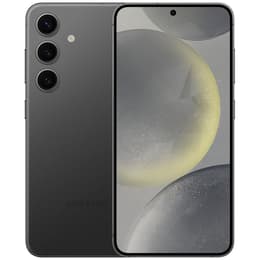
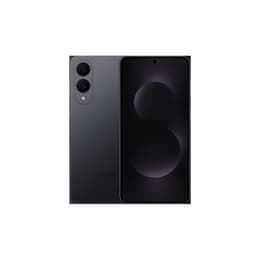
Galaxy S24 Vs Galaxy S25 Edge
- 1-year minimum warranty
- Free delivery on all orders
- Free 30-day returns
Differences at a glance
The Samsung Galaxy S24 (2024) and the Samsung Galaxy S25 Edge (2025) represent two different approaches to flagship smartphone design within Samsung's ecosystem. While the Galaxy S24 focuses on a compact, pocket-friendly form factor, the Galaxy S25 Edge prioritizes an ultra-slim profile and expanded screen real estate. Both devices run on the Android operating system paired with Samsung's custom interface, offering modern software features and long-term support.
Available Models
Colour
Storage
Scores
Durability
When examining longevity and durability, both smartphones feature robust build quality and extended software support timelines, though their release years create a natural offset in update longevity.
- Release timeline and OS support: The Galaxy S24 debuted in early 2024, whereas the Galaxy S25 Edge arrived in mid-2025. Both models benefit from Samsung's comprehensive multi-year software maintenance policy, though the newer S25 Edge extends active support further into the future.
- Build and repairability: Both devices incorporate high-strength frame materials and reinforced glass protection to handle daily wear. Repairability profiles remain comparable across both generations, with standardized internal layouts serviced through authorized repair channels.
- Expected lifespan: Practical operational lifespan remains high for both choices, with sufficient internal resources to maintain responsive day-to-day functionality over several years of continuous ownership.
Year of Release
2024
2025
Compatible with latest Update
Yes
Yes
OS
Android
Android
Foldable
No
No
Performance
Processing capabilities and daily responsiveness differ moderately between these models, driven by generational hardware advancements and memory capacity variations.
- System responsiveness and multitasking: The Galaxy S24 handles everyday applications, web browsing, and moderate multitasking smoothly with its standard memory allocation. The Galaxy S25 Edge incorporates a larger amount of RAM, allowing heavy applications and complex background processes to remain active without reloading.
- Gaming and intensive tasks: Demanding mobile games and resource-heavy software run reliably on both platforms, with the newer processor in the S25 Edge delivering higher frame rate stability under sustained loads.
- Battery behavior: The compact footprint of the Galaxy S24 houses a moderate battery capacity, suiting standard daily use. The S25 Edge balances a larger display with an ultra-thin chassis, resulting in distinct power draw profiles that require daily charging for typical usage patterns.
Screen quality
Display characteristics vary significantly in physical dimensions and panel technology, directly influencing media consumption and outdoor readability.
- Display technology and size: The Galaxy S24 features a compact 6.2-inch panel, making single-handed navigation straightforward. The Galaxy S25 Edge steps up to a larger 6.7-inch screen, offering more space for viewing documents, videos, and web pages.
- Resolution and clarity: Both models utilize advanced OLED panel technology that delivers deep black levels and vivid color reproduction. The S25 Edge provides a higher pixel resolution, yielding sharper text rendering and finer detail in high-definition media.
- Outdoor brightness and smoothness: High peak brightness levels on both devices ensure content remains legible under direct sunlight. Adaptive refresh rates reaching 120Hz provide fluid scrolling and responsive touch tracking across both interfaces.
Resolution
1080 x 2340
1440 x 3120
Audiovisual
Optics and multimedia configurations differ in sensor composition, affecting photography versatility and audio output during media playback.
- Camera system capabilities: The Galaxy S24 utilizes a versatile triple-lens rear arrangement including a dedicated telephoto lens for optical zoom. The Galaxy S25 Edge favors a dual-lens setup headlined by a very high-resolution primary sensor alongside an ultra-wide option, leaning on high-pixel cropping for zoom tasks.
- Low-light and video performance: Both smartphones process low-light scenes effectively using computational photography algorithms to reduce grain. Video recording yields stable footage with clear audio capture from built-in microphone arrays.
- Media consumption: Stereo speaker configurations on both devices deliver balanced sound output for hands-free calls, casual video viewing, and music playback.
Miscellaneous
Practical daily utility is shaped by physical dimensions, connectivity standards, and biometric security features.
- Dimensions and handling: The Galaxy S24 measures compactly and weighs slightly less, favoring users with smaller hands or pockets. The Galaxy S25 Edge achieves a notably slim profile while maintaining a broader footprint to accommodate its expansive screen.
- Connectivity and ports: Both devices support modern 5G cellular networks, current Wi-Fi standards, and Bluetooth accessories. Physical connections rely on standard USB-C ports for charging and data transfer.
- Security sensors: In-display fingerprint scanners and facial recognition technology provide secure, biometric unlocking methods on both models.
Weight
167 g
163 g
Screen size (in)
6.2
6.7
Network
5G
5G
SIM card
Dual Physical SIM + eSIM
Physical SIM + eSIM
Carrier compatibility
Unlocked
Unlocked
Connector
USB-C
USB-C
What the community thinks
User feedback from online communities highlights distinct preferences for each device based on physical handling and feature priorities. Owners of the Galaxy S24 frequently praise its compact form factor, comfortable one-handed usability, and reliable everyday performance. Common discussions note that its smaller battery requires careful power management during heavy travel days. Conversely, users of the Galaxy S25 Edge often emphasize appreciation for its exceptionally thin profile, expansive screen estate, and fluid multitasking capability. Some discussions point out that the slim chassis design leaves less room for extended battery endurance under intensive workloads.
When deciding between these options, user priorities serve as the primary guide. Users prioritizing a compact, pocket-friendly device with traditional multi-lens zoom versatility may prefer the Galaxy S24. Meanwhile, users prioritizing a larger viewing area, a remarkably slim physical build, and increased multitasking headroom will likely lean toward the Galaxy S25 Edge. For those exploring sustainable purchasing habits, a quality-assured refurbished option provides an eco-friendly alternative that matches performance requirements while reducing electronic waste.









