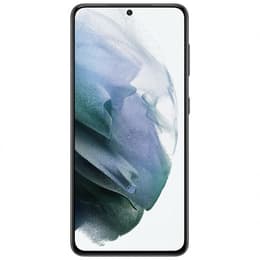
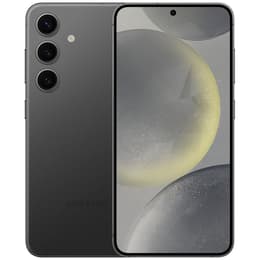


Galaxy S21 5G Vs Galaxy S24

Galaxy S21 5G
Galaxy S21 5G
Starting at

Refurbished price:165.00

Versus €1,026.00 new

See options
Galaxy S24
Galaxy S24
Starting at

Refurbished price:323.00

Versus €956.40 new

See options

Ratings

The Samsung Galaxy S21 5G, released in January 2021, and the Samsung Galaxy S24, launched in January 2024, are both Android-based smartphones from Samsung's flagship Galaxy S series. While they share the same operating system, the Galaxy S24 introduces a more advanced processor, a significantly upgraded camera system, and a commitment to extended software support, setting it apart from its predecessor.

Scores

Durability

The practical lifespan of these devices is influenced by their release timeline, software support, and repairability.

  • Software Longevity: The Galaxy S21 5G, released in January 2021, received four major Android OS updates, concluding with Android 15/One UI 7, and five years of security updates, which ended in February 2026. In contrast, the Galaxy S24, launched in January 2024, comes with a promise of seven years of OS and security updates, extending its support until 2031.
  • Physical Durability: The Galaxy S21 5G features Corning Gorilla Glass Victus for screen protection, while the Galaxy S24 upgrades to Corning Gorilla Glass Victus 2 or Armor, offering enhanced resistance against drops and scratches. Both devices carry an IP68 rating for dust and water resistance.
  • Repairability: The Galaxy S21 5G generally received repairability scores around 7.5 out of 10 from some assessments, with some parts being modular but the battery being difficult to remove due to strong adhesive. Other assessments gave it a lower score of 4/10. The Galaxy S24 shows improved repairability, with scores of 9 out of 10 from PBKreviews and 8 out of 10 from other sources, noting easier battery replacement due to pull tabs and better internal organization.

Year of Release

2021

2024

Compatible with latest Update

Yes

Yes

OS

Android

Android

Foldable

No

No

Performance

Performance differences between the two models are primarily driven by their respective processors and memory configurations.

  • Processing Power: The Galaxy S21 5G is powered by a processor from 2021, which provides smooth performance for everyday tasks and general app usage. However, some users have reported that it can be power-hungry and may experience heating during extended heavy use or demanding applications. The Galaxy S24 features a newer generation processor, delivering faster processing speeds and improved power efficiency. This translates to a more responsive experience for demanding apps, multitasking, and graphically intensive games.
  • Multitasking and Storage: Both devices typically come with 8GB of RAM, allowing for efficient multitasking. For storage, both offer 128GB and 256GB options, with the Galaxy S24 also providing a 512GB variant. The Galaxy S21 5G does not include a microSD card slot for expandable storage.
  • Battery Behavior: The Galaxy S21 5G is equipped with a 4000mAh battery. Some users have noted that its battery life can drain quickly, especially with 5G usage or under heavy load. The Galaxy S24 also has a 4000mAh battery, but its newer, more efficient processor and adaptive display technology contribute to optimized battery management, often resulting in all-day usage for many users. However, some users of the Exynos version of the S24 have reported battery drain issues.

Memory (GB)

8 GB

8 GB

Screen quality

Both smartphones offer vibrant displays, but the newer model brings advancements in brightness and adaptive technology.

  • Display Technology and Clarity: Both the Galaxy S21 5G and Galaxy S24 feature 6.2-inch AMOLED displays with Full HD+ resolutions (1080x2400 for S21, 1080x2340 for S24), providing clear visuals for daily use. Both also support a 120Hz refresh rate for smooth scrolling and responsiveness.
  • Brightness and Outdoor Visibility: A key differentiator is brightness. The Galaxy S21 5G offers a peak brightness of 1300 nits, which is adequate for most outdoor conditions. The Galaxy S24 significantly boosts this to an impressive 2600 nits peak brightness, ensuring excellent visibility even in very bright sunlight.
  • Advanced Display Features: The Galaxy S24 incorporates Dynamic LTPO AMOLED 2X technology, allowing for an adaptive refresh rate that can scale from 1Hz to 120Hz, optimizing power consumption. It also features slightly slimmer bezels, offering a larger screen-to-body ratio. Some initial user reports for the S24 mentioned a less vivid screen (later addressed by updates) and occasional grainy appearance at low brightness.

Resolution

1080 x 2400

1080 x 2340

Screen type

Dynamic AMOLED 2X

Dynamic LTPO AMOLED 2X

Audiovisual

The camera systems on both devices are capable, but the Galaxy S24 offers notable enhancements in image processing and sensor technology.

  • Rear Camera System: The Galaxy S21 5G features a triple rear camera setup consisting of a 12MP main sensor, a 64MP telephoto lens with 3x hybrid optical zoom, and a 12MP ultrawide lens. The Galaxy S24 also has a triple rear camera system, but it upgrades to a 50MP main sensor, a 10MP telephoto lens with 3x optical zoom, and a 12MP ultrawide sensor.
  • Photography Performance: The Galaxy S24 generally provides sharper details, more accurate color rendition, and improved low-light performance compared to the S21 5G. Its newer image processing and sensor capabilities result in cleaner images with less noise, particularly in challenging lighting conditions. The S21 5G's camera was considered solid at its release, but some users reported issues like autofocus failures and blurry images over time.
  • Video and Front Camera: Both phones are capable of recording video up to 8K resolution. The Galaxy S24's front camera is a 12MP sensor, an upgrade from the 10MP front camera on the S21 5G, and can record 4K video at 60 frames per second. The S24 also shows improvements in slow-motion video capture.

Main camera

12 megapixels

50 megapixels

Front camera

10 megapixels

12 megapixels

Miscellaneous

Beyond core performance, several practical features differentiate these two Samsung smartphones.

  • Connectivity and Ports: Both the Galaxy S21 5G and Galaxy S24 support 5G connectivity, Wi-Fi, Bluetooth, and NFC. They both utilize a USB-C port for charging and data transfer, and neither includes a traditional 3.5mm headphone jack.
  • Biometric Security: Both devices incorporate an in-display fingerprint sensor for secure unlocking and authentication.
  • Design and Handling: The Galaxy S21 5G measures 151.7 x 71.2 x 7.9 mm and weighs 169 grams. The Galaxy S24 is slightly more compact and lighter at 147.0 x 70.6 x 7.6 mm and 168 grams. The S21 5G features a plastic back with a Gorilla Glass Victus front, while the S24 uses glass on both the front and back, protected by Gorilla Glass Victus 2 or Armor.

Weight

171 g

167 g

Screen size (in)

6.2

6.2

Network

5G

5G

SIM card

Physical SIM + eSIM

Dual Physical SIM + eSIM

Carrier compatibility

Unlocked

Unlocked

Connector

USB-C

USB-C

The Samsung Galaxy S21 5G and Galaxy S24 represent different generations of Samsung's flagship line, each with distinct advantages and considerations for users.

The Galaxy S21 5G, while an older model, is often praised for its solid performance for everyday tasks, a vibrant display that was competitive for its time, and a versatile camera system capable of capturing good photos and videos. However, common criticisms from users have included concerns about battery drain, particularly with 5G usage, and some reports of heating issues under heavy load. A significant factor for current users is that its software support cycle has concluded, meaning it no longer receives regular OS or security updates.

The Galaxy S24, as the newer device, brings several key improvements. Users frequently highlight its significantly brighter and more advanced display, enhanced camera capabilities with better low-light performance and sharper details, and a more powerful and efficient processor. A major advantage is Samsung's commitment to seven years of software and security updates, offering extended longevity. Some initial user feedback for the S24 included reports of less vivid screen colors (later addressed by updates) and occasional battery drain on specific processor variants, as well as some instances of grainy display at low brightness.

Users prioritizing long-term software support, the latest camera advancements, and a display that excels in bright conditions will find the Galaxy S24 well-suited to their needs. It is also a strong choice for those who engage in more demanding applications or seek the most current features. Conversely, users seeking a capable device for general daily use, who are comfortable with an older software support cycle, may still find the Galaxy S21 5G to be a functional option. Opting for a refurbished model of either the Galaxy S21 5G or the Galaxy S24 offers an eco-friendly alternative, providing access to these devices with quality assurance.


See all articles

Our recent comparisons