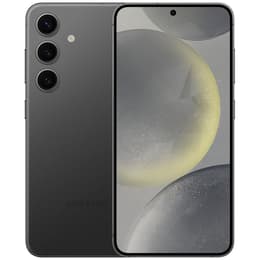


Galaxy S23 Vs Galaxy S24

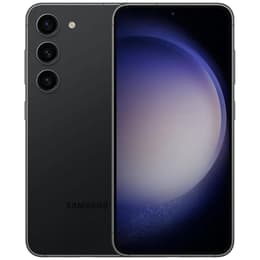
Galaxy S23
Galaxy S23
Starting at

Refurbished price:249.00

Versus €959.00 new

See options
Galaxy S24
Galaxy S24
Starting at

Refurbished price:323.00

Versus €956.40 new

See options

Ratings

The Samsung Galaxy S23, released in February 2023, and the Samsung Galaxy S24, launched in January 2024, represent consecutive generations of Samsung's compact flagship smartphones. While both devices share a similar design philosophy and operate on the Android platform, the S24 introduces notable advancements in software longevity, display technology, and processing capabilities, alongside new AI-powered features.

Scores

Durability

When considering the long-term usability of these devices, their release timelines and software support policies are key differentiators.

  • Software Longevity: The Galaxy S23 is expected to receive four major Android operating system updates and five years of security updates, extending its support until approximately 2028. In contrast, the Galaxy S24 offers a significantly extended commitment with seven generations of OS upgrades and seven years of security updates, potentially supporting the device through Android 21 and beyond.
  • Repairability: Both the Galaxy S23 series and the Galaxy S24 demonstrate a focus on repairability. The Galaxy S24 has received a high repairability score, with features like easily removable batteries thanks to pull tabs and accessible internal components. The Galaxy S23 series also features design elements that simplify repairs, including battery pull tabs.
  • Practical Lifespan: Users prioritizing the longest possible software support and access to the latest Android features will find the Galaxy S24's extended update policy more appealing. For those who typically upgrade their devices within a few years, the S23 still offers substantial software support.

Year of Release

2023

2024

Compatible with latest Update

Yes

Yes

OS

Android

Android

Foldable

No

No

Performance

The performance of both the Galaxy S23 and S24 is robust, designed to handle demanding applications and multitasking, though there are generational improvements.

  • Processing Power: The Galaxy S23 is powered by a processor that delivers consistent and efficient performance for everyday tasks, gaming, and heavy applications. The Galaxy S24 features a newer generation processor, offering enhanced CPU and GPU speeds, which translates to smoother operation and improved thermal efficiency, particularly noticeable in graphically intensive games or during prolonged use.
  • Multitasking and Responsiveness: Both devices come with 8GB of RAM in their base configurations, ensuring fluid multitasking. The S24's updated processor contributes to a slightly more responsive overall system, with faster app loading times and seamless transitions between applications.
  • Storage Options: Both models offer various storage configurations, starting from 128GB. It is worth noting that 128GB variants of both the S23 and S24 typically utilize an older storage format (UFS 3.1), while higher capacities (256GB and 512GB) benefit from a faster, more efficient storage technology (UFS 4.0).
  • Battery Behavior: The Galaxy S23 features a 3900mAh battery, while the S24 has a slightly larger 4000mAh battery. Despite the S24's larger capacity and more efficient display, real-world usage reports suggest that both phones offer comparable battery life, often lasting a full day for average users.

Memory (GB)

8 GB

8 GB

Screen quality

Both the Galaxy S23 and S24 offer vibrant and clear display experiences, with the S24 introducing some key enhancements.

  • Display Technology and Clarity: Both devices feature Dynamic AMOLED 2X displays with Full HD+ resolution, providing sharp images and rich colors. The S24's display is marginally larger at 6.2 inches compared to the S23's 6.1 inches, offering a slightly more expansive viewing area without significantly altering the phone's overall dimensions.
  • Brightness and Outdoor Visibility: The Galaxy S24 boasts a higher peak brightness of 2600 nits, a notable increase from the S23's 1750 nits. This enhancement makes the S24's screen more easily viewable in bright outdoor conditions.
  • Refresh Rate and Smoothness: Both phones feature a 120Hz refresh rate for smooth scrolling and responsive interactions. The S24 improves upon this with an adaptive refresh rate that can scale down to 1Hz for static content, contributing to better power efficiency compared to the S23's 48Hz to 120Hz range.

Resolution

1080 x 2340

1080 x 2340

Screen type

Dynamic AMOLED 2X

Dynamic LTPO AMOLED 2X

Audiovisual

The camera systems on the Galaxy S23 and S24 are quite similar in hardware, with software processing being a primary differentiator.

  • Camera Hardware: Both models feature a versatile triple-camera setup on the rear, consisting of a 50-megapixel main sensor, a 12-megapixel ultrawide lens, and a 10-megapixel telephoto lens with 3x optical zoom. The front camera on both is a 12-megapixel sensor.
  • Photography Performance: The S24 offers some software-driven enhancements that can result in slightly brighter pictures and potentially improved color production. However, some users have noted that the S23 can sometimes offer better dynamic range in certain scenarios. Both perform well in everyday photography.
  • Video Recording and Audio: Both devices are capable of high-quality video recording. User experiences suggest that video stabilization on the S24, particularly models with the Exynos processor, might be less effective compared to the S23. Microphone quality for calls and recording, and speaker output for media consumption, are generally consistent across both models, providing a clear audio experience.

Main camera

50 megapixels

50 megapixels

Front camera

12 megapixels

12 megapixels

Miscellaneous

Beyond core features, several practical elements contribute to the overall user experience of these smartphones.

  • Connectivity: Both the Galaxy S23 and S24 support 5G connectivity, Wi-Fi 802.11 ax, and GPS. The S24 includes Bluetooth v5.3, offering minor improvements in connectivity over the S23's Bluetooth v5.3.
  • Ports and Sensors: Both devices utilize a USB Type-C port for charging and data transfer. They include an in-display fingerprint sensor for secure unlocking, along with other standard sensors like an accelerometer, ambient light sensor, barometer, compass, and gyroscope.
  • Design and Materials: The Galaxy S24 features flatter side edges compared to the slightly curved sides of the S23, which can alter the in-hand feel. Both phones are constructed with durable materials, including an aluminum frame and Gorilla Glass for display protection, and carry an IP68 rating for dust and water resistance. The S24 also introduces a tougher Armor Aluminum frame.
  • Dimensions and Handling: Despite the S24's slightly larger screen, its physical dimensions are very similar to the S23, maintaining a compact form factor that is comfortable for one-handed use. The S24 is marginally lighter at 168 grams compared to the S23's 168 grams.

Weight

167 g

167 g

Screen size (in)

6.1

6.2

Network

5G

5G

SIM card

Physical SIM + eSIM

Dual Physical SIM + eSIM

Carrier compatibility

Unlocked

Unlocked

The Samsung Galaxy S23 and Galaxy S24 are both capable Android smartphones, each offering a compelling set of features. User sentiment often highlights the S23's consistent performance and camera quality, particularly in regions where it exclusively featured a Snapdragon processor. Some users appreciate the S23's dynamic range in photos. Criticisms for the S23 often revolve around its battery life for heavy users, though it generally lasts a full day for many.

For the Galaxy S24, common praise points include its brighter display, the extended software update policy, and the introduction of AI features. However, some users have expressed concerns regarding the performance and video stabilization of Exynos-powered S24 models compared to the Snapdragon variant found in the S23. The flatter design of the S24 is also a point of discussion, with some preferring the S23's more rounded feel.

Users prioritizing the longest possible software support and the latest display technology, especially for outdoor visibility, may find the Galaxy S24 to be a more suitable choice. Its enhanced processing power also appeals to those who engage in demanding tasks or gaming. Conversely, users who value a proven, globally consistent processor for performance and battery efficiency, and who may not require the absolute latest software updates for an extended period, might lean towards the Galaxy S23. Both devices offer a quality-assured refurbished option, providing an eco-friendly alternative for consumers.


See all articles

Our recent comparisons