

Xiaomi 13T Pro Vs Xiaomi Redmi Note 13

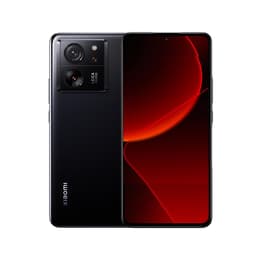
Xiaomi 13T Pro
Xiaomi 13T Pro
Starting at

Refurbished price:245.00

Versus €900.00 new

See options
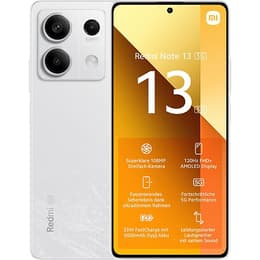
Xiaomi Redmi Note 13
Starting at

Refurbished price:137.00

Versus €340.00 new

See options

Ratings

The Xiaomi 13T Pro, released in September 2023, and the Xiaomi Redmi Note 13, launched globally in January 2024, are both Android smartphones from Xiaomi, yet they cater to different user priorities. The 13T Pro is positioned as a higher-tier device, offering advanced performance and camera capabilities, while the Redmi Note 13 provides a balanced experience for everyday use. Both devices initially run on Android 13 with Xiaomi's MIUI 14 interface, with updates to HyperOS.

Scores

Durability

The expected lifespan and software support differ between these two devices, reflecting their respective market segments.

  • Software Support: The Xiaomi 13T Pro is set to receive four generations of Android OS upgrades and five years of security patches, extending its software longevity significantly. The Redmi Note 13, on the other hand, is committed to receiving two major OS updates and four years of security patches, with some sources indicating three years of Android updates. This means the 13T Pro will likely remain current with the latest Android features for a longer period.
  • Physical Durability: The Xiaomi 13T Pro features an IP68 rating for dust and water resistance, indicating it can withstand immersion in water up to a certain depth and is fully dust-tight. It also comes with Corning Gorilla Glass 5 for screen protection. The Redmi Note 13 offers an IP54 rating, providing protection against splashes and dust ingress, and uses Corning Gorilla Glass 3 for its display.
  • Repairability: The Redmi Note 13 has a repairability index score of 8.0 out of 10, suggesting a relatively straightforward repair process and good availability of parts. Specific repairability scores for the 13T Pro are not as widely published, but generally, higher-end devices can sometimes present more complex repair challenges.

Year of Release

2023

2024

OS

Android

Android

Foldable

No

No

Performance

Performance is a key differentiator, with the Xiaomi 13T Pro offering a more robust experience for demanding tasks compared to the Redmi Note 13's capable everyday performance.

  • Processing Power: The Xiaomi 13T Pro is equipped with a powerful processor designed for intensive applications, delivering smooth performance for gaming, video editing, and heavy multitasking. Users can expect rapid app loading and seamless transitions between tasks. The Redmi Note 13 features a processor that provides stable and efficient performance for daily activities such as browsing, social media, and casual gaming.
  • Memory and Storage: The 13T Pro offers configurations with up to 16GB of RAM and up to 1TB of UFS 4.0 storage, contributing to its high responsiveness and faster data access speeds. The Redmi Note 13 comes with up to 8GB of RAM and up to 256GB of UFS 2.2 storage, with expandable storage options up to 1TB, which is suitable for most users' needs.
  • Battery and Charging: Both devices house a 5000 mAh battery. The Xiaomi 13T Pro supports 120W fast charging, capable of reaching a full charge in approximately 19 minutes. User reports suggest it can last a full day of typical use. The Redmi Note 13 supports 33W fast charging, which can charge the battery to 50% in about 29 minutes and fully in around 70 minutes. It generally offers good battery life for extended use throughout the day.

Memory (GB)

16 GB

8 GB

Screen quality

Both smartphones feature vibrant AMOLED displays, but they differ in resolution, refresh rate, and peak brightness, impacting the visual experience.

  • Display Technology and Size: Both the Xiaomi 13T Pro and the Redmi Note 13 come with a 6.67-inch AMOLED display, known for producing deep blacks and vivid colors. This technology provides an immersive viewing experience for media consumption.
  • Resolution and Clarity: The Xiaomi 13T Pro offers a resolution of 1220x2712 pixels, resulting in a higher pixel density for sharper images and text. The Redmi Note 13 has a resolution of 1080x2400 pixels, which still provides clear and detailed visuals for everyday viewing.
  • Brightness and Smoothness: The 13T Pro boasts a peak brightness of 2600 nits and a 144Hz refresh rate, offering exceptional visibility in bright outdoor conditions and incredibly smooth scrolling and animations. The Redmi Note 13 features a peak brightness of 1800 nits (some sources indicate 1900 nits) and a 120Hz refresh rate, ensuring good outdoor readability and a fluid user interface.

Resolution

1220 x 2712

1080 x 2400

Audiovisual

The camera systems on these devices offer distinct capabilities, with the Xiaomi 13T Pro emphasizing advanced photography features.

  • Rear Camera System: The Xiaomi 13T Pro features a Leica-tuned triple camera setup, including a 50MP main sensor with optical image stabilization (OIS), a 50MP telephoto lens with 2x optical zoom, and a 12MP ultrawide lens. This configuration is designed for versatility and detailed image capture. The Redmi Note 13 is equipped with a 108MP main camera, an 8MP ultrawide camera, and a 2MP macro camera, providing a capable system for general photography.
  • Photography Performance: The 13T Pro's main camera is noted for excellent detail, balanced processing, and good low-light performance, with the telephoto lens also performing well in good lighting. The Redmi Note 13's 108MP main camera is praised for capturing stunning photos with high resolution and detail.
  • Video Recording and Front Camera: The Xiaomi 13T Pro can record video at up to 8K resolution, offering advanced options for videographers, and has a 20MP front camera. The Redmi Note 13 records video at 1080p at 30 frames per second and includes a 16MP front camera. User feedback suggests the 13T Pro's selfie camera can sometimes be less impressive than its rear cameras. Both devices offer stereo speakers for media consumption.

Miscellaneous

Beyond core specifications, several practical elements contribute to the overall user experience and handling of these smartphones.

  • Connectivity and Ports: The Xiaomi 13T Pro supports 5G connectivity, Wi-Fi 7, and Bluetooth 5.4, offering advanced and faster wireless connections. The Redmi Note 13 supports 4G connectivity, Wi-Fi 802.11a/b/g/n/ac, and Bluetooth 5.1. Both devices utilize a USB-C port for charging and data transfer.
  • Security and Build: Both phones feature an in-screen fingerprint sensor and AI Face Unlock for secure and convenient access. The 13T Pro has an IP68 rating for dust and water resistance, and is available with either a glass or eco-leather back. The Redmi Note 13 has an IP54 splash and dust resistance rating and features a sleek, flat-frame design.
  • Dimensions and Handling: The Xiaomi 13T Pro measures approximately 162.2 x 75.7 x 8.5 mm and weighs around 200-206g. The Redmi Note 13 is slightly more compact and lighter at 162.24 x 75.55 x 7.97 mm and 188.5g. These differences can influence how each device feels in hand and its portability.

Weight

206 g

175 g

Screen size (in)

6.67

6.67

Network

5G

5G

SIM card

Physical SIM + eSIM

Dual Physical SIM

Carrier compatibility

Unlocked

Unlocked

Connector

USB-C

USB-C

User feedback for the Xiaomi 13T Pro often highlights its powerful performance, excellent main camera capabilities, and exceptionally fast charging as key strengths. Some users have noted that while the overall camera system is strong, the selfie camera might not match the quality of the rear setup, and battery life, while good, may not always outperform some competitors in its class. The Redmi Note 13 is generally praised for offering a balanced experience, with its vibrant display, capable 108MP main camera, and solid battery life for typical daily usage.

Users prioritizing high-end performance for demanding applications, advanced photography features, and rapid charging will find the Xiaomi 13T Pro well-suited to their needs. Its extended software support also appeals to those seeking longer device longevity. Conversely, users looking for a reliable daily driver with a good display, a capable camera for general use, and consistent battery life for everyday tasks may lean towards the Redmi Note 13. Choosing a quality-assured refurbished option for either device can offer a sustainable choice, extending the product's lifecycle and providing access to these features responsibly.


See all articles

Our recent comparisons