
Galaxy S22 5G Vs Galaxy S24

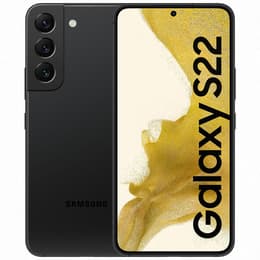
Galaxy S22 5G
Galaxy S22 5G
Starting at

Refurbished price:174.00

Versus €851.00 new

See options
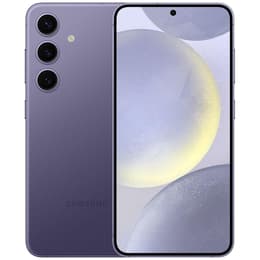
Galaxy S24
Galaxy S24
Starting at

Refurbished price:329.00

Versus €956.40 new

See options

Ratings

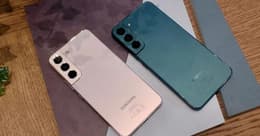
The Samsung Galaxy S22 5G, released in February 2022, and the Samsung Galaxy S24, launched in January 2024, represent two generations of Samsung's flagship smartphone line. While both devices offer a premium Android experience, the S24 introduces significant advancements in software support, display technology, and internal components. Both run on Samsung's One UI atop the Android operating system, providing a consistent user interface, but with varying levels of long-term support and feature sets.

Scores

Durability

When considering the practical lifespan of these devices, several factors come into play, including their release timelines, software support, and repairability.

  • Release Timeline and Age: The Galaxy S22 5G was released in February 2022, making it an older model compared to the Galaxy S24, which debuted in January 2024. This two-year difference directly impacts their remaining support cycles.
  • OS Support Duration: The Galaxy S22 5G was initially promised four years of Android OS updates and five years of security updates. In contrast, the Galaxy S24 benefits from Samsung's extended commitment, offering seven years of both OS and security updates, meaning it will receive software support until at least 2031.
  • Repairability: The Galaxy S22 5G received a lower repairability score from some experts, partly due to the extensive use of adhesive, particularly for the battery, making repairs more challenging. The Galaxy S24, however, shows improvements in this area, with a higher repairability score, featuring more accessible internal components and easier battery replacement thanks to pull tabs.

Year of Release

2022

2024

Compatible with latest Update

Yes

Yes

OS

Android

Android

Foldable

No

No

Performance

The performance of a smartphone is crucial for daily tasks, from launching applications to managing multiple processes simultaneously.

  • Storage Options: Both devices offer standard storage configurations, with the Galaxy S22 5G available in 128GB and 256GB variants. The Galaxy S24 expands on this, offering 128GB, 256GB, and 512GB options, providing more flexibility for users with extensive data needs.
  • Battery Behavior: The Galaxy S22 5G is equipped with a 3700 mAh battery, which for heavy users might require more frequent charging throughout the day. The Galaxy S24 features a larger 4000 mAh battery, coupled with more efficient internal components and adaptive refresh rate technology, which generally translates to improved endurance for typical use. However, some users have reported concerns regarding the S24's battery performance, particularly with certain regional processor variants.
  • System Responsiveness: The Galaxy S24, being a newer generation device, incorporates a more advanced processor. This results in noticeably faster app loading times, smoother multitasking, and enhanced performance in demanding applications and mobile gaming compared to the Galaxy S22 5G. The S24's newer architecture also contributes to better thermal management during intensive use.

Memory (GB)

8 GB

8 GB

Screen quality

The display is a primary interface for any smartphone, and both the Galaxy S22 5G and Galaxy S24 offer high-quality viewing experiences with some key distinctions.

  • Display Technology and Clarity: Both models feature a Dynamic AMOLED 2X display, known for deep blacks and vibrant colors. The Galaxy S22 5G has a 6.1-inch screen with a 2340 x 1080 (FHD+) resolution. The Galaxy S24 slightly increases the screen size to 6.2 inches while maintaining the FHD+ resolution, resulting in a sharp and clear visual output.
  • Brightness Levels: The Galaxy S22 5G offers a peak brightness of 1300 nits, providing good visibility in various lighting conditions. The Galaxy S24 significantly boosts this to 2600 nits, enhancing outdoor visibility and overall display vibrancy, especially under direct sunlight.
  • Refresh Rate and Smoothness: Both devices feature an adaptive 120Hz refresh rate, ensuring smooth scrolling and fluid animations. However, the Galaxy S24 utilizes LTPO technology, allowing its refresh rate to dynamically scale down to 1Hz when static, which contributes to better power efficiency compared to the S22 5G's minimum of 48Hz.

Resolution

1080 x 2340

1080 x 2340

Screen type

Dynamic AMOLED 2X

Dynamic LTPO AMOLED 2X

Audiovisual

Photography and videography capabilities are often a deciding factor for many users, and both Galaxy models offer versatile camera systems.

  • Camera System Capabilities: Both the Galaxy S22 5G and Galaxy S24 feature a triple-camera setup on the rear, consisting of a 50MP main sensor with optical image stabilization (OIS), a 12MP ultrawide lens, and a 10MP telephoto lens with 3x optical zoom. The front camera on the S22 5G is 10MP, while the S24 upgrades this to a 12MP sensor.
  • Photography Performance: While the hardware specifications for the main and telephoto lenses are similar, the Galaxy S24 benefits from newer image processing algorithms and software enhancements, which can lead to improved detail, color accuracy, and low-light performance. User reports for the S24 indicate generally excellent image quality, though some early units experienced choppy transitions between zoom levels.
  • Video Recording Quality: Both devices are capable of high-resolution video recording. The S24's enhanced processing power and improved stabilization contribute to a more refined video experience, particularly in challenging lighting conditions.

Main camera

50 megapixels

50 megapixels

Front camera

10 megapixels

12 megapixels

Miscellaneous

Beyond core features, several practical elements differentiate these two Samsung smartphones.

  • Connectivity Options: Both the Galaxy S22 5G and S24 support 5G connectivity. The S22 5G includes Wi-Fi 6 and Bluetooth 5.2. The Galaxy S24 upgrades to Wi-Fi 6E and Bluetooth 5.3, offering potentially faster and more stable wireless connections.
  • Port Types and Sensors: Both devices utilize a USB Type-C port for charging and data transfer. For biometric security, both feature an in-display ultrasonic fingerprint sensor.
  • Dimensions and Build Materials: The Galaxy S22 5G measures 146 x 70.6 x 7.6 mm and weighs 167g. The Galaxy S24 has very similar dimensions at 147 x 70.6 x 7.6 mm and weighs 168g, maintaining a compact form factor. Both phones feature a premium build with an aluminum frame and Gorilla Glass on the front and back for durability, with the S24 using the newer Gorilla Glass Victus 2. Both also carry an IP68 rating for dust and water resistance.

Weight

195 g

167 g

Screen size (in)

6.1

6.2

Network

5G

5G

SIM card

Physical SIM + eSIM

Dual Physical SIM + eSIM

Carrier compatibility

Unlocked

Unlocked

Connector

USB-C + Jack 3.5mm

USB-C

User feedback for the Galaxy S22 5G often praises its compact design and capable camera system for its time. Some criticisms included its battery life for heavy users and its repairability. For the Galaxy S24, common praise points include its significantly extended software support, brighter display, and overall performance improvements. However, some early users reported concerns regarding display color calibration, occasional camera choppiness, and GPS reliability, though software updates often address such issues.

Users prioritizing long-term software support and cutting-edge performance will find the Galaxy S24 well-suited to their needs, especially those who keep their devices for many years. Its brighter screen and improved repairability also offer practical advantages. Conversely, users seeking a still-capable device for everyday tasks, who may not require the absolute latest features or the longest software update window, might consider the Galaxy S22 5G. Both devices offer a robust Android experience, and choosing a quality-assured refurbished option for either model can be an eco-friendly alternative for consumers.


See all articles

Our recent comparisons