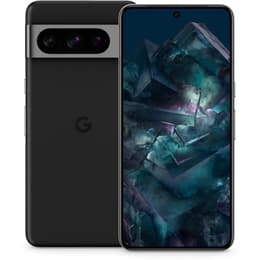
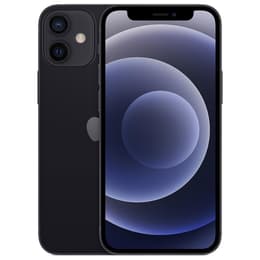


Google Pixel 8 Pro Vs iPhone 12 mini

Google Pixel 8 Pro
Google Pixel 8 Pro
Starting at

Refurbished price:293.00

Versus €1,099.00 new

See options
iPhone 12 mini
iPhone 12 mini
Starting at

Refurbished price:146.50

Versus €689.00 new

See options

Ratings

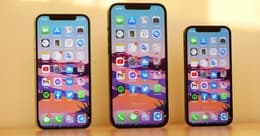
The Google Pixel 8 Pro (released October 2023) and the iPhone 12 Mini (released November 2020) represent distinct philosophies in smartphone design. The Pixel 8 Pro offers a large display and a focus on advanced computational photography and AI features, running on the Android operating system. In contrast, the iPhone 12 Mini provides a compact form factor with Apple's iOS, prioritizing one-handed use and a streamlined experience.

Scores

Durability

The practical lifespan of a smartphone is influenced by its release timeline, software support, and physical durability. These two devices, released three years apart, offer different expectations in these areas.

  • Software Longevity: The Google Pixel 8 Pro benefits from Google's commitment to seven years of operating system and security updates, extending its software support significantly further into the future compared to the iPhone 12 Mini. The iPhone 12 Mini, released in 2020, receives iOS updates for approximately 5-6 years from its launch.
  • Physical Durability: Both devices feature robust build materials and water resistance. The iPhone 12 Mini introduced Ceramic Shield for improved drop performance. The Pixel 8 Pro also incorporates durable glass and an IP68 rating for dust and water resistance.
  • Expected Practical Lifespan: Users prioritizing the longest possible software support and access to the latest features will find the Pixel 8 Pro offers a considerably extended practical lifespan due to its newer release and longer update commitment.

Year of Release

2023

2020

Compatible with latest Update

Yes

Yes

Foldable

No

No

Performance

Performance in daily use, from app handling to battery endurance, varies between these two smartphones, reflecting their different generations and design priorities.

  • Everyday Responsiveness: The Google Pixel 8 Pro, with its newer processor and 12GB of RAM, handles demanding applications, multitasking, and graphically intensive games smoothly. The iPhone 12 Mini, powered by a capable processor and 4GB of RAM, still offers smooth performance for general use, social media, and many games, though it may show its age with the most intensive tasks or future software updates.
  • Battery Behavior: The Pixel 8 Pro features a larger 5050 mAh battery, generally providing a full day of use for most users, though some heavy users report needing to charge it during the day. The iPhone 12 Mini, with its compact size, has a smaller 2227 mAh battery, which often requires more frequent charging, especially for users with moderate to heavy usage.
  • Storage Options: The Pixel 8 Pro offers storage configurations up to 1TB, while the iPhone 12 Mini is available with up to 256GB of internal storage.

Memory (GB)

12 GB

4 GB

Screen quality

The visual experience on these devices differs significantly due to their display sizes, resolutions, and refresh rate capabilities.

  • Display Technology and Clarity: Both phones feature OLED displays, offering deep blacks and vibrant colors. The Pixel 8 Pro has a larger 6.7-inch QHD+ LTPO OLED display with a resolution of 2992 x 1344 pixels at 489 ppi, providing a very sharp and detailed viewing experience. The iPhone 12 Mini has a 5.4-inch Super Retina XDR OLED display with a 2340 x 1080 pixel resolution at 476 ppi, which is also very sharp for its size.
  • Brightness and Refresh Rate: The Pixel 8 Pro's display can reach a peak brightness of 2400 nits, making it highly visible even in direct sunlight, and features a dynamic refresh rate that can range from 1Hz to 120Hz for smooth scrolling and power efficiency. The iPhone 12 Mini has a typical maximum brightness of 625 nits and a peak of 1200 nits for HDR content, and a standard 60Hz refresh rate.
  • Viewing Experience: The Pixel 8 Pro offers an expansive viewing area suitable for media consumption and multitasking, while the iPhone 12 Mini provides a more compact and easily manageable screen, ideal for one-handed use.

Resolution

1344 x 2992

1080 x 2340

Screen type

LTPO OLED

Super Retina XDR OLED

Audiovisual

Both smartphones offer capable camera systems, but they approach photography with different hardware configurations and computational strengths.

  • Rear Camera System: The Google Pixel 8 Pro features a versatile triple-camera system, including a 50MP wide lens, a 48MP ultrawide lens with a 125.5° field of view, and a 48MP telephoto lens with 5x optical zoom. The iPhone 12 Mini has a dual 12MP camera system, consisting of a wide lens with an ƒ/1.6 aperture and an ultrawide lens with a 120° field of view.
  • Photography Performance: The Pixel 8 Pro is known for its advanced computational photography, excelling in detail, color accuracy, and low-light performance across its multiple lenses, including its telephoto capabilities. The iPhone 12 Mini delivers strong image quality in good lighting and features Night mode for improved low-light shots, though it lacks a dedicated telephoto lens, relying on digital zoom.
  • Video Recording and Audio: Both devices support 4K video recording. The Pixel 8 Pro offers various frame rates and advanced video features. The iPhone 12 Mini supports HDR video recording with Dolby Vision up to 4K at 30 fps. Both provide good microphone quality for calls and recording, and stereo speakers for media consumption.

Main camera

50 megapixels

12 megapixels

Front camera

10.5 megapixels

12 megapixels

Miscellaneous

Beyond core features, several practical elements differentiate these devices, impacting daily convenience and user interaction.

  • Connectivity: Both the Google Pixel 8 Pro and the iPhone 12 Mini support 5G connectivity, along with modern Wi-Fi standards and Bluetooth for wireless accessories.
  • Ports and Biometrics: The Pixel 8 Pro uses a USB-C port for charging and data transfer, and features an in-display fingerprint sensor for secure unlocking. The iPhone 12 Mini utilizes Apple's Lightning port and relies on Face ID for biometric authentication. Neither device includes a traditional 3.5mm headphone jack.
  • Dimensions and Handling: The Pixel 8 Pro is a larger device, measuring 162.6 x 76.5 x 8.8 mm and weighing 213 grams, offering a substantial feel. The iPhone 12 Mini is significantly more compact and lighter at 131.5 x 64.2 x 7.4 mm and 135 grams, designed for easy one-handed use and pocketability.

Weight

213 g

135 g

Screen size (in)

6.7

5.4

Network

5G

5G

SIM card

Physical SIM + eSIM

Physical SIM + eSIM

Carrier compatibility

Unlocked

Unlocked

User feedback for the Google Pixel 8 Pro often highlights its exceptional camera quality, particularly its computational photography and AI features, as a major strength. Users also praise its vibrant display and the promise of extended software support. However, some common criticisms include concerns about battery life for heavy users and occasional reports of the device getting warm under sustained load.

For the iPhone 12 Mini, its compact size is consistently lauded as its primary advantage, making it ideal for users who prefer a smaller, more manageable phone. Users appreciate its capable camera for everyday photos and videos, and its smooth iOS experience. The most frequent criticism, however, revolves around its battery life, which many users find insufficient for a full day of heavy use. Some also note that the small screen can be less ideal for extensive media consumption.

Users prioritizing a large, feature-rich display, advanced camera capabilities with telephoto zoom, and long-term software updates will find the Google Pixel 8 Pro well-suited to their needs. Conversely, users who value a highly compact form factor, comfortable one-handed use, and the Apple iOS ecosystem for general tasks and photography may lean towards the iPhone 12 Mini. Both devices offer quality-assured refurbished options, providing an eco-friendly alternative for those seeking to make an informed and sustainable choice.


See all articles

Our recent comparisons