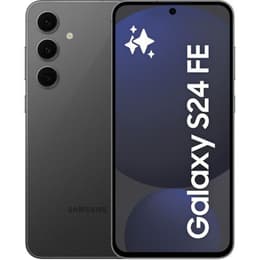
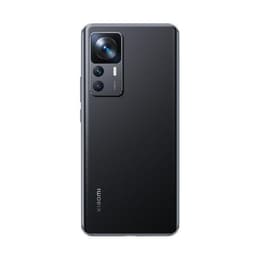


Galaxy S24 FE Vs Xiaomi 12T

Galaxy S24 FE
Galaxy S24 FE
Starting at

Refurbished price:329.00

Versus €991.15 new

See options
Xiaomi 12T
Xiaomi 12T
Starting at

Refurbished price:131.00

Versus €649.00 new

See options

Ratings

The Samsung Galaxy S24 FE (Fan Edition), released in late 2024, and the Xiaomi 12T, launched in late 2022, are both Android smartphones designed to offer capable performance and features. While the Galaxy S24 FE focuses on extended software support and a refined user experience, the Xiaomi 12T emphasizes rapid charging and a high-resolution main camera. Both devices operate on the Android platform, but they differ in their software update policies and the specific versions of Android they launched with.

Scores

Durability

When considering the long-term usability of these devices, their release timelines and software support policies are key differentiators.

  • Release Timeline: The Samsung Galaxy S24 FE was released in October 2024, making it a newer device compared to the Xiaomi 12T, which launched in October 2022. [2, 4, 7, 32] This two-year difference in release directly impacts their expected software longevity.
  • Software Longevity: The Galaxy S24 FE offers a substantial commitment of seven generations of OS upgrades and seven years of security updates from its global launch date. [6, 33, 37] This means it is expected to receive updates until 2031. In contrast, the Xiaomi 12T launched with Android 12 and MIUI 13, with a typical expectation of three years of OS updates. [4, 12, 14, 27] Users prioritizing the longest possible software support will find the Galaxy S24 FE more appealing.
  • Durability and Repairability: The Galaxy S24 FE features Gorilla Glass Victus+ for screen protection and is generally described as having a tough and durable build, often associated with an IP68 rating for water and dust resistance, typical for Samsung's FE series. [8, 20] The Xiaomi 12T comes with Gorilla Glass 5 on the front and an IP53 rating for dust and splash resistance. [1, 7, 27] Both devices are built to withstand daily use, but the Galaxy S24 FE offers a higher level of ingress protection.

Year of Release

2024

2022

OS

Android

Android

Foldable

No

No

Performance

Both smartphones are equipped with processors designed to handle a range of tasks, from everyday applications to more demanding activities.

  • Processor Capabilities: The Samsung Galaxy S24 FE is powered by a current-generation processor that delivers smooth performance for daily use and multitasking. [8, 9, 22] Users report that it handles demanding apps with ease, though it may experience some warmth during extended, intensive gaming sessions, particularly on 5G networks. [18, 22, 30] The Xiaomi 12T features a processor that provides strong performance, comparable to other capable chipsets of its era, and is noted for its stability during thermal throttling tests, making it well-suited for gaming. [11, 34]
  • System Responsiveness: Both devices offer a responsive user experience. The Galaxy S24 FE is described as very fast, with quick app opening times and overall smoothness. [22] The Xiaomi 12T also provides a fluid experience, with everything looking great on its display. [11]
  • Storage and Multitasking: Both models typically come with 8GB of RAM and offer storage options of 128GB or 256GB. [1, 2, 4, 5, 7, 9, 12, 14, 27] This amount of RAM is generally sufficient for efficient multitasking and running multiple applications simultaneously without significant slowdowns.

Memory (GB)

8 GB

8 GB

Screen quality

The visual experience on both devices is delivered through high-quality displays, though with some distinctions in their specifications.

  • Display Technology and Clarity: The Samsung Galaxy S24 FE features a 6.7-inch Dynamic AMOLED 2X display, known for its vibrant colors, deep blacks, and overall clarity. [8, 36] The Xiaomi 12T sports a 6.67-inch AMOLED display, also offering rich colors and a sharp viewing experience. [1, 4, 7, 12, 27] The Xiaomi 12T has a slightly higher resolution (1220x2712 pixels) compared to the Galaxy S24 FE's 1080x2340 pixels. [4, 5, 27]
  • Brightness and Refresh Rate: The Galaxy S24 FE boasts a peak brightness of 1900 nits, which contributes to good outdoor visibility, though its adaptive display switches between 60Hz and 120Hz. [9, 35, 36] The Xiaomi 12T has a peak brightness of 900 nits and a 120Hz refresh rate, with an adaptive feature that can drop to 60Hz when the screen is static to conserve battery. [1, 7, 11, 27] The higher peak brightness of the Galaxy S24 FE may offer a more comfortable viewing experience in very bright environments.
  • Viewing Experience: Both phones provide a smooth scrolling and viewing experience due to their 120Hz refresh rates. The Galaxy S24 FE's larger screen and slimmer bezels contribute to an immersive viewing experience. [36]

Resolution

1080 x 2340

1220 x 2712

Screen type

Dynamic AMOLED 2X

AMOLED

Audiovisual

Both smartphones offer versatile camera systems, each with its own strengths for capturing photos and videos.

  • Rear Camera System: The Samsung Galaxy S24 FE features a triple camera setup, including a 50-megapixel main sensor with optical image stabilization (OIS), a 12-megapixel ultra-wide lens, and an 8-megapixel telephoto lens with 3x optical zoom and OIS. [5, 9, 10, 28] This configuration allows for detailed shots and effective optical zoom. The Xiaomi 12T also has a triple camera system, with a 108-megapixel main sensor with OIS, an 8-megapixel ultra-wide lens, and a 2-megapixel macro lens. [1, 4, 7, 12, 27]
  • Photography Performance: The Galaxy S24 FE's main camera performs well in good lighting, producing vibrant and detailed images with good dynamic range. Its 3x optical telephoto is noted for good detail. However, the ultra-wide camera can be soft, and low-light performance relies heavily on software processing due to smaller sensors. [10, 15, 21, 22, 28] The Xiaomi 12T's 108-megapixel main lens captures vibrant and detailed stills with solid dynamic range, and it performs well in night photography. [11, 19] However, its ultra-wide and macro lenses are considered less capable. [11, 13]
  • Video Recording and Audio: The Galaxy S24 FE supports video recording up to 8K at 30 frames per second (fps) with its rear cameras, and 4K at 60fps with both front and rear cameras. [9, 15] The Xiaomi 12T records video up to 4K at 30fps with its rear camera and 1080p at 60fps with its front camera. [1, 12, 27] Both devices offer stereo speakers, with the Xiaomi 12T additionally featuring Hi-Res Audio and Dolby Atmos for an enhanced media consumption experience. [1, 7, 12, 20]

Miscellaneous

Beyond core performance, several practical features contribute to the overall user experience of these smartphones.

  • Connectivity and Ports: Both devices support 5G connectivity, modern Wi-Fi standards (Wi-Fi 6 for Xiaomi 12T), and Bluetooth (Bluetooth 5.3 for Xiaomi 12T). [1, 7] The Galaxy S24 FE uses a USB-C port, which is standard for contemporary Android phones. The Xiaomi 12T also features a USB-C port and includes an infrared blaster, which can be used to control various home appliances. [1]
  • Biometric Security: For secure unlocking, both smartphones incorporate an in-display fingerprint sensor. [1, 5, 7, 8, 14] The Galaxy S24 FE also includes face recognition.
  • Design and Handling: The Galaxy S24 FE has a premium build with a glass front (Gorilla Glass Victus+) and is noted for its solid construction, though some users find it to be on the heavier and bulkier side. [8, 24, 30] The Xiaomi 12T features a Gorilla Glass 5 front, a glass back, and a plastic frame, offering a minimalist aesthetic that feels premium, though it can be slippery without a case. [1, 7, 11, 12, 27] The Galaxy S24 FE has an IP68 rating, providing robust protection against dust and water, while the Xiaomi 12T has an IP53 rating, offering splash and dust resistance. [27]

Weight

213 g

220 g

Screen size (in)

6.7

6.67

Network

5G

5G

SIM card

Dual Physical SIM

Dual Physical SIM

Carrier compatibility

Unlocked

Unlocked

Connector

USB-C

USB-C

The Samsung Galaxy S24 FE and the Xiaomi 12T cater to different priorities, reflecting their respective release years and design philosophies. Users frequently praise the Galaxy S24 FE for its strong overall performance, capable main camera, and, most notably, its industry-leading software support commitment, ensuring longevity. [6, 17, 20, 22, 33] However, some users have noted that the screen's initial color calibration might require adjustment, the bezels could be slimmer, and while battery life is generally good, it may not be exceptional for heavy users. [24, 30]

The Xiaomi 12T receives commendation for its vibrant AMOLED display, the impressive speed of its 120W wired charging (with the charger included), and its capable main camera, particularly in good lighting and for night shots. [1, 7, 11, 12, 13, 19, 27] Criticisms often point to its less extensive software update policy compared to newer devices, the perceived lower utility of its secondary cameras (ultra-wide and macro), and the absence of wireless charging. [11, 12, 13]

Users prioritizing long-term software updates, a dedicated telephoto camera, and robust water and dust resistance may find the Samsung Galaxy S24 FE well-suited to their needs. Conversely, individuals who value extremely fast wired charging, a high-resolution main camera, and a slightly higher display resolution might lean towards the Xiaomi 12T. Both devices represent solid choices within their segments, and for those considering an eco-friendly alternative, quality-assured refurbished options for both models are available, offering a sustainable choice without compromising on functionality.


See all articles

Our recent comparisons