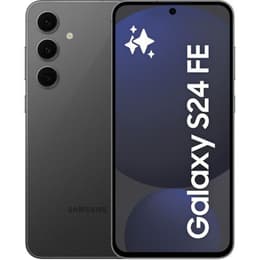
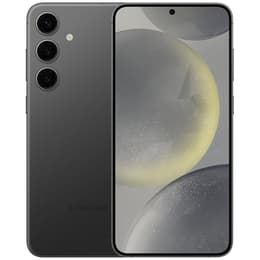


Galaxy S24 FE Vs Galaxy S24+

Galaxy S24 FE
Galaxy S24 FE
Starting at

Refurbished price:329.00

Versus €991.15 new

See options
Galaxy S24+
Galaxy S24+
Starting at

Refurbished price:399.00

Versus €1,167.06 new

See options

Ratings

The Samsung Galaxy S24 FE, released in October 2024, and the Samsung Galaxy S24 Plus, launched in January 2024, are both Android smartphones from Samsung's Galaxy S series. While sharing a similar design language and the Android 14 operating system with One UI 6.1, these devices cater to slightly different user priorities. The S24 Plus generally offers more advanced specifications, whereas the S24 FE aims to provide a premium experience with some strategic adjustments to its hardware.

Scores

Durability

Both the Galaxy S24 FE and the Galaxy S24 Plus are designed for extended usability, benefiting from Samsung's commitment to long-term software support.

  • Software Longevity: Both devices are promised seven generations of Android OS upgrades and seven years of security updates from their respective launch dates. This means users can expect software support for both models until at least 2031, ensuring they remain current with the latest features and security protocols for a significant period.
  • Release Timeline: The Galaxy S24 Plus, being released earlier in January 2024, has a slightly longer operational history, while the S24 FE followed in October 2024. This difference in release means the S24 Plus has already received its first major OS update (One UI 7 in April 2025), demonstrating Samsung's update cadence.
  • Repairability: Both models feature an IP68 rating for dust and water resistance, contributing to their overall durability. While specific repairability scores can vary, the shared build philosophy suggests a comparable approach to internal component accessibility.

Year of Release

2024

2024

OS

Android

Android

Foldable

No

No

Performance

The performance capabilities of the Galaxy S24 FE and S24 Plus are robust, designed to handle a wide range of applications and multitasking demands, though with some distinctions.

  • Processing Power: The Galaxy S24 Plus is equipped with a current-generation processor, either the Samsung Exynos 2400 or the Snapdragon 8 Gen 3, depending on the region. This allows for exceptionally smooth operation, rapid app loading, and efficient handling of graphically intensive games and demanding applications. The Galaxy S24 FE features an Exynos 2400e, an underclocked variant of the Exynos 2400. While still very capable, it offers a slightly less powerful performance profile.
  • Multitasking and Responsiveness: The S24 Plus typically comes with 12GB of RAM, providing ample capacity for extensive multitasking and keeping numerous applications open in the background without performance degradation. The S24 FE generally includes 8GB of RAM, which is sufficient for most daily tasks and moderate multitasking. Users engaging in very heavy multitasking or switching frequently between many demanding apps might notice a difference.
  • Storage Options: Both devices offer various internal storage configurations, including 128GB, 256GB, and 512GB, providing flexibility for users to store a large volume of apps, photos, and videos.

Memory (GB)

8 GB

12 GB

Screen quality

Both smartphones offer vibrant display experiences, but the Galaxy S24 Plus provides a more refined visual output compared to the S24 FE.

  • Display Technology and Resolution: Both devices feature Dynamic AMOLED 2X displays, known for deep blacks and vivid colors. However, the S24 Plus boasts a higher QHD+ resolution (1440x3120 pixels), resulting in sharper text and more detailed imagery. The S24 FE has an FHD+ resolution (1080x2340 pixels), which is still clear but less pixel-dense.
  • Brightness and Refresh Rate: The S24 Plus achieves a higher peak brightness of 2600 nits, making it more visible in bright outdoor conditions. The S24 FE reaches 1900 nits, which is still bright for most environments. Both phones feature a 120Hz refresh rate for smooth scrolling and animations. The S24 Plus utilizes an LTPO backplane, allowing for a variable refresh rate from 1Hz to 120Hz, which can contribute to better power efficiency. The S24 FE uses an LTPS backplane with a refresh rate range of 60Hz to 120Hz.
  • Screen Size and Protection: Both models feature a 6.7-inch display, offering an expansive viewing area. The S24 Plus benefits from Corning Gorilla Glass Victus 2 for enhanced scratch and drop resistance.

Resolution

1080 x 2340

1440 x 3120

Screen type

Dynamic AMOLED 2X

Dynamic LTPO AMOLED 2X

Audiovisual

Both the Galaxy S24 FE and S24 Plus offer capable camera systems, delivering quality results for everyday photography and video recording.

  • Rear Camera System: Both devices feature a triple-camera setup. The S24 Plus includes a 50 MP wide-angle main sensor, a 12 MP ultrawide sensor, and a 10 MP telephoto lens with 3x optical zoom. The S24 FE also has a 50 MP wide-angle main sensor and a 12 MP ultrawide sensor, but its telephoto lens is 8 MP with 3x optical zoom. In daylight conditions, the overall image quality from both phones is often comparable.
  • Low-Light Performance and Video: While both perform well in good lighting, the S24 Plus may offer a slight advantage in low-light photography due to its potentially more advanced sensor or processing. Both phones are capable of recording video at up to 8K resolution at 30 frames per second.
  • Front Camera and Audio: The S24 Plus features a 12 MP front camera, while the S24 FE has a 10 MP front camera. Both devices are equipped with stereo speakers, providing a good audio experience for media consumption, with the S24 Plus potentially offering a richer sound profile.

Miscellaneous

Beyond core specifications, several practical elements differentiate the user experience between the Galaxy S24 FE and the S24 Plus.

  • Connectivity and Ports: Both phones support 5G connectivity, Wi-Fi 6E, and Bluetooth 5.3, ensuring fast and reliable wireless connections. The S24 Plus also supports Wi-Fi 7 and Ultra Wide Band (UWB) for enhanced connectivity and location services. Both utilize a USB Type-C port for charging and data transfer, with the S24 Plus supporting faster USB 3.2 Gen 1 speeds.
  • Biometric Security and Build: The S24 Plus incorporates an ultrasonic in-screen fingerprint sensor, which is generally considered more secure and reliable. The S24 FE uses an optical in-screen fingerprint sensor. In terms of build, the S24 Plus uses higher-grade materials like Armor Aluminum for its frame and Gorilla Glass Victus 2 for its back, offering a more premium feel and potentially greater resilience. The S24 FE typically features a glass back with a brilliant finish and an aluminum frame.
  • Dimensions and Handling: The S24 Plus is slightly more compact and lighter, measuring 158.5 x 75.9 x 7.7 mm and weighing 197g. The S24 FE is marginally larger and heavier at 162 x 77.3 x 8 mm and 213g. The S24 FE also has slightly larger display bezels, particularly at the bottom.

Weight

213 g

197 g

Width

7.7 cm

7,59 cm

Height

16.2 cm

15,85 cm

Depth

0.8 cm

0,77 cm

Screen size (in)

6.7

6.7

Network

5G

5G

SIM card

Dual Physical SIM

Dual Physical SIM + eSIM

Carrier compatibility

Unlocked

Unlocked

Connector

USB-C

USB-C

User feedback and expert comparisons highlight distinct advantages for both the Galaxy S24 FE and the Galaxy S24 Plus. The S24 Plus is frequently praised for its superior display resolution, higher peak brightness, and more robust build materials, often described as a more complete flagship experience. Its larger RAM capacity and slightly more powerful processor contribute to a smoother experience for demanding users. Criticisms for the S24 Plus are less common but sometimes point to its higher positioning within the lineup.

The S24 FE, on the other hand, receives positive remarks for delivering a very similar overall user experience to the S24 Plus, especially in daylight camera performance and general daily usage, despite its adjusted specifications. Some users appreciate its battery life, noting it can offer comparable or even better call times. Common observations for the S24 FE include its lower display resolution and the use of an optical fingerprint sensor, which some find less responsive than the ultrasonic alternative.

Users prioritizing a top-tier display, maximum performance headroom, and the most premium build quality may find the Galaxy S24 Plus better suited to their needs. Its faster charging and slightly larger battery capacity also appeal to those who require extended use and quick power-ups. Conversely, users who value a strong overall smartphone experience with excellent software longevity and capable cameras, but do not require the absolute highest specifications, might lean towards the Galaxy S24 FE. Both devices offer a compelling choice, and considering a quality-assured refurbished option can provide an eco-friendly alternative for either model.


See all articles

Our recent comparisons