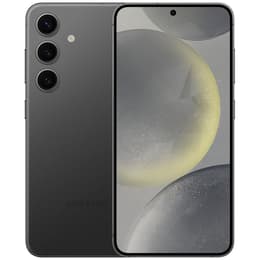


Galaxy S23 FE Vs Galaxy S24

Galaxy S23 FE
Galaxy S23 FE
Starting at

Refurbished price:226.00

Versus €708.98 new

See options
Galaxy S24
Galaxy S24
Starting at

Refurbished price:323.00

Versus €956.40 new

See options

Ratings

The Samsung Galaxy S23 FE, released in October 2023, and the Samsung Galaxy S24, launched in January 2024, represent different segments within Samsung's smartphone lineup. While both operate on the Android platform, the S24 introduces a more advanced processor and a significantly extended software support policy, alongside refinements in display technology and overall design. These differences cater to varying user priorities, from long-term software commitment to specific performance needs.

Scores

Durability

The practical lifespan of a smartphone is influenced by its release timeline, software support, and physical durability.

  • Release Timeline: The Galaxy S23 FE was released in October 2023, while the Galaxy S24 followed in January 2024. This means the S24 is a newer device, offering a slightly more current starting point for its lifecycle.
  • Software Longevity: The Galaxy S23 FE is expected to receive four major OS updates and five years of security updates, extending its support until Android 17 and security patches until 2028. In contrast, the Galaxy S24 boasts an extended commitment of seven generations of OS upgrades and seven years of security updates, potentially supporting it through Android 21. This makes the S24 a more future-proof option for users prioritizing long-term software support.
  • Build and Durability: Both devices feature an IP68 rating for dust and water resistance, indicating a high level of protection against environmental elements. The Galaxy S23 FE uses Gorilla Glass 5 for its front and back, while the Galaxy S24 upgrades to Gorilla Glass Victus 2, offering enhanced scratch and drop resistance.

Year of Release

2023

2024

Compatible with latest Update

Yes

Yes

OS

Android

Android

Foldable

No

No

Performance

Performance in daily use is shaped by the device's internal components, affecting app responsiveness, multitasking, and gaming capabilities.

  • Processor Capabilities: The Galaxy S23 FE is equipped with a processor that handles demanding applications and multitasking smoothly, though some users have noted potential heating during extended heavy use, particularly with the Exynos variant. The Galaxy S24 features a newer generation processor, providing improved efficiency and performance for more intensive tasks and advanced AI features.
  • Multitasking and Responsiveness: Both models come with 8GB of RAM, which is sufficient for smooth multitasking and switching between various applications. The S24's newer processor contributes to an overall snappier and more responsive user experience, especially when navigating the interface or running multiple demanding apps simultaneously.
  • Storage Options: The Galaxy S23 FE is available with 128GB or 256GB of internal storage. The Galaxy S24 offers more flexibility with 128GB, 256GB, and 512GB storage options. Neither device supports expandable storage via a microSD card.
  • Battery Behavior: The Galaxy S23 FE has a 4,500 mAh battery, which generally provides a full day of moderate use, though heavy gaming or camera use can lead to faster depletion. The Galaxy S24 has a smaller 4,000 mAh battery, but its more efficient processor can help optimize battery life for typical daily usage. Some users have reported that the S24 can make it through an average day's use, even with heavy usage.

Memory (GB)

8 GB

8 GB

Screen quality

The display is a primary interface for user interaction, with differences in technology, resolution, and brightness impacting the viewing experience.

  • Display Technology and Clarity: Both devices feature a Dynamic AMOLED 2X display with a 1080 x 2340 resolution, offering vibrant colors and deep blacks. The S23 FE has a 6.4-inch screen, providing a slightly larger viewing area compared to the S24's 6.2-inch display.
  • Refresh Rate and Smoothness: Both phones offer a 120Hz refresh rate for smooth scrolling and fluid animations. The Galaxy S24 features an adaptive refresh rate that can scale from 1Hz to 120Hz, optimizing power consumption by adjusting to the content being displayed. The S23 FE's refresh rate is also adaptive but typically operates within a narrower range.
  • Brightness Levels: The Galaxy S23 FE has a peak brightness of 1450 nits, which is suitable for most indoor and outdoor conditions. The Galaxy S24 significantly increases this to a peak brightness of 2600 nits, offering better visibility in direct sunlight and for HDR content.

Resolution

1080 x 2340

1080 x 2340

Screen type

Dynamic AMOLED 2X

Dynamic LTPO AMOLED 2X

Audiovisual

Camera systems are a key differentiator, with variations in sensor capabilities, processing, and features influencing photo and video output.

  • Camera System Configuration: Both the Galaxy S23 FE and Galaxy S24 feature a triple rear camera setup, including a 50 MP main sensor with optical image stabilization, a 12 MP ultrawide lens, and a telephoto lens. The S23 FE has an 8 MP telephoto lens with 3x optical zoom, while the S24 upgrades to a 10 MP telephoto lens, also with 3x optical zoom.
  • Photography Performance: Both devices are capable of producing detailed and vibrant photos in good lighting conditions. The S23 FE's main camera performs well in low-light situations. The S24 offers improved image processing, leading to more natural-looking colors and reduced oversharpening, though some users have expressed disappointment with low-light performance and color accuracy in certain indoor settings.
  • Video Recording Quality: Both phones support 8K video recording at 24fps. The Galaxy S24 enhances video capabilities with 4K recording at up to 120fps, offering more options for slow-motion and high-resolution video capture.
  • Front Camera: The S23 FE has a 10 MP front camera, while the S24 features a 12 MP front camera, both capable of capturing clear selfies. The S24's front camera includes autofocus, which is beneficial for consistent sharpness.

Main camera

50 megapixels

50 megapixels

Front camera

10 megapixels

12 megapixels

Miscellaneous

Beyond core features, connectivity, physical design, and additional functionalities contribute to the overall user experience.

  • Connectivity: Both the Galaxy S23 FE and Galaxy S24 support 5G connectivity, Wi-Fi 6E, and Bluetooth 5.3, ensuring fast and reliable wireless connections.
  • Ports and Biometrics: Both devices utilize a USB-C port for charging and data transfer. For security, the S23 FE uses an optical in-display fingerprint sensor, while the S24 features an improved ultrasonic in-screen fingerprint reader for faster and more efficient biometric authentication.
  • Dimensions and Weight: The Galaxy S23 FE measures 158 x 76.5 x 8.2 mm and weighs 209 g, offering a substantial feel. The Galaxy S24 is more compact and lighter at 147 x 70.6 x 7.6 mm and 167 g, making it easier for one-handed use and pocketability.
  • Build Materials: The S23 FE features a glass front and back (Gorilla Glass 5) with an aluminum frame. The S24 also has a glass front and back, but with the more durable Gorilla Glass Victus 2, and an aluminum frame.

Weight

209 g

167 g

Screen size (in)

6.4

6.2

Network

5G

5G

SIM card

Physical SIM

Dual Physical SIM + eSIM

Carrier compatibility

Unlocked

Unlocked

User feedback for the Galaxy S23 FE often praises its capable camera system and vibrant display, offering a strong overall experience for its segment. Some common criticisms include concerns about battery life for heavy users and occasional heating with certain processor variants. The Galaxy S24, being a more recent flagship, receives commendation for its enhanced performance, brighter display, and the significant commitment to extended software updates. However, some users have expressed mixed opinions on its battery life and camera performance in specific low-light scenarios.

Users prioritizing long-term software support and a more compact, lightweight design will find the Galaxy S24 well-suited to their needs. Its brighter display and newer processor also cater to those seeking the latest advancements in screen technology and overall responsiveness. Conversely, users who prefer a slightly larger screen and a robust camera system without the need for the absolute latest processor might lean towards the Galaxy S23 FE. Both devices offer a solid Android experience, and choosing between them often comes down to balancing the desire for the newest features and extended support against a slightly larger form factor and established performance.

For those considering either of these devices, exploring quality-assured refurbished options can provide an eco-friendly alternative, offering access to these technologies while supporting sustainable consumption.


See all articles

Our recent comparisons