

Compare models

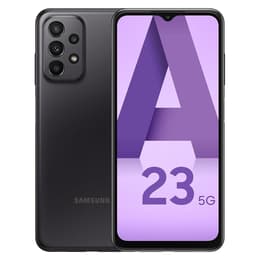
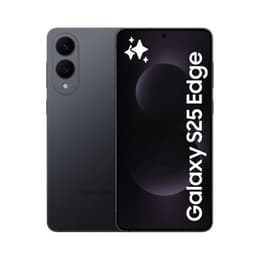
Galaxy A23 5G Vs Galaxy S25 Edge

  • 1-year minimum warranty
  • Free delivery on all orders
  • Free 30-day returns
Galaxy A23 5G
Starting at

Refurbished price:149.00

Versus €600.00 new

See options
Galaxy S25 Edge
Starting at

Refurbished price:471.00

Versus €1,386.13 new

See options

Differences at a glance

The Samsung Galaxy A23 5G (2022) and the Samsung Galaxy S25 Edge (2025) represent different tiers within Samsung's smartphone lineup, separated by several years of hardware evolution. While the Galaxy A23 5G serves everyday communication needs with essential capabilities, the Galaxy S25 Edge delivers a modern, ultra-slim flagship experience. Both devices run on the Android operating system with Samsung's custom interface, though they target distinct functional priorities and user expectations.

Available Models

Colour

Storage (GB)

Scores

Durability

When examining structural longevity, these two smartphones reflect their respective release years and manufacturing tiers in software and build design.

  • Software support timelines: The Galaxy S25 Edge benefits from a much later release date, securing extended operating system updates and security patches compared to the older Galaxy A23 5G.
  • Build materials and design: The Galaxy S25 Edge employs advanced titanium framing and reinforced glass, whereas the Galaxy A23 5G relies on standard plastic composite materials for its body.
  • Expected practical lifespan: Users can anticipate longer hardware and software viability from the flagship-tier model, while the older entry-level device suits shorter-term usage goals.

Year of Release

2022

2025

OS

Android

Android

Foldable

No

No

Performance

Daily operation and responsiveness differ significantly based on the internal components and memory configurations housed within each chassis.

  • Multitasking and system speed: The Galaxy S25 Edge handles demanding applications and intensive background tasks smoothly thanks to its high-tier processor and generous random access memory, while the Galaxy A23 5G manages standard messaging and web browsing reliably with its entry-level processor.
  • Storage capacity: The Galaxy S25 Edge starts with larger baseline internal storage options, whereas the Galaxy A23 5G offers smaller base storage paired with a dedicated memory card slot for expandable file management.
  • Battery behavior: The Galaxy S25 Edge balances a slim profile with efficient power consumption, while the Galaxy A23 5G delivers standard daily endurance for routine tasks.

Screen quality

Visual output and panel construction create entirely distinct media consumption experiences between the two models.

  • Display technology: The Galaxy S25 Edge features an advanced AMOLED panel providing deep contrast levels and vivid color reproduction, whereas the Galaxy A23 5G utilizes a standard LCD screen.
  • Outdoor visibility and brightness: Peak brightness levels on the Galaxy S25 Edge ensure clear readability under direct sunlight, outperforming the more modest brightness ceiling of the Galaxy A23 5G.
  • Clarity and resolution: High-resolution output on the Galaxy S25 Edge delivers sharper text and image rendering compared to the standard high-definition resolution of the Galaxy A23 5G.

Resolution

1080 x 2408

1440x3120

Audiovisual

Multimedia capture and audio output capabilities vary to match the intended audience of each device.

  • Photography hardware: The Galaxy S25 Edge incorporates a high-resolution primary sensor and refined secondary lenses for detailed low-light captures, while the Galaxy A23 5G provides a versatile multi-lens layout suited for casual snapshots in daylight.
  • Video recording: The Galaxy S25 Edge supports advanced stabilization and higher-resolution video formats, whereas the Galaxy A23 5G captures stable standard-definition footage for everyday sharing.
  • Audio delivery: Media playback through the built-in speakers offers richer acoustic depth on the flagship model, complemented by the quality-assured refurbished option available through sustainable platforms like Back Market.

Miscellaneous

Physical dimensions and connectivity standards shape how each smartphone feels and integrates into daily routines.

  • Physical profile: The Galaxy S25 Edge is engineered with an exceptionally thin titanium build and light weight, whereas the Galaxy A23 5G features a thicker, heavier plastic housing.
  • Connectivity standards: Both devices support 5G cellular networks, but the Galaxy S25 Edge includes newer wireless communication protocols and modern data transfer speeds.
  • Physical ports and biometric security: The Galaxy A23 5G retains a traditional wired headphone jack, while the Galaxy S25 Edge relies entirely on wireless audio and advanced biometric face and fingerprint recognition.

Weight

197 g

163 g

Screen size (in)

6.6

6.7

Network

5G

5G

SIM card

Dual Physical SIM

Dual Physical SIM + eSIM

Carrier compatibility

Unlocked

Unlocked

Connector

USB-C + Jack 3.5mm

USB-C

What the community thinks

User discussions across community forums highlight distinct sentiments regarding both devices. Owners of the Galaxy A23 5G frequently praise its dependable everyday functionality, expandable storage capacity via memory cards, and straightforward reliability for basic tasks. Conversely, discussions surrounding the Galaxy S25 Edge frequently emphasize its striking thin profile, vibrant high-resolution display, and responsive system performance, though some users note that its slim physical design leaves less room for larger battery capacity.

Users prioritizing a lightweight build, sharp visuals, and high-end processing power will find the Galaxy S25 Edge well-suited to their daily routines. Meanwhile, users focusing on straightforward communication tools and expandable storage may prefer the practical utility of the Galaxy A23 5G. Choosing a quality-assured refurbished alternative through Back Market also provides an eco-friendly way to access these technologies while reducing electronic waste. Ultimately, selecting the right device depends entirely on individual workflow priorities and preferred feature sets.