

Galaxy S22 Ultra 5G Vs iPhone 11

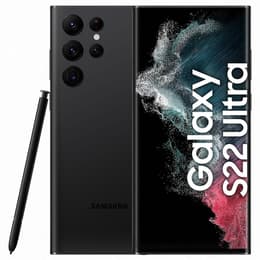
Galaxy S22 Ultra 5G
Galaxy S22 Ultra 5G
Starting at

Refurbished price:350.00

Versus €1,445.00 new

See options
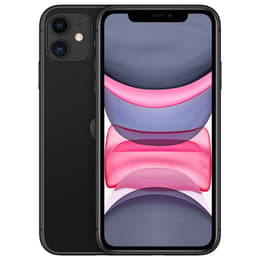
iPhone 11
iPhone 11
Starting at

Refurbished price:149.00

Versus €589.00 new

See options

Ratings

The Samsung Galaxy S22 Ultra 5G, released in February 2022, and the Apple iPhone 11, launched in September 2019, represent different generations and philosophies within the smartphone market. While both devices offer robust performance for their respective eras, the Galaxy S22 Ultra 5G distinguishes itself with an integrated stylus, a more advanced camera system, and a higher-resolution display. The iPhone 11, running on iOS, provides a streamlined user experience, while the Galaxy S22 Ultra 5G operates on Android, offering greater customization.

Scores

Durability

When considering the practical lifespan of these devices, their release timelines and software support policies are key factors.

  • Release Timeline: The iPhone 11 was released in September 2019, making it an older model compared to the Galaxy S22 Ultra 5G, which launched in February 2022. This age difference directly impacts the remaining period of official software support.
  • Software Longevity: Apple typically provides major iOS updates for iPhones for approximately five to six years, with security updates often extending longer, up to seven to eight years. The iPhone 11 is capable of running iOS 26, released in 2025 [32, 34]. Samsung, for its part, committed to four major Android OS updates and five years of security updates for flagships from 2019 onwards, including the S22 series [20, 23, 33]. This means the Galaxy S22 Ultra 5G will receive major Android updates for a longer duration than the iPhone 11.
  • Physical Durability: Both devices feature robust builds. The iPhone 11 has an IP68 rating for water and dust resistance, capable of submersion up to 2 meters for 30 minutes [1]. The Galaxy S22 Ultra 5G also carries an IP68 rating, with Gorilla Glass Victus+ on both the front and back, and an aluminum frame, offering enhanced protection against drops and scratches [17, 29].

Year of Release

2022

2019

Compatible with latest Update

Yes

Yes

OS

Android

iOS

Foldable

No

No

Performance

The performance of a smartphone is crucial for daily tasks, app usage, and multitasking. These two devices offer distinct experiences based on their internal components.

  • System Responsiveness: The iPhone 11, powered by its A13 Bionic chip, delivers smooth performance for everyday applications and gaming, a testament to Apple's optimization of hardware and software [1, 12]. The Galaxy S22 Ultra 5G, featuring a more recent high-end processor (either the Snapdragon 8 Gen 1 or Exynos 2200 depending on region), handles demanding applications, intensive multitasking, and graphic-heavy games with greater efficiency and speed [18, 19].
  • Multitasking and RAM: The iPhone 11 comes with 4GB of RAM, which is sufficient for typical user scenarios and switching between several applications [1, 12]. The Galaxy S22 Ultra 5G offers more substantial RAM options, typically 8GB or 12GB, allowing for more aggressive multitasking and keeping a larger number of applications active in the background without performance degradation [18, 19].
  • Storage Options: The iPhone 11 is available with 64GB, 128GB, and 256GB of internal storage [1, 12, 26]. The Galaxy S22 Ultra 5G provides a wider range of storage capacities, including 128GB, 256GB, 512GB, and even 1TB options, catering to users with extensive storage needs for media and applications [19, 29].

Memory (GB)

8 GB

4 GB

Screen quality

The visual experience is a primary interaction point for users, and these two smartphones offer different display technologies and capabilities.

  • Display Technology and Clarity: The iPhone 11 features a 6.1-inch Liquid Retina HD display, which is an IPS LCD panel with a resolution of 1792 x 828 pixels [1, 2]. This provides clear visuals for general use. In contrast, the Galaxy S22 Ultra 5G boasts a larger 6.8-inch Dynamic AMOLED 2X display with a significantly higher QHD+ resolution of 3088 x 1440 pixels, resulting in sharper images and more detailed content [4, 8, 19].
  • Brightness and Color: The iPhone 11 offers a typical maximum brightness of 625 nits [1, 2]. The Galaxy S22 Ultra 5G's Dynamic AMOLED 2X display can reach a peak brightness of 1750 nits, making it considerably brighter and more legible in direct sunlight [8, 30]. The AMOLED technology also provides deeper blacks and more vibrant colors compared to the LCD panel of the iPhone 11 [30].
  • Refresh Rate: The iPhone 11 has a standard 60Hz refresh rate, which offers a smooth enough experience for most users [12]. The Galaxy S22 Ultra 5G features an adaptive 120Hz refresh rate, which allows for noticeably smoother scrolling, animations, and a more fluid overall user interface experience [4, 8].

Resolution

1440 x 3088

828 x 1792

Screen type

Dynamic AMOLED 2X

Liquid Retina IPS LCD

Audiovisual

For many users, the camera system is a critical feature, and both devices offer capable photographic and videographic tools, though with different strengths.

  • Rear Camera System: The iPhone 11 is equipped with a dual 12MP camera system, comprising a wide-angle lens (f/1.8) and an ultra-wide-angle lens (f/2.4) with a 120-degree field of view. It supports features like Night mode and 4K video recording up to 60fps [1, 2, 9]. The Galaxy S22 Ultra 5G features a more versatile quad-camera setup: a 108MP main sensor (f/1.8), a 12MP ultra-wide sensor (f/2.2), a 10MP telephoto lens with 3x optical zoom (f/2.4), and a 10MP periscope telephoto lens with 10x optical zoom (f/4.9) [4, 18, 29]. This allows for greater flexibility in focal lengths and zoom capabilities.
  • Low-Light Performance and Detail: Both phones offer good performance in well-lit conditions. The iPhone 11's Night mode was a significant improvement for its time, capturing detailed images in challenging lighting [9]. The Galaxy S22 Ultra 5G, with its larger main sensor and advanced image processing, generally excels in capturing fine details and managing noise in various lighting conditions, including low light [35, 36].
  • Video Recording and Front Camera: The iPhone 11 supports 4K video recording at up to 60 frames per second and includes cinematic video stabilization [2]. Its front camera is a 12MP sensor [2]. The Galaxy S22 Ultra 5G can record video at up to 8K resolution at 24 frames per second and offers a 40MP front camera, providing higher resolution for both video capture and selfies [8, 29].

Main camera

108 megapixels

12 megapixels

Front camera

40 megapixels

12 megapixels

Miscellaneous

Beyond the core features, several practical elements contribute to the overall user experience and differentiate these two smartphones.

  • Connectivity Standards: The iPhone 11 supports Gigabit-class 4G LTE and Wi-Fi 6, along with Bluetooth 5.0 [2, 12, 27]. The Galaxy S22 Ultra 5G offers more advanced connectivity, including 5G capabilities, Wi-Fi 6E, and Bluetooth 5.2, providing faster data speeds and improved wireless performance where supported [19, 29].
  • Ports and Biometrics: The iPhone 11 utilizes Apple's proprietary Lightning port for charging and data transfer, and relies on Face ID for secure authentication [12, 14]. The Galaxy S22 Ultra 5G features a universal USB-C port and offers both an ultrasonic in-display fingerprint sensor and 2D face unlock for security [17, 19].
  • Unique Features and Handling: A significant differentiator for the Galaxy S22 Ultra 5G is its integrated S Pen, offering precise input for notes, drawings, and navigation [4]. In terms of physical characteristics, the iPhone 11 measures 150.9 x 75.7 x 8.3 mm and weighs 194g [7]. The Galaxy S22 Ultra 5G is a larger and heavier device at 163.3 x 77.9 x 8.9 mm and 228g, which can impact one-handed use [17, 19].

Weight

228 g

194 g

Screen size (in)

6.8

6.1

Network

5G

4G

SIM card

Physical SIM + eSIM

Physical SIM + eSIM

Carrier compatibility

Unlocked

Unlocked

Connector

USB-C

Lightning

The Samsung Galaxy S22 Ultra 5G and the iPhone 11 cater to different user preferences and priorities, largely due to their generational gap and distinct operating system ecosystems. Users often praise the iPhone 11 for its consistent performance, reliable camera, and the intuitive nature of iOS, making it a solid choice for those seeking a straightforward and dependable smartphone experience [9]. Some users, however, have noted its LCD display and lack of 5G connectivity as areas where it shows its age.

The Galaxy S22 Ultra 5G, on the other hand, frequently receives acclaim for its expansive and vibrant display, its highly versatile camera system with impressive zoom capabilities, and the unique productivity features offered by the integrated S Pen [4]. Some user discussions occasionally touch upon its larger size and the potential for varied battery performance depending on usage patterns. Ultimately, the choice between these two devices hinges on individual needs.

Users prioritizing a more modern display with a high refresh rate, advanced camera features including significant optical zoom, 5G connectivity, and the added functionality of a stylus, may find the Galaxy S22 Ultra 5G well-suited to their needs. This device is particularly appealing to professionals or creative individuals who can leverage the S Pen for productivity and those who consume a lot of media. Conversely, users who value a more compact form factor, the long-term software support and ecosystem of Apple, and a capable camera for everyday photography without needing extensive zoom, may lean toward the iPhone 11. Both devices remain viable options, and considering a quality-assured refurbished option for either model can be an eco-friendly alternative for extending their lifecycle.

See all articles

Our recent comparisons