

Galaxy A23 5G Vs Galaxy S10

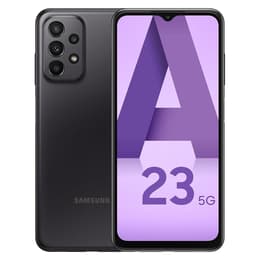
Galaxy A23 5G
Galaxy A23 5G
Starting at

Refurbished price:108.00

Versus €600.00 new

See options
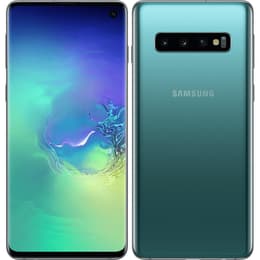
Galaxy S10
Galaxy S10
Starting at

Refurbished price:114.00

Versus €549.00 new

See options

Ratings

The Samsung Galaxy A23 5G, released in August 2022, is a contemporary mid-range smartphone designed to offer modern features at an accessible point. In contrast, the Samsung Galaxy S10, launched in March 2019, was a flagship device representing the pinnacle of Samsung's technology at its release. While the A23 5G brings newer connectivity and extended software support, the S10 offers a premium build and a high-resolution display that were top-tier in its era. Both devices operate on the Android platform, but they cater to different user expectations and priorities.

Scores

Durability

The practical lifespan of a smartphone is significantly influenced by its release timeline and ongoing software support. The Galaxy A23 5G, being a more recent device, benefits from a longer expected period of official updates compared to the older Galaxy S10.

  • Software Support: The Galaxy A23 5G launched with Android 12 and is anticipated to receive two major OS upgrades, extending its software longevity further into the future. It is also expected to receive security updates for four years from its release. The Galaxy S10, originally released with Android 9, received its last major OS update with Android 12, and security updates for most models concluded around March 2023.
  • Build and Protection: The Galaxy A23 5G features a plastic back and a display protected by Corning Gorilla Glass 5, offering a practical level of durability for everyday use. The Galaxy S10 boasts a more premium construction with a glass back (Gorilla Glass 5) and a glass front (Gorilla Glass 6), encased in an aluminum frame. Additionally, the S10 includes an IP68 rating for dust and water resistance, providing enhanced protection against environmental elements. The A23 5G does not carry an official IP rating.
  • Expected Lifespan: Users prioritizing a device with the latest software and security patches for a longer duration will find the Galaxy A23 5G more aligned with their needs. The S10, while still functional, has reached the end of its official software support cycle, which may impact its long-term usability for some users.

Year of Release

2022

2019

Compatible with latest Update

Yes

No

OS

Android

Android

Foldable

No

No

Performance

Performance in smartphones encompasses how smoothly applications run, the device's responsiveness, and its ability to manage power efficiently. Both the Galaxy A23 5G and the Galaxy S10 offer distinct performance profiles.

  • Processing Power and Responsiveness: The Galaxy A23 5G is equipped with a modern processor designed for efficient handling of daily tasks, multitasking, and supporting 5G connectivity. This allows for smooth navigation and app usage in current software environments. The Galaxy S10, as a former flagship, features a powerful processor that was top-of-the-line at its release, providing robust performance for demanding applications and gaming. While older, its flagship-tier hardware can still deliver a responsive experience for many users.
  • Storage and Memory: The Galaxy A23 5G offers internal storage options of 64GB or 128GB, with the flexibility to expand storage up to 1TB using a microSD card. It comes with 4GB, 6GB, or 8GB of RAM, supporting various levels of multitasking. The Galaxy S10 typically provides 128GB or 512GB of internal storage, with some variants offering up to 1TB, and also supports microSD card expansion up to 512GB. It generally includes 8GB of RAM, with some S10+ models featuring 12GB, which was substantial for its time.
  • Battery Endurance: The Galaxy A23 5G is powered by a large 5000 mAh battery, which, combined with its efficient processor, typically provides extended usage times, often lasting through a full day of heavy use. It supports 25W fast charging for quicker power replenishment. The Galaxy S10 has a 3400 mAh battery and supports 15W fast charging as well as wireless charging. While capable of lasting a full day for moderate users, heavy usage may require more frequent charging.

Memory (GB)

4 GB

8 GB

Screen quality

The display is a primary interface for smartphone interaction, and both devices offer different visual experiences based on their underlying technology and specifications.

  • Display Technology and Resolution: The Galaxy A23 5G features a 6.6-inch PLS LCD display with a resolution of 1080 x 2408 pixels (FHD+). This technology provides clear visuals suitable for everyday content consumption. The Galaxy S10, on the other hand, boasts a 6.1-inch Dynamic AMOLED display with a significantly higher resolution of 3040 x 1440 pixels (QHD+). The AMOLED technology delivers deeper blacks, higher contrast, and more vibrant colors.
  • Refresh Rate and Smoothness: A key advantage of the Galaxy A23 5G is its 120Hz refresh rate, which contributes to a smoother scrolling experience and more fluid animations, enhancing the perception of responsiveness. The Galaxy S10 features a standard 60Hz refresh rate, which is adequate for most tasks but does not offer the same level of visual fluidity.
  • Brightness and Clarity: The S10's Dynamic AMOLED display typically offers superior peak brightness and excellent outdoor visibility, along with a higher pixel density of approximately 550 pixels per inch (PPI), resulting in sharper text and images. The A23 5G's PLS LCD, while clear, has a lower pixel density of around 400 PPI and may not achieve the same level of contrast or brightness, particularly in bright conditions.

Resolution

1080 x 2408

1440 x 3040

Screen type

PLS LCD

Dynamic AMOLED

Audiovisual

Camera capabilities are a significant factor for many users, and both the Galaxy A23 5G and Galaxy S10 offer different approaches to mobile photography and videography.

  • Rear Camera Systems: The Galaxy A23 5G features a versatile quad-camera setup on the rear, including a 50-megapixel main sensor with optical image stabilization (OIS), a 5-megapixel ultrawide lens, a 2-megapixel macro lens, and a 2-megapixel depth sensor. This configuration provides options for various shooting scenarios. The Galaxy S10 comes with a triple-camera system, comprising a 12-megapixel wide-angle lens with OIS and dual aperture, a 12-megapixel telephoto lens with OIS and 2x optical zoom, and a 16-megapixel ultrawide lens. The S10's setup, particularly its telephoto lens and advanced main sensor, was considered flagship-grade.
  • Photography Performance: The A23 5G's 50-megapixel main sensor with OIS is capable of capturing detailed images in good lighting and offers improved stability. The S10, despite its lower megapixel count on the main sensor, benefits from larger sensor pixels and more sophisticated image processing, which can translate to better low-light performance and overall image quality, especially in challenging conditions.
  • Video Recording and Front Camera: For video, the Galaxy A23 5G records up to 1080p at 30 frames per second. Its front-facing camera is 8-megapixel. The Galaxy S10 offers more advanced video capabilities, including recording at 4K resolution at 60 frames per second, as well as slow-motion options at 1080p at 240fps and 720p at 960fps. The S10 features a 10-megapixel front camera. The S10 also includes stereo speakers with Dolby Atmos support, providing a more immersive audio experience for media consumption compared to the A23 5G, which typically has a single bottom-firing speaker.

Main camera

50 megapixels

12 megapixels

Front camera

8 megapixels

10 megapixels

Miscellaneous

Beyond core performance and display, several practical features contribute to the overall user experience and differentiate these two Samsung smartphones.

  • Connectivity and Ports: The Galaxy A23 5G offers modern connectivity with 5G network support, Wi-Fi 802.11 a/b/g/n/ac (dual-band), and Bluetooth 5.1. It includes a USB-C 2.0 port and retains a 3.5mm headphone jack. The Galaxy S10 supports 4G LTE networks, Wi-Fi 802.11 a/b/g/n/ac/ax (dual-band), and Bluetooth 5.0. It features a faster USB-C 3.1 port and also includes a 3.5mm headphone jack. Both devices support NFC for contactless payments.
  • Biometrics and Sensors: The Galaxy A23 5G incorporates a side-mounted fingerprint sensor for secure unlocking. The Galaxy S10 features an ultrasonic in-display fingerprint sensor, which was a cutting-edge technology at its release, along with face recognition. The S10 also includes additional sensors such as a heart rate monitor and SpO2 sensor, which are not typically found on mid-range devices like the A23 5G.
  • Design and Handling: The Galaxy A23 5G has dimensions of 165.4 x 76.9 x 8.4 mm and weighs 197g, offering a larger form factor. The Galaxy S10 is more compact and lighter, measuring 149.9 x 70.4 x 7.8 mm and weighing 157g, making it easier for one-handed use for some individuals. The S10's glass and aluminum construction provides a more premium in-hand feel compared to the A23 5G's plastic build.

Weight

197 g

158 g

Screen size (in)

6.6

6.1

Network

5G

4G

SIM card

Dual Physical SIM

Physical SIM

Carrier compatibility

Unlocked

Unlocked

The Samsung Galaxy A23 5G and Galaxy S10 offer distinct propositions for smartphone users. The A23 5G is often praised for its large 120Hz display, providing a smooth visual experience, and its substantial battery capacity, which typically ensures long usage times. Users also appreciate its modern 5G connectivity and the promise of extended software support. Some common observations include its PLS LCD screen not matching the vibrancy of AMOLED panels and its plastic build, though these are often considered acceptable trade-offs for its market segment.

Conversely, the Galaxy S10, a former flagship, is frequently lauded for its premium glass and aluminum design, its vibrant and high-resolution Dynamic AMOLED display, and its versatile camera system that includes a telephoto lens. Its compact size and advanced biometric features like the in-display fingerprint sensor were also significant advantages. A frequent point of discussion for the S10 is its battery life, which, while adequate for many, might not meet the demands of heavy users as consistently as newer devices with larger batteries. Its primary limitation now is the cessation of official software and security updates.

Users prioritizing a large, fluid display, long battery life, and the latest network connectivity with ongoing software support will find the Galaxy A23 5G well-suited to their needs. It represents a modern mid-range option that delivers on current essential features. On the other hand, individuals who value a compact, premium-feeling device with a high-resolution AMOLED screen, advanced camera capabilities, and don't require the absolute latest software updates may still appreciate the Galaxy S10. For those considering either device, exploring quality-assured refurbished options can be an eco-friendly alternative to extend the life of these electronics.


See all articles

Our recent comparisons