

Compare models
Galaxy Z Fold7 Vs Xiaomi Redmi Note 14 4G
- 1-year minimum warranty
- Free delivery on all orders
- Free 30-day returns
Differences at a glance
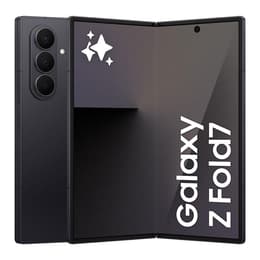
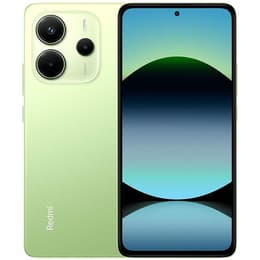
The Samsung Galaxy Z Fold7 (2025) and the Xiaomi Redmi Note 14 4G (2025) represent two distinct concepts within the contemporary smartphone market, catering to fundamentally different user preferences and daily workflows. While the Galaxy Z Fold7 introduces a folding main screen and a sophisticated multi-window interface running on the Android operating system, the Xiaomi Redmi Note 14 4G offers a traditional candy-bar form factor focused on standard smartphone utility. These devices diverge significantly in their physical design, engineering approach, and target audience, making a side-by-side evaluation essential for buyers seeking a reliable daily device.
Available Models
Colour
Storage
Scores
Durability
When examining longevity and structural endurance, these two smartphones approach support and physical resilience from contrasting directions, offering distinct advantages depending on how long you intend to keep your device.
- Software support timeline: The Galaxy Z Fold7 benefits from an extended multi-year manufacturer update schedule covering major operating system upgrades, whereas the Xiaomi Redmi Note 14 4G typically follows a standard mid-range support cycle with fewer years of system updates.
- Physical design and wear: The Xiaomi Redmi Note 14 4G features a traditional unibody construction with fewer moving parts, whereas the folding hinge mechanism of the Galaxy Z Fold7 requires careful handling over years of daily folding and unfolding actions.
- Repairability and maintenance: Standard slab smartphones like the Xiaomi Redmi Note 14 4G generally present simpler repair procedures for components like screens and batteries, while foldable displays on devices like the Galaxy Z Fold7 involve specialized servicing requirements.
Year of Release
2025
2025
OS
Android
Android
Foldable
Yes
No
Performance
Daily operation, processing power, and multitasking capabilities differ heavily between these two models, driven by their respective hardware architectures and internal memory configurations.
- Multitasking and heavy applications: The Galaxy Z Fold7 handles demanding multi-window workflows, high-end mobile gaming, and intensive background tasks smoothly, whereas the Xiaomi Redmi Note 14 4G is optimized for everyday routines like web browsing, messaging, and media streaming.
- Storage and memory configurations: The Galaxy Z Fold7 provides high-tier internal storage and generous RAM capacity to support simultaneous app usage, while the Xiaomi Redmi Note 14 4G offers balanced storage options suitable for standard media libraries and casual app collections.
- Battery behavior and endurance: The Xiaomi Redmi Note 14 4G efficiently manages its power consumption to comfortably sustain a full day of typical use, whereas the dual-screen configuration of the Galaxy Z Fold7 draws more power when utilizing the expansive folding display extensively throughout the day.
Screen quality
Visual output represents one of the most substantial divergences between these two devices, defining how media consumption and everyday navigation are experienced by the user.
- Display technology and versatility: The Galaxy Z Fold7 features a foldable organic light-emitting diode inner panel that transforms from a standard smartphone size into a tablet-like workspace, while the Xiaomi Redmi Note 14 4G utilizes a fixed, traditional flat display panel with vibrant color reproduction.
- Brightness and outdoor visibility: Both devices offer high peak brightness levels that allow for clear readability under bright sunlight, though reflective characteristics differ between standard glass and foldable screen protectors.
- Refresh rate and motion smoothness: High refresh rate support ensures fluid scrolling and responsive touch interactions across both user interfaces, enhancing the overall fluidity of daily navigation.
Resolution
1968x2184
1080x2400
Audiovisual
Capture capabilities and media playback hardware vary to match the distinct market positioning of each smartphone, influencing photography and audio experiences.
- Camera versatility: The Galaxy Z Fold7 incorporates a multi-lens rear array equipped for flexible framing including ultra-wide and optical zoom perspectives, whereas the Xiaomi Redmi Note 14 4G focuses on a reliable primary sensor supported by basic auxiliary lenses for everyday snapshots.
- Low-light and video performance: Advanced image processing on the Galaxy Z Fold7 yields clear details in challenging lighting conditions and stable high-resolution video recording, while the Xiaomi Redmi Note 14 4G delivers adequate results for casual social sharing and daylight photography.
- Audio output and media consumption: Stereo speaker setups on both models provide clear sound for calls and video playback, with the expansive folding screen of the Galaxy Z Fold7 offering an immersive visual companion to media audio.
Miscellaneous
Practical everyday features, connectivity standards, and physical handling characteristics complete the daily user experience profile of each smartphone.
- Connectivity and networks: The Galaxy Z Fold7 supports advanced fifth-generation cellular networks and modern wireless standards, whereas the Xiaomi Redmi Note 14 4G is restricted to fourth-generation cellular connectivity alongside standard Wi-Fi and Bluetooth protocols.
- Biometric security and sensors: Both models integrate responsive security measures, utilizing side-mounted fingerprint sensors or facial recognition features to secure personal data conveniently.
- Physical dimensions and weight: The Xiaomi Redmi Note 14 4G maintains a lightweight and slim traditional profile that rests easily in one hand, while the Galaxy Z Fold7 is thicker when folded and heavier due to its dual-screen and hinge architecture.
Weight
215 g
196 g
Screen size (in)
8.0
6.67
Network
5G
4G
SIM card
Dual Physical SIM + eSIM
Physical SIM + eSIM
Carrier compatibility
Unlocked
Unlocked
What the community thinks
Choosing between the Samsung Galaxy Z Fold7 and the Xiaomi Redmi Note 14 4G depends entirely on your specific daily habits and functional requirements. Users prioritizing an expansive, tablet-like workspace, advanced multitasking features, and cutting-edge hardware flexibility will find the Galaxy Z Fold7 well-suited to their needs. Conversely, users who prefer a straightforward, lightweight traditional smartphone focused on core communication and reliable everyday battery efficiency will lean toward the Xiaomi Redmi Note 14 4G.
Reviewers and community members frequently praise the Galaxy Z Fold7 for its innovative form factor and expansive screen real estate, though some note the added weight and folding maintenance require adaptation. Meanwhile, users highlight the Xiaomi Redmi Note 14 4G for its dependable everyday reliability and straightforward utility, while noting its limitation to fourth-generation network speeds. For buyers interested in sustainable consumer choices, selecting a quality-assured refurbished option through platforms like Back Market offers an eco-friendly alternative that extends device lifecycles without compromising on performance expectations. Evaluating whether a folding workspace or a conventional slab design matches your routine remains the most effective way to guide your decision.