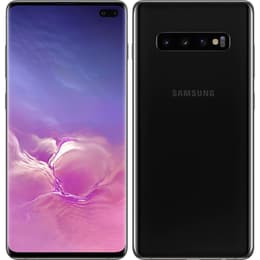



Galaxy S10 Vs Xiaomi Redmi Note 12 Pro

Galaxy S10
Galaxy S10
Starting at

Refurbished price:114.00

Versus €549.00 new

See options
Xiaomi Redmi Note 12 Pro
Starting at

Refurbished price:106.00

Versus €399.00 new

See options

Ratings

The Samsung Galaxy S10 (2019) and the Xiaomi Redmi Note 12 Pro (2022) are smartphones from different generations, offering distinct experiences. While the Galaxy S10 was a flagship device at its release, the Redmi Note 12 Pro entered the market as a mid-range contender. These differences manifest in their core specifications, software support, and overall user profiles they cater to.

Scores

Durability

The age difference between these two devices significantly impacts their expected practical lifespan and ongoing software support.

  • Release Timeline: The Samsung Galaxy S10 was released in March 2019, making it a considerably older device compared to the Xiaomi Redmi Note 12 Pro, which launched globally in 2022.
  • OS Support: The Galaxy S10 launched with Android 9 and received its last major Android update with Android 12. The Redmi Note 12 Pro launched with Android 12 and has since been updated to Android 14 (HyperOS), indicating a longer period of ongoing software support.
  • Repairability: The Galaxy S10 received a low repairability score of 3 out of 10 from iFixit, primarily due to extensive use of adhesive and a soldered charging port, making repairs challenging. Information on the Redmi Note 12 Pro's repairability is less widely detailed, but its construction is generally considered more accessible for common component replacements.

Year of Release

2019

2022

Compatible with latest Update

No

No

OS

Android

Android

Foldable

No

No

Performance

The performance of these devices reflects their original market positioning and the advancements in mobile technology over time.

  • Processor Capabilities: The Galaxy S10, powered by a flagship-tier processor from its era, handles demanding applications and multitasking smoothly. The Redmi Note 12 Pro features a current-generation mid-range processor designed for efficient daily use and moderate gaming.
  • System Responsiveness: Both devices offer a responsive user experience for general tasks. The Galaxy S10, despite its age, still provides a fluid interface, while the Redmi Note 12 Pro benefits from newer optimizations for app loading and navigation.
  • Storage and RAM: The Galaxy S10 offered configurations with up to 12GB of RAM and expandable storage via a microSD card. The Redmi Note 12 Pro comes with up to 12GB of RAM but does not support expandable storage.

Memory (GB)

8 GB

8 GB

Screen quality

Both smartphones feature AMOLED display technology, but they differ in resolution, refresh rate, and overall viewing experience.

  • Display Technology and Resolution: The Galaxy S10 features a 6.1-inch Dynamic AMOLED display with a high resolution of 3040x1440 pixels, offering a very sharp and detailed image. The Redmi Note 12 Pro has a larger 6.67-inch AMOLED display with a resolution of 2400x1080 pixels, providing vibrant colors and deep blacks.
  • Refresh Rate and Brightness: The Galaxy S10 has a standard 60Hz refresh rate. The Redmi Note 12 Pro offers a smoother visual experience with a 120Hz refresh rate. The Redmi Note 12 Pro also boasts a peak brightness of 900 nits, making it comfortable for outdoor viewing.
  • Viewing Experience: The Galaxy S10's higher pixel density results in exceptionally crisp text and images, while the Redmi Note 12 Pro's larger screen and higher refresh rate contribute to a more immersive and fluid scrolling experience.

Resolution

1440 x 3040

1080 x 2400

Screen type

Dynamic AMOLED

AMOLED

Audiovisual

The camera systems on these two phones approach photography with different strengths and capabilities.

  • Rear Camera System: The Galaxy S10 features a versatile triple-camera setup with a 12MP main lens, a 12MP telephoto lens with optical zoom, and a 16MP ultrawide lens, offering flexibility for various shooting scenarios. The Redmi Note 12 Pro also has a triple-camera system, led by a 50MP main sensor with optical image stabilization (OIS), an 8MP ultrawide, and a 2MP macro lens.
  • Low-Light and Everyday Photography: The Galaxy S10 was praised for its balanced images and good dynamic range in various conditions, including low light, at its release. The Redmi Note 12 Pro's 50MP main sensor with OIS performs well in daylight and shows improved low-light performance compared to its predecessors.
  • Video Recording and Front Camera: Both phones are capable of recording 4K video. The Galaxy S10 has a 10MP front camera, which was considered strong for selfies. The Redmi Note 12 Pro features a 16MP front camera that delivers good detail and exposure in selfies.

Main camera

12 megapixels

50 megapixels

Front camera

10 megapixels

16 megapixels

Miscellaneous

Beyond the core specifications, several other features contribute to the overall user experience of each device.

  • Connectivity: The Galaxy S10 supports 4G LTE and was among the first to feature Wi-Fi 6. The Redmi Note 12 Pro offers 5G connectivity, along with Wi-Fi 6 and Bluetooth 5.2.
  • Ports and Sensors: The Galaxy S10 notably includes a 3.5mm headphone jack and an ultrasonic in-display fingerprint sensor. The Redmi Note 12 Pro also retains the 3.5mm headphone jack and features a side-mounted fingerprint sensor. Both devices utilize USB-C for charging and data transfer.
  • Build and Ergonomics: The Galaxy S10 features a glass front and back with an aluminum frame, weighing 157g. The Redmi Note 12 Pro has a glass front, a plastic back, and a plastic frame, weighing 187g. The Galaxy S10 also has an IP68 rating for dust and water resistance, while the Redmi Note 12 Pro has an IP53 rating.

Weight

158 g

187 g

Screen size (in)

6.1

6.67

Network

4G

5G

SIM card

Physical SIM

Dual Physical SIM

Carrier compatibility

Unlocked

Unlocked

User feedback for the Samsung Galaxy S10 often highlights its premium build quality, vibrant display, and versatile camera system as strong points at its release. Many appreciated the inclusion of features like the headphone jack and expandable storage. Criticisms sometimes focused on its battery life for heavy users and the difficulty of repair. For the Xiaomi Redmi Note 12 Pro, users frequently praise its smooth 120Hz AMOLED display, reliable battery life, and 5G connectivity. Some common concerns include the performance of its secondary cameras and the presence of pre-installed software.

Users prioritizing a compact design, a very high-resolution display, and a telephoto camera may find the Samsung Galaxy S10 well-suited to their needs. Its established ecosystem and premium feel remain appealing. Conversely, users who value a larger, smoother display, longer battery life, and future-proof 5G connectivity will likely lean towards the Xiaomi Redmi Note 12 Pro. It offers a more modern software experience and faster charging capabilities.

For those considering either device, exploring quality-assured refurbished options can provide an eco-friendly alternative, extending the life of these products and offering a sustainable choice.


See all articles

Our recent comparisons