

Galaxy S10 Vs Galaxy S21 5G

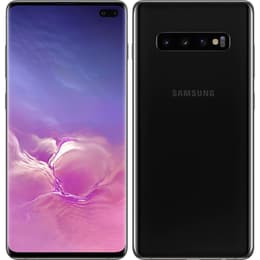
Galaxy S10
Galaxy S10
Starting at

Refurbished price:114.00

Versus €549.00 new

See options
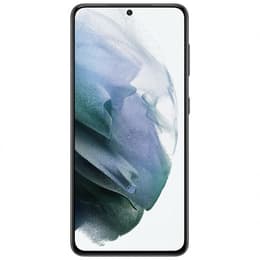
Galaxy S21 5G
Galaxy S21 5G
Starting at

Refurbished price:163.00

Versus €1,026.00 new

See options

Ratings

The Samsung Galaxy S10, released in March 2019, and the Samsung Galaxy S21 5G, launched in January 2021, represent different generations within Samsung's flagship smartphone series. While both devices offer a premium Android experience, the Galaxy S21 5G introduces significant advancements in performance, camera capabilities, and connectivity, reflecting its newer release. Both smartphones operate on the Android platform, providing access to a vast ecosystem of applications and services.

Scores

Durability

When considering the practical lifespan of these devices, their respective release dates and software support policies are key factors. The Galaxy S21 5G, being a newer model, benefits from a longer period of official software updates and security patches compared to its predecessor.

  • Software Support: The Galaxy S10 received major Android updates up to Android 12, concluding its major OS support cycle. The Galaxy S21 5G, having launched with Android 11, has received updates through Android 14 and is expected to receive further updates, extending its software longevity.
  • Expected Lifespan: Users prioritizing the latest software features and security updates will find the Galaxy S21 5G offers a longer practical lifespan due to its more recent release and extended support window.
  • Durability Features: Both devices feature robust builds, with the Galaxy S10 utilizing Gorilla Glass 6 and the Galaxy S21 5G upgrading to Gorilla Glass Victus for enhanced screen protection. The Galaxy S21 5G also features a polycarbonate back on the standard model, which some users find less prone to shattering than glass.

Year of Release

2019

2021

Compatible with latest Update

No

Yes

OS

Android

Android

Foldable

No

No

Performance

The performance difference between the Galaxy S10 and Galaxy S21 5G is notable, primarily due to the advancements in mobile processing technology over the two-year gap between their releases. This impacts everything from app loading times to demanding computational tasks.

  • Processing Power: The Galaxy S21 5G features a more advanced processor, which translates to smoother operation, faster app launches, and more efficient handling of graphically intensive applications and multitasking. The Galaxy S10, while still capable for everyday tasks, may exhibit slower performance with newer, more demanding software.
  • Battery Behavior: The Galaxy S21 5G is equipped with a 4000 mAh battery, a slight increase from the Galaxy S10's 3400 mAh battery. Combined with a more power-efficient processor, the Galaxy S21 5G generally offers improved battery endurance for typical daily use, though actual battery life can vary based on usage patterns and display settings.
  • Multitasking and Storage: Both devices offer ample RAM for smooth multitasking, with the standard Galaxy S10 typically featuring 8GB of RAM and the Galaxy S21 5G also coming with 8GB. Storage options are available in various capacities for both models, though the Galaxy S21 5G lacks a microSD card slot, a feature present in the Galaxy S10.

Memory (GB)

8 GB

8 GB

Screen quality

Both the Galaxy S10 and Galaxy S21 5G offer vibrant display experiences, but there are distinct differences in their specifications that affect visual quality and user interaction.

  • Display Technology and Resolution: Both phones utilize Dynamic AMOLED display technology, known for deep blacks and rich colors. The Galaxy S10 features a higher resolution display at 3040 x 1440 pixels, resulting in a sharper image density. The Galaxy S21 5G, on the other hand, has a resolution of 2400 x 1080 pixels.
  • Refresh Rate and Brightness: A key differentiator is the refresh rate; the Galaxy S10 has a standard 60Hz refresh rate, while the Galaxy S21 5G boasts an adaptive 120Hz refresh rate, providing a noticeably smoother scrolling and viewing experience. The Galaxy S21 5G also offers higher peak brightness, improving visibility in bright outdoor conditions.
  • Screen Size and Viewing: The Galaxy S10 features a 6.1-inch display, while the Galaxy S21 5G has a slightly larger 6.2-inch display. Both offer an immersive viewing experience with minimal bezels, though the S21 5G's adaptive refresh rate contributes to a more fluid visual experience.

Resolution

1440 x 3040

1080 x 2400

Screen type

Dynamic AMOLED

Dynamic AMOLED 2X

Audiovisual

The camera systems on the Galaxy S10 and Galaxy S21 5G both offer versatile photography options, but the newer model benefits from hardware refinements and advanced software processing.

  • Rear Camera Setup: The Galaxy S10 features a triple-camera system with a 12MP wide, 16MP ultrawide, and 12MP telephoto lens. The Galaxy S21 5G also has a triple-camera array, consisting of a 12MP wide, 12MP ultrawide, and a 64MP telephoto lens, offering enhanced zoom capabilities.
  • Photography Performance: The Galaxy S21 5G generally provides improved low-light performance and more sophisticated image processing, leading to clearer and more detailed photos in various conditions. Its telephoto lens offers greater flexibility for capturing distant subjects.
  • Video Recording and Audio: The Galaxy S21 5G supports 8K video recording at 24fps, a feature not available on the Galaxy S10, which records up to 4K at 60fps. Both devices offer good microphone quality for calls and video, and their speaker outputs provide a satisfactory media consumption experience.

Main camera

12 megapixels

12 megapixels

Front camera

10 megapixels

10 megapixels

Miscellaneous

Beyond the core specifications, several practical elements differentiate the Galaxy S10 and Galaxy S21 5G, impacting daily usability and connectivity.

  • Connectivity: A significant upgrade in the Galaxy S21 5G is its support for 5G networks, offering faster mobile data speeds where available, whereas the Galaxy S10 is limited to 4G LTE. The S21 5G also supports newer Wi-Fi standards (Wi-Fi 6) and Bluetooth 5.2, compared to the S10's Wi-Fi 6 and Bluetooth 5.0.
  • Ports and Sensors: The Galaxy S10 includes a 3.5mm headphone jack, a feature absent from the Galaxy S21 5G. Both devices utilize a USB-C port for charging and data transfer. For biometric security, both phones feature in-display fingerprint sensors, with the S21 5G often noted for its improved responsiveness.
  • Design and Handling: The Galaxy S10 weighs approximately 157 grams, while the Galaxy S21 5G is slightly heavier at around 169-171 grams. Both maintain a relatively compact form factor, making them comfortable for one-handed use. The S21 5G introduces a redesigned camera housing that integrates more seamlessly with the phone's frame.

Weight

158 g

171 g

Screen size (in)

6.1

6.2

Network

4G

5G

SIM card

Physical SIM

Physical SIM + eSIM

Carrier compatibility

Unlocked

Unlocked

User feedback for the Galaxy S10 often highlights its enduring appeal for those who appreciate its higher-resolution display and the inclusion of a 3.5mm headphone jack. Many users still find its performance adequate for everyday tasks, though some note its aging software support and potential battery degradation over time as areas of concern.

The Galaxy S21 5G is frequently praised for its modern performance, 5G connectivity, and significantly improved camera system, particularly its telephoto capabilities and low-light photography. Users also appreciate the smoother experience provided by its adaptive 120Hz display and the longer software update commitment from Samsung. Some common criticisms include the removal of the headphone jack and microSD card slot, and the shift to a polycarbonate back on the standard model, which some perceive as a less premium material.

Users who prioritize a traditional smartphone experience with a headphone jack and a very sharp display for media consumption may find the Galaxy S10 well-suited to their needs. Conversely, individuals seeking a device with cutting-edge performance, future-proof 5G connectivity, extended software support, and advanced camera features will likely lean towards the Galaxy S21 5G. Both models, especially when considering quality-assured refurbished options, offer a sustainable choice for consumers looking to make an informed purchasing decision.


See all articles

Our recent comparisons