
Galaxy S10 Vs iPhone 14 Pro

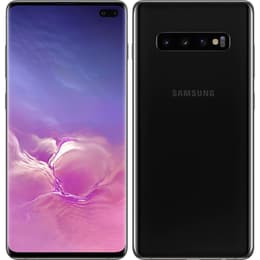
Galaxy S10
Galaxy S10
Starting at

Refurbished price:114.00

Versus €549.00 new

See options
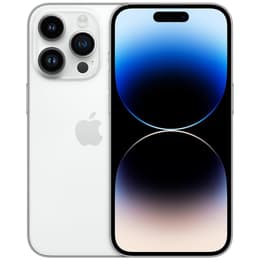
iPhone 14 Pro
iPhone 14 Pro
Starting at

Refurbished price:423.00

Versus €1,339.00 new

See options

Ratings

The Samsung Galaxy S10, released in March 2019, and the Apple iPhone 14 Pro, launched in September 2022, represent different generations and operating systems in the smartphone landscape. While the Galaxy S10 runs on Android, offering a customizable experience, the iPhone 14 Pro operates on iOS, known for its integrated ecosystem. The primary differentiators lie in their release timelines, which impact software support, processing power, and camera capabilities.

Scores

Durability

The longevity and support for a smartphone are crucial considerations for users. These two devices, separated by several years, offer different expectations in terms of software updates and practical lifespan.

  • Release Timeline: The Galaxy S10 was introduced in March 2019, making it an older device compared to the iPhone 14 Pro, which debuted in September 2022. This age difference significantly impacts their remaining software support.
  • OS Support Duration: The Galaxy S10 typically received three major Android OS updates, ending its official OS upgrade cycle around Android 12, with security updates concluding around March 2023. In contrast, the iPhone 14 Pro, launched with iOS 16, is expected to receive major iOS updates for approximately 5-6 years from its release, extending its software longevity significantly further into the future.
  • Repairability: The Galaxy S10 received a low repairability score of 3 out of 10 from iFixit, citing extensive adhesive and a soldered charging port as challenges for repair. The iPhone 14 Pro, while initially praised for some repair-friendly design changes, later had its repairability score downgraded by iFixit to 4 out of 10 due to software restrictions and parts pairing requirements that complicate independent repairs.

Year of Release

2019

2022

Compatible with latest Update

No

Yes

OS

Android

iOS

Foldable

No

No

Performance

Performance is a key aspect of the daily smartphone experience, influencing everything from app responsiveness to demanding tasks like gaming and video editing. The difference in release years between these two models results in a notable gap in their processing capabilities.

  • Overall System Responsiveness: The iPhone 14 Pro, with its more recent internal components, delivers a highly fluid and responsive user experience, handling demanding applications and multitasking with ease. Users report that it remains snappy even after extended use. The Galaxy S10, while capable for everyday tasks, may exhibit slower app loading times and less seamless multitasking compared to newer devices, particularly with more resource-intensive applications.
  • Battery Behavior: The iPhone 14 Pro generally offers solid battery life, often lasting a full day for many users, though some heavy users might find themselves needing to charge by evening. The Galaxy S10, with its older battery technology and age, may require more frequent charging, especially if the battery has not been replaced. Users have noted that a battery replacement can significantly improve its daily usability.
  • Storage Options: The Galaxy S10 offered storage options up to 512GB and included a microSD card slot for expandable storage, providing flexibility for users with large media libraries. The iPhone 14 Pro comes with internal storage options ranging from 128GB up to 1TB, but it does not offer expandable storage.

Memory (GB)

8 GB

6 GB

Screen quality

The display is the primary interface for smartphone interaction, and both devices offer high-quality viewing experiences, though with distinct characteristics and advancements.

  • Display Technology and Clarity: The Galaxy S10 features a 6.1-inch Dynamic AMOLED display with a resolution of 1440 x 3040 pixels, providing sharp images and vibrant colors with deep blacks. The iPhone 14 Pro also has a 6.1-inch Super Retina XDR OLED display, offering a resolution of 2556 x 1179 pixels. It is known for its exceptional color accuracy, deep blacks, and high contrast.
  • Brightness Levels and Refresh Rate: The iPhone 14 Pro features ProMotion technology, allowing for an adaptive refresh rate up to 120Hz, which contributes to smoother scrolling and more fluid animations. It also boasts a high peak brightness of up to 2000 nits for outdoor visibility. The Galaxy S10 has a standard 60Hz refresh rate and a peak brightness of around 800 nits, which is still good for most conditions but less bright than the iPhone 14 Pro.
  • Screen Features: The iPhone 14 Pro introduces the Dynamic Island, an interactive area around the front camera and sensors that displays alerts and background activities. It also features an Always-On display. The Galaxy S10 features a punch-hole cutout for its front camera and an edge-to-edge curved display design.

Resolution

1440 x 3040

1179 x 2556

Screen type

Dynamic AMOLED

LTPO Super Retina XDR OLED

Audiovisual

Camera capabilities are a significant factor for many smartphone users, and both the Galaxy S10 and iPhone 14 Pro offer advanced photographic and videographic tools, reflecting their respective eras of innovation.

  • Rear Camera System: The Galaxy S10 features a versatile triple-lens rear camera setup, including a 12MP wide-angle lens with variable aperture, a 12MP telephoto lens with 2x optical zoom, and a 16MP ultrawide lens. The iPhone 14 Pro boasts a more advanced triple-camera system, highlighted by a 48MP main sensor, a 12MP ultrawide lens, and a 12MP telephoto lens with 3x optical zoom.
  • Low-Light and Video Performance: The iPhone 14 Pro excels in low-light photography and video recording, with features like Photonic Engine and improved sensor-shift optical image stabilization contributing to clearer and more detailed results. It also offers advanced video capabilities like Cinematic mode and Action mode. The Galaxy S10 performs well in good lighting conditions, capturing solid photos and smooth video, but its low-light performance is not on par with newer flagships.
  • Front Camera and Audio: The Galaxy S10 has a 10MP front camera. The iPhone 14 Pro features a 12MP front camera with autofocus and improved low-light performance. Both devices offer good microphone quality for calls and recording, and their speaker outputs provide a decent media consumption experience.

Main camera

12 megapixels

48 megapixels

Front camera

10 megapixels

12 megapixels

Miscellaneous

Beyond the core features, several practical elements contribute to the overall user experience, including connectivity, physical design, and additional functionalities.

  • Connectivity and Ports: The Galaxy S10 supports 4G LTE and Wi-Fi 6, and notably includes a 3.5mm headphone jack and a USB-C port. The iPhone 14 Pro supports 5G connectivity and Wi-Fi 6, offering faster wireless speeds. It features Apple's proprietary Lightning port and does not include a headphone jack.
  • Sensors and Biometrics: The Galaxy S10 features an ultrasonic in-display fingerprint sensor and face recognition. The iPhone 14 Pro relies on Face ID for secure facial recognition.
  • Build Materials and Handling: The Galaxy S10 has a glass front (Gorilla Glass 6) and back (Gorilla Glass 5) with an aluminum frame, offering a premium feel. The iPhone 14 Pro features a Ceramic Shield front, a textured matte glass back, and a stainless steel frame, contributing to its robust build. The iPhone 14 Pro is slightly heavier than the Galaxy S10.

Weight

158 g

206 g

Screen size (in)

6.1

6.1

Network

4G

5G

SIM card

Physical SIM

Physical SIM + eSIM

Carrier compatibility

Unlocked

Unlocked

The Samsung Galaxy S10 and iPhone 14 Pro cater to different user needs, largely due to their generational gap and distinct operating system philosophies. Users often praise the Galaxy S10 for its vibrant AMOLED display, the inclusion of a 3.5mm headphone jack, and expandable storage, which are features less common in newer flagships. Criticisms for the S10 often revolve around its aging software support and battery degradation over time, which can necessitate a replacement.

The iPhone 14 Pro receives acclaim for its powerful performance, exceptional camera system, and the innovative Dynamic Island feature. Some users, however, have noted that while its battery life is solid, it might not be groundbreaking for heavy usage, and the repair process can be complex due to Apple's ecosystem.

Users prioritizing a highly customizable Android experience, a traditional headphone jack, and expandable storage might find the Galaxy S10 a suitable option, especially if their usage is not heavily reliant on the latest software updates. Conversely, individuals seeking cutting-edge camera technology, top-tier performance for demanding applications, and a long period of software support within the iOS ecosystem will likely find the iPhone 14 Pro better suited to their needs. Both devices, when considering a quality-assured refurbished option, offer an eco-friendly alternative for consumers looking to make informed and sustainable choices.


See all articles

Our recent comparisons