

Galaxy Z Flip6 Vs iPhone 14 Pro Max

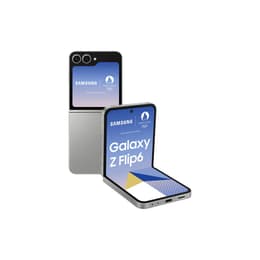
Galaxy Z Flip6
Galaxy Z Flip6
Starting at

Refurbished price:415.00

Versus €1,199.99 new

See options
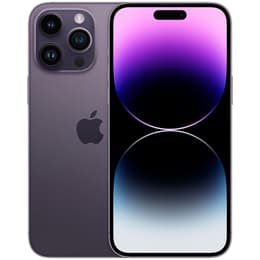
iPhone 14 Pro Max
iPhone 14 Pro Max
Starting at

Refurbished price:446.00

Versus €1,489.00 new

See options

Ratings

The Samsung Galaxy Z Flip6, released in July 2024, and the Apple iPhone 14 Pro Max, launched in September 2022, represent distinct approaches to premium smartphone design and functionality. While the Z Flip6 offers a unique foldable form factor running on Android, the iPhone 14 Pro Max provides a traditional slab design powered by iOS. The primary differentiators lie in their physical design, operating system ecosystems, and specific hardware capabilities tailored to different user preferences.

Scores

Durability

When considering the long-term usability of these devices, their release timelines and software support policies are key factors.

  • Release and Age: The Galaxy Z Flip6 is a more recent device, having been released in July 2024. The iPhone 14 Pro Max was released earlier, in September 2022. This difference in launch dates means the Z Flip6 benefits from newer hardware and a longer period before its technology becomes outdated.
  • Software Longevity: Samsung has committed to providing seven years of Android OS upgrades and seven years of security updates for the Galaxy Z Flip6, offering extensive software support. Apple typically provides iOS updates for its devices for five to seven years, meaning the iPhone 14 Pro Max will also receive substantial software support, though potentially for a slightly shorter duration than the Z Flip6's stated policy.
  • Physical Durability: The Galaxy Z Flip6 features an enhanced armored aluminum frame and is rated IP48 for water and dust resistance, offering protection against splashes and dust particles up to 1mm. Its inner foldable screen is protected by ultra-thin glass, while the outer cover screen uses Gorilla Glass Victus 2. The iPhone 14 Pro Max boasts a Ceramic Shield front cover, a glass back, and a stainless steel frame, along with an IP68 rating, indicating higher resistance to dust and water submersion. The Z Flip6's hinge has been improved to better handle shocks and pressure, and the crease on its main display is notably less pronounced than in previous models.

Year of Release

2024

2022

Compatible with latest Update

Yes

Yes

OS

Android

iOS

Foldable

Yes

No

Performance

Both devices deliver robust performance, but they achieve this through different hardware architectures and software optimizations.

  • Processing Power: The Galaxy Z Flip6 is equipped with a current-generation processor, the Qualcomm Snapdragon 8 Gen 3 for Galaxy, which handles demanding applications and multitasking efficiently. The iPhone 14 Pro Max features Apple's A16 Bionic chip, known for its strong performance in graphics-intensive tasks and overall system responsiveness. Both processors ensure smooth operation for everyday use, gaming, and content creation.
  • Multitasking and Storage: The Z Flip6 typically comes with 12GB of RAM, facilitating seamless transitions between multiple open applications. It offers storage options of 256GB or 512GB. The iPhone 14 Pro Max includes 6GB of RAM and provides a wider range of storage configurations, from 128GB up to 1TB.
  • Battery Behavior: The Galaxy Z Flip6 houses a 4,000 mAh battery, which, combined with its efficient processor, provides improved battery life compared to its predecessor, often lasting through a full day of moderate to heavy use. The iPhone 14 Pro Max, with its 4,323 mAh battery, is recognized for its extended battery endurance, frequently offering more than a full day of usage for many users.

Memory (GB)

12 GB

6 GB

Screen quality

The display experience on these two smartphones differs significantly due to their fundamental design philosophies.

  • Display Technology and Size: The Galaxy Z Flip6 features a 6.7-inch foldable Dynamic AMOLED 2X main display, offering vibrant colors and deep blacks. It also includes a 3.4-inch Super AMOLED cover screen for quick interactions when folded. The iPhone 14 Pro Max has a 6.7-inch Super Retina XDR OLED display, providing a consistent, expansive viewing area.
  • Resolution and Clarity: The Z Flip6's main display has a resolution of 1080 x 2640 pixels. The iPhone 14 Pro Max offers a higher resolution of 2796 x 1290 pixels, resulting in a slightly sharper image with 460 pixels per inch.
  • Brightness and Refresh Rate: Both devices feature high refresh rates for smooth scrolling and responsiveness. The Z Flip6's main display has a 120Hz variable refresh rate. The iPhone 14 Pro Max incorporates ProMotion technology, with an adaptive refresh rate up to 120Hz, capable of dropping to 1Hz for power efficiency with its Always-On display. The iPhone 14 Pro Max can reach a peak outdoor brightness of 2000 nits, while the Z Flip6's main display can achieve 2600 nits.

Resolution

1080 x 2640

1290 x 2796

Screen type

Foldable Dynamic LTPO AMOLED 2X

LTPO Super Retina XDR OLED

Audiovisual

Both smartphones offer advanced camera systems, but with different strengths and configurations.

  • Rear Camera Systems: The Galaxy Z Flip6 features a dual-camera setup on the rear, consisting of a 50MP wide-angle main sensor with optical image stabilization (OIS) and a 12MP ultra-wide-angle lens. The iPhone 14 Pro Max has a triple-camera system, including a 48MP main sensor with sensor-shift OIS, a 12MP ultrawide lens with a 120-degree field of view, and a 12MP telephoto lens offering 3x optical zoom. The iPhone also includes a LiDAR scanner for improved depth sensing.
  • Photography Performance: The Z Flip6's 50MP main camera captures detailed photos in good lighting, with improvements in low-light performance for its ultrawide lens. However, some user reports indicate occasional inconsistencies with portrait mode and autofocus, and noticeable noise in very low-light conditions. The iPhone 14 Pro Max is known for its consistent and high-quality image capture across various lighting conditions, with strong low-light performance and advanced computational photography features.
  • Video Recording and Front Camera: Both devices offer high-quality video recording capabilities. The Z Flip6 supports 4K video recording, and its main sensor provides good video stabilization. The iPhone 14 Pro Max offers advanced video features like Cinematic mode, Action mode, and ProRes video recording, along with 4K video at various frame rates. For selfies and video calls, the Z Flip6 has a 10MP front camera, while the iPhone 14 Pro Max features a 12MP front camera with autofocus.

Main camera

50 megapixels

48 megapixels

Front camera

10 megapixels

12 megapixels

Miscellaneous

Beyond core specifications, several practical elements contribute to the overall user experience of these devices.

  • Connectivity: Both smartphones support 5G connectivity for fast mobile data. The Galaxy Z Flip6 supports newer Wi-Fi standards like Wi-Fi 6E or Wi-Fi 7 and Bluetooth 5.3 or 5.4. The iPhone 14 Pro Max supports Wi-Fi 6 and Bluetooth 5.3.
  • Ports and Biometrics: The Z Flip6 utilizes a USB-C port for charging and data transfer. The iPhone 14 Pro Max uses Apple's proprietary Lightning port. For security and convenience, the Z Flip6 typically features a side-mounted fingerprint sensor, while the iPhone 14 Pro Max relies on Face ID for facial recognition.
  • Design and Handling: The Galaxy Z Flip6's foldable design allows it to be more compact when closed, making it highly portable. When unfolded, its dimensions are approximately 71.9 x 165.1 x 6.9 mm, and it weighs around 187g. The iPhone 14 Pro Max is a larger, heavier device at 240g, with dimensions of 160.7 x 77.6 x 7.9 mm. The Z Flip6's cover screen offers quick access to notifications and widgets without unfolding the device. The iPhone 14 Pro Max features the Dynamic Island, an interactive area around the front camera cutout that displays alerts and background activities.

Weight

187 g

120 g

Screen size (in)

6.7

6.7

Network

5G

5G

SIM card

Physical SIM + eSIM

Physical SIM + eSIM

Carrier compatibility

Unlocked

Unlocked

The Samsung Galaxy Z Flip6 and iPhone 14 Pro Max cater to different user priorities, each excelling in distinct areas. Users frequently praise the Z Flip6 for its innovative foldable design, which offers a unique blend of portability and a large screen experience. Its extended software support commitment is also a significant advantage for those seeking long-term device usability. However, some users have noted that while its camera system is improved, it may not consistently match the performance of traditional flagship phones in all scenarios, particularly in very challenging lighting conditions. The battery life, while better than previous Flip models, can still be a point of discussion for heavy users.

The iPhone 14 Pro Max is widely lauded for its exceptional battery life, robust performance, and highly capable camera system that delivers consistent results across various photographic situations. Its display quality, with high brightness and adaptive refresh rate, also receives frequent positive feedback. Some common criticisms, however, revolve around its larger size and weight, which can make one-handed use challenging for some individuals. The Lightning port, while familiar to Apple users, is also a point of contention for those preferring the more universal USB-C standard.

Users prioritizing a compact, stylish device with a unique form factor and long-term software commitment may find the Galaxy Z Flip6 well-suited to their needs. Its ability to fold makes it highly portable, and the cover screen adds a layer of convenience. Conversely, users who value a consistently excellent camera, industry-leading performance, and extended battery life in a traditional smartphone design will likely lean toward the iPhone 14 Pro Max. Both devices offer a premium experience, and choosing between them often comes down to personal preference regarding form factor, operating system, and specific feature emphasis. For those considering a more sustainable choice, both models are available as quality-assured refurbished options, extending their lifecycle and reducing electronic waste.

See all articles

Our recent comparisons