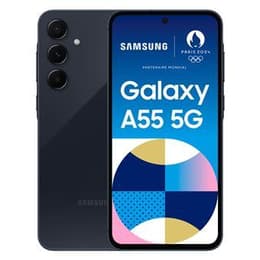
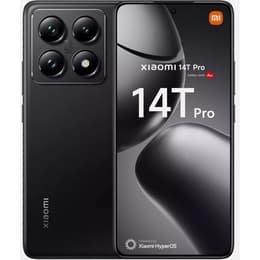


Galaxy A55 Vs Xiaomi 14T Pro

Galaxy A55
Galaxy A55
Starting at

Refurbished price:230.00

Versus €513.35 new

See options
Xiaomi 14T Pro
Xiaomi 14T Pro
Starting at

Refurbished price:395.00

Versus €1,500.00 new

See options

Ratings

The Samsung Galaxy A55, released in March 2024, and the Xiaomi 14T Pro, launched in September 2024, are both Android smartphones designed to offer a blend of features for everyday use. While the Galaxy A55 focuses on a balanced user experience with robust software support, the Xiaomi 14T Pro emphasizes high-end performance and rapid charging capabilities. Both devices run on the Android operating system, with the Galaxy A55 featuring Samsung's One UI and the Xiaomi 14T Pro utilizing Xiaomi HyperOS.

Scores

Durability

When considering the long-term usability of these devices, their release timelines and software support policies are key factors.

  • Software Longevity: The Samsung Galaxy A55, released in March 2024, is slated to receive four major Android OS upgrades and five years of security updates from its launch date, ensuring a prolonged period of current software features and security patches. The Xiaomi 14T Pro, launched in September 2024, shipped with Android 14 and has since been updated to Android 15, suggesting a commitment to ongoing software support, though a specific number of future OS updates is not as widely publicized as Samsung's policy.
  • Build Durability: The Galaxy A55 features a glass front protected by Corning Gorilla Glass Victus+ and a glass back, framed by aluminum, offering a sturdy construction with an IP67 rating for dust and water resistance. The Xiaomi 14T Pro also boasts a metal frame and an IP68 rating, indicating a higher level of protection against dust and water immersion.
  • Practical Lifespan: Both phones are built with materials and software commitments that suggest a practical lifespan of several years. The Galaxy A55's explicit update policy provides a clear expectation for users prioritizing long-term software currency, while the Xiaomi 14T Pro's robust build and high-performance components contribute to its potential for extended use.

Year of Release

2024

2024

Compatible with latest Update

Yes

Yes

OS

Android

Android

Foldable

No

No

Performance

The performance of a smartphone is crucial for daily tasks, from app navigation to demanding applications and gaming.

  • Processing Power: The Samsung Galaxy A55 is equipped with an in-house processor designed to handle multitasking and everyday applications smoothly, offering improved CPU and GPU performance compared to its predecessor. The Xiaomi 14T Pro, on the other hand, integrates a high-performance processor known for its advanced architecture, which translates to very responsive operation, particularly for intensive gaming and complex computational tasks.
  • Multitasking and Storage: The Galaxy A55 is available with 8GB or 12GB of RAM and offers storage options of 128GB or 256GB, with the added flexibility of expandable storage via a microSD card. The Xiaomi 14T Pro typically comes with 12GB or 16GB of RAM and offers larger internal storage configurations, ranging from 256GB up to 1TB, but it does not support expandable storage.
  • Battery Behavior: Both devices feature a 5000 mAh battery capacity, providing ample power for a full day of typical usage. The Xiaomi 14T Pro distinguishes itself with rapid charging capabilities, supporting 120W wired charging and 50W wireless charging, allowing for very quick power replenishment. The Galaxy A55 supports 25W fast charging.

Memory (GB)

8 GB

12 GB

Screen quality

The display is a primary interface for users, and both smartphones offer distinct visual experiences.

  • Display Technology and Clarity: The Samsung Galaxy A55 features a 6.6-inch Super AMOLED display with a Full HD+ resolution (1080 x 2340 pixels), delivering deep blacks and vibrant colors. The Xiaomi 14T Pro comes with a slightly larger 6.67-inch AMOLED display, offering a higher resolution of 2712x1220 pixels, which results in a sharper visual experience.
  • Brightness and Smoothness: The Galaxy A55's display can reach a peak brightness of 1000 nits, ensuring good visibility in various lighting conditions, and features a 120Hz refresh rate for smooth scrolling and animations. The Xiaomi 14T Pro also offers a high refresh rate, up to 144Hz, providing an even more fluid visual experience, particularly noticeable in fast-paced content and gaming.
  • Viewing Experience: Both phones provide immersive viewing experiences suitable for media consumption and daily tasks. The Galaxy A55's Super AMOLED panel offers excellent contrast, while the Xiaomi 14T Pro's higher resolution and refresh rate cater to users who prioritize maximum detail and fluidity.

Resolution

1080 x 2340

1220 x 2712

Screen type

Super AMOLED

AMOLED

Audiovisual

For many users, the camera system is a critical component, and both devices offer capable setups for capturing photos and videos.

  • Rear Camera System: The Samsung Galaxy A55 features a versatile triple-camera setup on the rear, including a 50MP main sensor with optical image stabilization (OIS), a 12MP ultrawide lens, and a 5MP macro lens. The Xiaomi 14T Pro also sports a 50MP main camera, which includes a specialized sensor for enhanced light capture and often benefits from advanced imaging partnerships, alongside additional lenses for varied photographic needs.
  • Photography Performance: The Galaxy A55 is noted for capturing detailed and vibrant photos in good lighting, with its OIS aiding in sharper images and more stable video. The Xiaomi 14T Pro, with its advanced main sensor and computational photography capabilities, aims to deliver strong performance across different lighting conditions, including improved low-light photography and detailed shots.
  • Video and Front Camera: Both smartphones are capable of recording 4K video at 30 frames per second with their main cameras. The Xiaomi 14T Pro extends its video capabilities to 8K resolution at 24 or 30 frames per second, offering higher detail for video enthusiasts. For selfies and video calls, both devices are equipped with a 32MP front-facing camera.

Main camera

50 megapixels

50 megapixels

Front camera

32 megapixels

32 megapixels

Miscellaneous

Beyond the core features, several other aspects contribute to the overall user experience and practical utility of these smartphones.

  • Connectivity and Ports: Both the Galaxy A55 and Xiaomi 14T Pro support 5G connectivity for fast mobile data. The Galaxy A55 includes Wi-Fi 6 and Bluetooth 5.3, along with a USB-C 2.0 port. The Xiaomi 14T Pro also features a USB Type-C port, but notably omits a traditional 3.5mm headphone jack, a common trend in more recent devices.
  • Biometric Security and Additional Features: The Galaxy A55 incorporates an in-display optical fingerprint sensor for secure unlocking. The Xiaomi 14T Pro typically includes advanced biometric options, often an in-display fingerprint sensor, and may also feature an infrared (IR) blaster, allowing it to function as a universal remote control for various home electronics. Both devices support NFC for contactless payments.
  • Design and Handling: The Galaxy A55 weighs 213g and has dimensions of 161.1 x 77.4 x 8.2 mm. The Xiaomi 14T Pro is slightly lighter at 209g and has dimensions of 160.4 x 75.1 x 8.4mm, making it marginally more compact in width and height while being slightly thicker. Both phones feature modern designs with durable build materials.

Weight

213 g

209 g

Screen size (in)

6.6

6.67

Network

5G

5G

SIM card

Physical SIM

Dual Physical SIM

Carrier compatibility

Unlocked

Unlocked

User feedback for the Samsung Galaxy A55 often highlights its reliable performance for daily tasks, consistent software updates, and the quality of its Super AMOLED display. Some users appreciate its balanced approach to features and its robust build with IP67 water and dust resistance. Potential criticisms sometimes point to its charging speed not being as fast as some competitors. The Xiaomi 14T Pro, on the other hand, receives praise for its powerful processing capabilities, especially for gaming and demanding applications, and its exceptionally fast wired and wireless charging. Its higher resolution and refresh rate display are also frequently noted as strong points. Some users might find the absence of expandable storage a limitation, and the specific long-term software update policy might be less defined compared to Samsung's.

Users prioritizing a device with a guaranteed long software support window and a balanced feature set for everyday use, coupled with expandable storage, may find the Samsung Galaxy A55 to be a suitable choice. Its IP67 rating and Gorilla Glass Victus+ offer good durability for general use. Conversely, users who prioritize cutting-edge performance, extremely fast charging, a higher refresh rate display, and advanced video recording capabilities, and who do not require expandable storage, might lean towards the Xiaomi 14T Pro. Both devices represent solid options in their respective segments, and considering a quality-assured refurbished option for either model can be an eco-friendly alternative to purchasing new.


See all articles

Our recent comparisons