

Galaxy A55 Vs iPhone 13

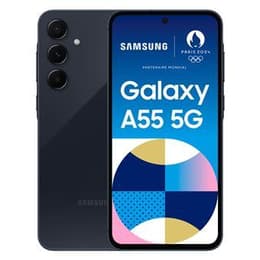
Galaxy A55
Galaxy A55
Starting at

Refurbished price:229.00

Versus €513.35 new

See options
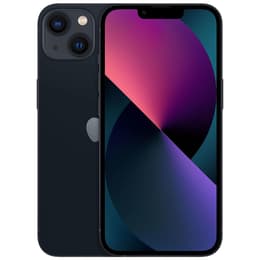
iPhone 13
iPhone 13
Starting at

Refurbished price:234.00

Versus €769.00 new

See options

Ratings

The Samsung Galaxy A55, released in March 2024, and the Apple iPhone 13, launched in September 2021, represent distinct approaches to smartphone design and functionality. While both devices offer robust features for everyday use, they cater to different user preferences through their respective operating systems and hardware philosophies. The primary distinctions lie in their release timelines, the ecosystems they belong to, and their focus on specific user experiences.

Scores

Durability

When considering the long-term usability of a smartphone, software support and physical resilience are key factors. The Galaxy A55 and iPhone 13 offer different longevity prospects based on their respective manufacturers' update policies and build materials.

  • Software Support: The Samsung Galaxy A55, launched with Android 14, is promised to receive four major Android operating system updates and five years of security updates, extending its support until approximately March 2029. The iPhone 13, which debuted with iOS 15, typically receives major iOS updates for five to seven years, meaning it is likely to continue receiving new iOS versions until around 2026-2028, with security updates often extending beyond that period.
  • Physical Durability: The Galaxy A55 features Corning Gorilla Glass Victus+ on its front for enhanced screen protection and carries an IP67 rating for dust and water resistance. The iPhone 13 incorporates Apple's Ceramic Shield front cover, designed for increased drop performance, and boasts an IP68 rating, offering slightly better water immersion protection compared to the A55.
  • Expected Lifespan: Both devices are built to last, but the iPhone 13's longer historical software support from Apple may offer a slightly extended period of receiving new features and compatibility with the latest applications. However, the Galaxy A55's newer release date means its guaranteed update period extends further into the future from the current date.

Year of Release

2024

2021

Compatible with latest Update

Yes

Yes

OS

Android

iOS

Foldable

No

No

Performance

The performance of a smartphone is crucial for daily tasks, from browsing and social media to more demanding applications and gaming. Both the Galaxy A55 and iPhone 13 deliver capable performance, though with different underlying architectures and real-world outcomes.

  • Processing Power: The iPhone 13 generally offers smoother performance, particularly for graphically intensive games and demanding applications, due to its optimized hardware and software integration. The Galaxy A55 handles everyday tasks and multitasking efficiently, and its higher RAM configurations can contribute to keeping more applications open in memory without reloading.
  • Battery Endurance: The Galaxy A55 is equipped with a larger 5000 mAh battery, which typically translates to longer usage times on a single charge compared to the iPhone 13's 3240 mAh battery. Users often report the A55 lasting through a full day of heavy use with power to spare. The iPhone 13's battery life is also robust, but heavy users may find themselves needing to charge more frequently.
  • Storage and Multitasking: The Galaxy A55 offers storage options of 128GB or 256GB and includes a microSD card slot for expandable storage, providing flexibility for users who need more space. It also comes with 8GB or 12GB of RAM. The iPhone 13 is available with 128GB, 256GB, or 512GB of internal storage but does not support expandable storage. It features 4GB of RAM.

Memory (GB)

8 GB

4 GB

Screen quality

The display is a primary interface for smartphone interaction, and both devices offer vibrant viewing experiences with distinct characteristics.

  • Display Technology and Size: The Samsung Galaxy A55 features a larger 6.6-inch Super AMOLED display, providing ample screen real estate for media consumption and productivity. The iPhone 13 comes with a 6.1-inch Super Retina XDR OLED display, offering a more compact form factor.
  • Refresh Rate and Smoothness: A notable difference is the refresh rate; the Galaxy A55 boasts a 120Hz refresh rate, which results in smoother scrolling and more fluid animations, enhancing the overall user experience. The iPhone 13 has a standard 60Hz refresh rate.
  • Resolution and Brightness: The iPhone 13's display has a higher pixel density of approximately 460 pixels per inch (ppi) and a peak brightness of 1200 nits, contributing to sharper images and better visibility in bright outdoor conditions. The Galaxy A55 offers a resolution of 1080x2340 pixels with approximately 390 ppi and a peak brightness of 1000 nits.

Resolution

1080 x 2340

1170 x 2532

Screen type

Super AMOLED

Super Retina XDR OLED

Audiovisual

For many users, the camera system is a deciding factor, and both the Galaxy A55 and iPhone 13 provide capable photographic and videographic tools.

  • Rear Camera Systems: The Galaxy A55 features a versatile triple-camera setup, including a 50-megapixel main sensor with optical image stabilization (OIS), a 12-megapixel ultrawide lens, and a 5-megapixel macro lens. The iPhone 13 is equipped with a dual 12-megapixel camera system, comprising a wide lens with sensor-shift OIS and an ultrawide lens.
  • Photography Performance: The Galaxy A55 often produces vivid colors and performs well in low-light conditions, capturing images with less noise. The iPhone 13 is recognized for its consistent color accuracy, excellent dynamic range, and reliable performance across various lighting scenarios, particularly in computational photography.
  • Video Recording and Front Camera: The iPhone 13 offers superior video recording capabilities, supporting 4K resolution at up to 60 frames per second, along with strong video stabilization. The Galaxy A55 records 4K video at 30 frames per second. For selfies, the A55 has a 32-megapixel front camera, while the iPhone 13 features a 12-megapixel front camera.

Main camera

50 megapixels

12 megapixels

Front camera

32 megapixels

12 megapixels

Miscellaneous

Beyond core performance, several practical elements contribute to the overall user experience and can influence a purchasing decision.

  • Connectivity and Ports: Both devices support 5G connectivity and Wi-Fi 6 for fast wireless internet. The Galaxy A55 utilizes a USB-C 2.0 port, which is a widely adopted standard, and supports Bluetooth 5.3. The iPhone 13 uses Apple's proprietary Lightning port and features Bluetooth 5.0.
  • Biometrics and Expandable Storage: The Galaxy A55 includes an in-display fingerprint sensor for secure unlocking and offers a microSD card slot for expanding storage, a feature not present on the iPhone 13. The iPhone 13 relies on Face ID for biometric authentication.
  • Design and Handling: The Galaxy A55 is larger and heavier, measuring 161.1 x 77.4 x 8.2 mm and weighing 213g. The iPhone 13 is more compact and lighter at 146.7 x 71.5 x 7.65 mm and 173g, which can make it easier for one-handed use. The A55 features a metal frame and Gorilla Glass Victus+ on the front, while the iPhone 13 has a Ceramic Shield front and an aluminum frame.

Weight

213 g

173 g

Screen size (in)

6.6

6.1

Network

5G

5G

SIM card

Physical SIM

Physical SIM + eSIM

Carrier compatibility

Unlocked

Unlocked

Connector

USB-C

Lightning

Choosing between the Samsung Galaxy A55 and the iPhone 13 involves weighing different priorities and ecosystem preferences. User feedback often highlights the iPhone 13's strengths in raw performance, software optimization, and consistent camera output. Conversely, the Galaxy A55 is frequently praised for its larger, smoother display, extended battery life, and the flexibility offered by the Android operating system, including expandable storage.

Users prioritizing a highly optimized and fluid user experience, particularly for demanding applications and video recording, may find the iPhone 13 well-suited to their needs. Its compact size and robust software support timeline also appeal to those seeking a device with a longer feature update cycle within the Apple ecosystem. For individuals who value a larger display with a high refresh rate for a more immersive viewing and scrolling experience, along with longer battery life and the option for expandable storage, the Galaxy A55 presents a compelling choice. Its Android platform also offers greater customization possibilities.

Ultimately, the decision depends on whether a user prioritizes the refined performance and ecosystem of the iPhone 13 or the expansive display, battery endurance, and customization of the Galaxy A55. Both devices offer a quality experience, and considering a quality-assured refurbished option for either model can be an eco-friendly alternative for making an informed choice.
See all articles

Our recent comparisons