

Galaxy S10 Vs Galaxy S21+ 5G

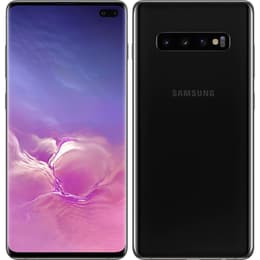
Galaxy S10
Galaxy S10
Starting at

Refurbished price:114.00

Versus €549.00 new

See options
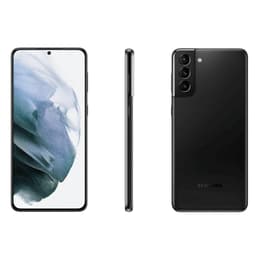
Galaxy S21+ 5G
Galaxy S21+ 5G
Starting at

Refurbished price:200.00

Versus €1,299.99 new

See options

Ratings

The Samsung Galaxy S10, released in March 2019, and the Samsung Galaxy S21 Plus 5G, launched in January 2021, represent different generations within Samsung's flagship smartphone series. While both devices offer a premium Android experience, the S21 Plus 5G introduces advancements in processing power, display technology, and connectivity. Both phones operate on the Android platform, featuring Samsung's One UI for a customized user interface.

Scores

Durability

The practical lifespan of a smartphone is influenced by its release timeline, software support, and physical durability. The Galaxy S10, being an older model, has reached the end of its official software support, while the S21 Plus 5G benefits from a more extended update policy.

  • Release Timeline: The Galaxy S10 was released in March 2019, making it approximately two years older than the Galaxy S21 Plus 5G, which launched in January 2021. This age difference directly impacts their respective software support cycles.
  • Software Longevity: The Galaxy S10 received three major Android operating system updates, concluding with Android 12, and its official software support, including security patches, ended around March 2023. In contrast, the Galaxy S21 Plus 5G was eligible for four major Android OS updates, receiving its final major update, Android 15 (One UI 7.0), in May 2025, with security updates expected to continue through early 2026.
  • Physical Durability: Both devices feature an IP68 rating for dust and water resistance, indicating a similar level of protection against environmental elements. The S21 Plus 5G incorporates Gorilla Glass Victus for its display, offering enhanced scratch and drop resistance compared to the S10's Gorilla Glass 6.

Year of Release

2019

2021

Compatible with latest Update

No

Yes

OS

Android

Android

Foldable

No

No

Performance

Performance differences between these two models are notable, primarily due to the generational leap in internal components, affecting overall speed and efficiency for various tasks.

  • Processing Power: The Galaxy S21 Plus 5G features a more recent and powerful processor, which translates to faster app loading times, smoother multitasking, and more efficient handling of demanding applications and games. The S10's processor, while capable for its time, offers less headroom for future software and intensive tasks.
  • Multitasking and Responsiveness: Both devices come with 8GB of RAM in their base configurations, allowing for competent multitasking. However, the S21 Plus 5G's more advanced processor architecture contributes to a more consistently responsive user experience, especially when switching between multiple open applications or running complex processes.
  • Storage Options: The Galaxy S10 offered expandable storage via a microSD card slot, providing flexibility for users to increase their storage capacity. The Galaxy S21 Plus 5G, however, does not include a microSD card slot, meaning users must rely solely on the internal storage options of 128GB or 256GB.

Memory (GB)

8 GB

8 GB

Screen quality

The display experience on both the Galaxy S10 and S21 Plus 5G is a highlight, though the newer model introduces significant enhancements in refresh rate and overall visual fluidity.

  • Display Technology and Resolution: Both phones utilize Dynamic AMOLED technology, known for deep blacks and vibrant colors. The Galaxy S10 features a 6.1-inch display with a Quad HD+ resolution (1440x3040 pixels), offering a very sharp image. The S21 Plus 5G has a larger 6.7-inch display with a Full HD+ resolution (1080x2400 pixels). While the S10 has a higher pixel density, the S21 Plus 5G's larger screen provides a more expansive viewing area.
  • Refresh Rate and Smoothness: A key differentiator is the refresh rate. The Galaxy S10 has a standard 60Hz refresh rate. The S21 Plus 5G features an adaptive 120Hz refresh rate, which dynamically adjusts based on content, providing noticeably smoother scrolling and more fluid animations, enhancing the overall user interaction.
  • Brightness and Viewing Experience: The S21 Plus 5G offers a higher peak brightness of 1300 nits, which can improve outdoor visibility compared to the S10. Both displays deliver excellent color accuracy and contrast, making them suitable for media consumption, though the S21 Plus 5G's higher refresh rate and larger size contribute to a more immersive experience.

Resolution

1440 x 3040

1080 x 2400

Screen type

Dynamic AMOLED

Dynamic AMOLED 2X

Audiovisual

Both devices are equipped with versatile camera systems designed to capture a range of photographic and video content, with the S21 Plus 5G offering more advanced capabilities.

  • Rear Camera System: The Galaxy S10 features a triple-camera setup with a 12 MP wide-angle lens, a 12 MP telephoto lens with 2x optical zoom, and a 16 MP ultra-wide-angle lens. The Galaxy S21 Plus 5G also has a triple-camera system, comprising a 12 MP wide-angle lens, a 64 MP telephoto lens (offering 1.1x optical zoom and up to 3x hybrid optical zoom), and a 12 MP ultra-wide-angle lens. The S21 Plus 5G's telephoto lens provides greater flexibility for zooming.
  • Photography and Video Quality: The S21 Plus 5G generally offers improved low-light performance and enhanced image processing, leading to clearer and more detailed photos in various conditions. For video recording, the S10 supports 4K resolution at 60 frames per second, while the S21 Plus 5G elevates this to 8K resolution at 24 frames per second, providing higher detail for video creators.
  • Audio and Media Experience: Both phones deliver good speaker output for media consumption. User feedback for the S10 indicated good microphone quality for calls and recordings. The S21 Plus 5G also features improved microphone quality, particularly for video recording, contributing to a better overall audio-visual experience.

Main camera

12 megapixels

12 megapixels

Front camera

10 megapixels

10 megapixels

Miscellaneous

Beyond core specifications, several practical features and design elements differentiate the Galaxy S10 and S21 Plus 5G, impacting daily usability and connectivity.

  • Connectivity and Ports: The Galaxy S10 supports 4G LTE networks, while the S21 Plus 5G includes 5G connectivity, offering significantly faster mobile data speeds in supported areas. The S10 retains a 3.5mm headphone jack, a feature absent on the S21 Plus 5G, which relies on USB-C or wireless audio solutions. Both devices use USB-C for charging and data transfer.
  • Biometric Security: Both models incorporate an ultrasonic in-screen fingerprint reader for secure unlocking. While the S10's implementation was a pioneering feature, user feedback sometimes noted it could be slow or inconsistent. The S21 Plus 5G features an improved version of this technology, offering faster and more reliable recognition.
  • Design and Handling: The Galaxy S10 has a more compact 6.1-inch display with curved edges, while the S21 Plus 5G features a larger 6.7-inch flat display. The S21 Plus 5G is slightly heavier and larger, which might affect one-handed use for some users. Both phones feature premium build materials, including glass backs.

Weight

158 g

200 g

Screen size (in)

6.1

6.7

Network

4G

5G

SIM card

Physical SIM

Dual Physical SIM + eSIM

Carrier compatibility

Unlocked

Unlocked

The Samsung Galaxy S10 and Galaxy S21 Plus 5G cater to different user priorities, reflecting the technological advancements over their respective release cycles. Users often praise the Galaxy S10 for its compact size, the inclusion of a 3.5mm headphone jack, and expandable storage, features that are increasingly rare in newer flagships. However, some criticisms included the initial performance of its in-screen fingerprint reader and the curved display leading to accidental touches.

The Galaxy S21 Plus 5G is frequently lauded for its powerful performance, vibrant 120Hz display, extended software support, and robust battery life. Common points of contention for the S21 Plus 5G include the removal of the headphone jack and microSD card slot, which were present in earlier models. Some users also reported minor issues with the adaptive 120Hz refresh rate or specific camera performance aspects, though these were not widespread.

Users prioritizing a more compact device with legacy features like a headphone jack and expandable storage may find the Galaxy S10 well-suited to their needs. Conversely, those who value cutting-edge performance, a smoother display, 5G connectivity, and a longer period of software updates will likely lean towards the Galaxy S21 Plus 5G. Both devices offer a quality experience, and choosing between them often comes down to these specific preferences. For those considering either model, exploring quality-assured refurbished options can be an eco-friendly alternative.


See all articles

Our recent comparisons