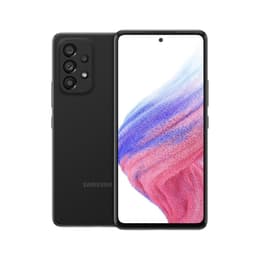



Galaxy A53 5G Vs Xiaomi Redmi Note 13

Galaxy A53 5G
Galaxy A53 5G
Starting at

Refurbished price:119.00

Versus €459.00 new

See options
Xiaomi Redmi Note 13
Starting at

Refurbished price:137.00

Versus €340.00 new

See options

Ratings

The Samsung Galaxy A53 5G, released in April 2022, and the Xiaomi Redmi Note 13, launched in January 2024, are both Android smartphones designed for everyday use. While the Galaxy A53 5G runs on Samsung's One UI based on Android, the Redmi Note 13 operates with Xiaomi's MIUI (or HyperOS) also based on Android. A key difference lies in their release timelines, with the Redmi Note 13 being a more recent offering, potentially bringing newer hardware and software optimizations.

Scores

Durability

The practical lifespan of a smartphone is significantly influenced by its software support and physical resilience. Both devices offer substantial longevity, though with different timelines.

  • Software Updates: The Samsung Galaxy A53 5G was notable for its commitment to four generations of Android OS upgrades and five years of security updates, meaning it is expected to receive updates up to Android 16 and security patches until 2027. The Xiaomi Redmi Note 13 is committed to receiving three years of Android OS updates (up to Android 16) and four years of security patches, extending its support until January 2028.
  • Physical Durability: The Galaxy A53 5G features Corning Gorilla Glass 5 protection on its display and boasts an IP67 rating for dust and water resistance, offering a good level of protection against everyday elements. The Redmi Note 13 comes with Gorilla Glass 3 for screen protection and an IP54 rating, indicating resistance to dust and splashes.
  • Repairability: The Samsung Galaxy A53 5G has been noted as a relatively repairable device, with a repairability score of 6.75 out of 10 in some assessments, and 7.5 out of 10 in others, with accessible components like the battery. Information regarding the specific repairability score for the Redmi Note 13 is less readily available, but its construction typically involves standard smartphone disassembly procedures.

Year of Release

2022

2024

Compatible with latest Update

Yes

Yes

OS

Android

Android

Foldable

No

No

Performance

Performance in both devices is tailored for general usage, with differences emerging in demanding tasks and overall system fluidity.

  • Processing Power: The Galaxy A53 5G is powered by an octa-core processor designed for efficiency, which handles daily applications and multitasking adequately. However, some users have reported occasional stuttering and less snappy performance, particularly with heavier applications or gaming. The Redmi Note 13 features a more recent octa-core processor, which generally provides a responsive experience for everyday tasks and smoother animations due to its display capabilities.
  • Multitasking and Storage: Both phones offer various RAM configurations, typically starting from 6GB or 8GB, which is sufficient for managing multiple applications simultaneously. The Galaxy A53 5G offers 128GB or 256GB of internal storage, expandable via a microSD card. The Redmi Note 13 also provides multiple storage options, including 128GB, 256GB, and 512GB, with some variants supporting expandable storage.
  • Battery Endurance: Both devices are equipped with a 5000mAh battery, designed to provide a full day of use for most users. The Galaxy A53 5G is often praised for its solid battery life, lasting up to two days with casual use. The Redmi Note 13 also offers good battery life, with some tests indicating it can last through extended simulated workloads.

Memory (GB)

4 GB

8 GB

Screen quality

Both smartphones offer vibrant and responsive displays, though with some distinctions in their underlying technology and characteristics.

  • Display Technology and Size: Both the Galaxy A53 5G and the Redmi Note 13 feature a 6.5-inch or 6.67-inch Super AMOLED or AMOLED display, respectively, providing deep blacks and vivid colors. The Redmi Note 13's display is slightly larger at 6.67 inches.
  • Resolution and Refresh Rate: Both devices offer a Full HD+ resolution (1080x2400 pixels), resulting in sharp and clear visuals for general viewing. They also both feature a 120Hz refresh rate, contributing to smoother scrolling and more fluid animations.
  • Brightness and Clarity: The Galaxy A53 5G's display can reach a peak brightness of 800 nits, making it generally easy to view in various lighting conditions. The Redmi Note 13 boasts a higher peak brightness of up to 1800 nits, which can offer better visibility in bright outdoor environments.

Resolution

1080 x 2400

1080 x 2400

Screen type

Super AMOLED

AMOLED

Audiovisual

Both phones are equipped with versatile camera systems designed to capture a range of photos and videos, with varying strengths in different scenarios.

  • Rear Camera System: The Galaxy A53 5G features a quad-camera setup with a 64MP main sensor with optical image stabilization (OIS), a 12MP ultra-wide lens, a 5MP macro lens, and a 5MP depth sensor. The Redmi Note 13 typically comes with a triple camera system, including a 108MP main camera, an 8MP ultra-wide camera, and a 2MP macro or depth sensor.
  • Photography Performance: The Galaxy A53 5G generally produces decent main camera photos in good lighting, with good ultra-wide performance and effective OIS for stability. Its low-light performance is considered average, and some users have noted shutter lag. The Redmi Note 13's 108MP main camera performs reasonably well in good lighting, capturing detailed 12MP photos after pixel binning. However, its ultra-wide and macro cameras are often considered less capable.
  • Video Recording: The Galaxy A53 5G supports 4K video recording at 30 frames per second (fps) with both its front and rear cameras, and includes gyro-EIS for stabilization. The Redmi Note 13 records video at 1080p, and some reviews indicate that its video stabilization and overall quality can be a limitation.

Main camera

64 megapixels

108 megapixels

Front camera

32 megapixels

16 megapixels

Miscellaneous

Beyond core specifications, several practical features and design elements differentiate these two devices.

  • Connectivity and Ports: Both phones support 5G connectivity, ensuring access to faster mobile networks. The Galaxy A53 5G supports Wi-Fi 802.11 a/b/g/n/ac/ax (Wi-Fi 6 in some models) and Bluetooth 5.1. The Redmi Note 13 also offers modern Wi-Fi standards and Bluetooth. Both devices utilize a USB-C port for charging and data transfer. The Redmi Note 13 notably retains a 3.5mm headphone jack, which is absent on the Galaxy A53 5G.
  • Biometric Security: The Galaxy A53 5G features an under-display optical fingerprint scanner, which generally works well, though some users find it to be slower than dedicated sensors. The Redmi Note 13 also includes an under-display fingerprint reader in some variants, or a side-mounted fingerprint sensor integrated into the power button, both proving efficient.
  • Design and Handling: The Galaxy A53 5G has a plastic frame and back, with a design that takes inspiration from Samsung's flagship S series, offering an IP67 rating for water and dust resistance. It weighs 189g. The Redmi Note 13 also features a plastic casing, with an angular design and an IP54 rating.

Weight

189 g

175 g

Screen size (in)

6.5

6.67

Network

5G

5G

SIM card

Physical SIM

Dual Physical SIM

Carrier compatibility

Unlocked

Unlocked

Connector

USB-C

USB-C

User feedback for the Samsung Galaxy A53 5G often highlights its vibrant AMOLED display, reliable battery life, and Samsung's commitment to long-term software updates as strong positives. However, some users have expressed concerns about its performance, noting occasional lag and stuttering, particularly with demanding applications, and some criticisms regarding camera shutter lag and low-light photo quality. The absence of a headphone jack is also a point of contention for some.

For the Xiaomi Redmi Note 13, common praise centers on its impressive AMOLED display with a high refresh rate and excellent brightness, as well as its competitive main camera performance in good lighting. The inclusion of a 3.5mm headphone jack is also appreciated by users. Criticisms often point to the less impressive performance of its secondary cameras (ultra-wide and macro) and its video recording capabilities, which some find to be lacking in detail and stabilization.

Users prioritizing extended software support and a higher water and dust resistance rating may find the Samsung Galaxy A53 5G to be a suitable choice. Its display and overall design are also strong points. Conversely, individuals who value a more recent device with a potentially brighter screen, a higher resolution main camera, and the convenience of a headphone jack might lean towards the Xiaomi Redmi Note 13. Both devices offer a solid foundation for daily use, and considering a quality-assured refurbished option for either model can be an eco-friendly alternative to purchasing new.


See all articles

Our recent comparisons