

Galaxy A50 Vs iPhone 11 Pro Max

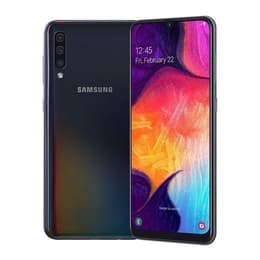
Galaxy A50
Galaxy A50
Starting at

Refurbished price:107.00

Versus €349.00 new

See options
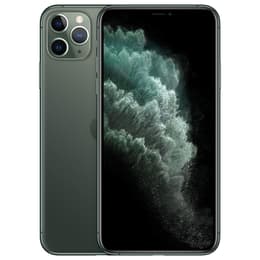
iPhone 11 Pro Max
iPhone 11 Pro Max
Starting at

Refurbished price:219.00

Versus €939.00 new

See options

Ratings

The Samsung Galaxy A50 and the iPhone 11 Pro Max are smartphones released in 2019, offering distinct experiences within the mobile landscape. The Galaxy A50, launched in February 2019, operates on the Android platform, while the iPhone 11 Pro Max, released in September 2019, runs on Apple's iOS. These devices cater to different user preferences, primarily differing in their operating systems, camera capabilities, and overall performance profiles.

Scores

Durability

When considering the long-term usability of these devices, their release timelines and software support are key factors.

  • Release and Software Support: The Samsung Galaxy A50, released in early 2019, launched with Android 9.0 Pie and received updates up to Android 11. However, it ceased receiving major OS and security updates as of April 2023, indicating a shorter software longevity. [2, 14, 18, 27] In contrast, the iPhone 11 Pro Max, released later in 2019, launched with iOS 13 and is expected to continue receiving iOS updates until 2026, offering a longer period of software support and security patches. [16, 29, 39, 40, 41, 45]
  • Repairability: The Galaxy A50 generally has a repairability score around 7.0 out of 10, with its battery and screen being relatively accessible for replacement. [8, 19] The iPhone 11 Pro Max received an iFixit repairability score of 6 out of 10, with critical display and battery repairs being prioritized in its design. [9] However, some components in Apple devices can be registered to the motherboard, potentially limiting third-party repair options. [21]
  • Expected Practical Lifespan: Users of the Galaxy A50 might find its practical lifespan limited by the cessation of software updates, which can impact security and compatibility with newer applications. [14, 18, 27] The iPhone 11 Pro Max, with its extended software support, offers a longer period of optimal functionality and access to the latest features and security enhancements. [29, 40, 41, 45]

Year of Release

2019

2019

Compatible with latest Update

No

Yes

OS

Android

iOS

Foldable

No

No

Performance

The performance of a smartphone is crucial for daily tasks, from app usage to multitasking and gaming.

  • Processor Capabilities: The Galaxy A50 is powered by a processor designed for efficient everyday use, handling common applications and general multitasking smoothly. [2, 12, 34] Users report adequate performance for most tasks, including some gaming. [23, 34] The iPhone 11 Pro Max features a more powerful processor, enabling smoother operation for demanding applications, intensive gaming, and complex multitasking. [6, 22] This difference in processing power means the iPhone 11 Pro Max offers more headroom for future software and more resource-intensive tasks.
  • Battery Behavior: The Galaxy A50 is equipped with a 4000 mAh battery, which users often find provides a full day of use, and sometimes even extends into a second day with moderate usage. [2, 17, 28, 34] The iPhone 11 Pro Max, with its 3969 mAh battery, is widely praised for its exceptional battery life, frequently lasting up to two full days for many users under typical conditions. [20, 26, 31, 32] Both devices support fast charging, with the iPhone 11 Pro Max including an 18W fast charger in the box. [20]
  • Storage Options: The Galaxy A50 offers internal storage options of 64GB or 128GB, with the added flexibility of expandable storage via a microSD card up to 512GB. [2, 12, 44] The iPhone 11 Pro Max comes with internal storage options of 64GB, 256GB, or 512GB, but does not offer expandable storage. [6, 16, 22]

Memory (GB)

4 GB

4 GB

Screen quality

The display is a primary interface for smartphone interaction, and both devices offer distinct viewing experiences.

  • Display Technology and Clarity: The Galaxy A50 features a 6.4-inch Super AMOLED Infinity-U display with a resolution of 2340 x 1080 pixels, resulting in a pixel density of 403 PPI. [2, 10, 12, 36] This Super AMOLED technology provides vibrant colors and deep blacks. The iPhone 11 Pro Max boasts a 6.5-inch Super Retina XDR OLED display with a resolution of 2688 x 1242 pixels, yielding a pixel density of 458 PPI. [1, 5, 43] Its OLED technology delivers exceptional contrast and color accuracy.
  • Brightness and Viewing Experience: The Galaxy A50's display offers a peak brightness of around 550-574 nits, providing good visibility in various lighting conditions. [10, 17] The iPhone 11 Pro Max features a significantly brighter display, reaching 800 nits typical maximum brightness and up to 1200 nits for HDR content, which greatly enhances outdoor visibility and HDR viewing. [1, 5, 11, 16]
  • Refresh Rate and Protection: Both devices feature a standard 60Hz refresh rate, which provides a smooth experience for most everyday tasks. The Galaxy A50's screen is protected by Corning Gorilla Glass 3. [2, 36] The iPhone 11 Pro Max utilizes a custom-designed glass, offering robust protection. [1, 38]

Resolution

1080 x 2340

1242 x 2688

Screen type

Super AMOLED

Super Retina XDR OLED

Audiovisual

Camera capabilities are a significant consideration for many users, and these two phones approach photography differently.

  • Rear Camera Systems: The Galaxy A50 features a triple rear camera setup, including a 25MP wide lens, an 8MP ultrawide lens, and a 5MP depth sensor. [2, 3, 44] It is capable of recording video at 1080p. [15, 23] The iPhone 11 Pro Max also has a triple 12MP camera system, comprising an Ultra Wide, Wide, and Telephoto lens with 2x optical zoom. [11, 16, 22] It supports 4K video recording at 60 frames per second. [26]
  • Photography Performance: In well-lit conditions, the Galaxy A50 can capture good-looking photos, particularly for social media sharing. [23, 28] However, its low-light performance is noted as a weaker point, often resulting in noise and softer details. [23, 28] The iPhone 11 Pro Max excels in photography, especially with its Night Mode, which significantly improves low-light image quality, capturing detail in challenging conditions. [20, 26, 31] Its Deep Fusion technology further enhances detail and texture in various lighting. [11, 20, 26]
  • Front Camera and Audio: The Galaxy A50 has a 25MP front-facing camera, which performs well in good lighting. [2, 23] The iPhone 11 Pro Max features a 12MP front camera, offering high-quality selfies and video calls. [22] For audio, the iPhone 11 Pro Max provides powerful speakers for media consumption. [35]

Main camera

25 megapixels

12 megapixels

Front camera

25 megapixels

12 megapixels

Miscellaneous

Beyond core features, several practical elements contribute to the overall user experience.

  • Connectivity and Ports: Both devices support standard Wi-Fi and Bluetooth connectivity. The Galaxy A50 includes a USB-C port for charging and data transfer, along with a 3.5mm headphone jack. [17, 34, 44] The iPhone 11 Pro Max uses Apple's Lightning port and does not feature a 3.5mm headphone jack. [43] Neither device supports 5G connectivity. [11, 22]
  • Biometric Security: The Galaxy A50 incorporates an in-display optical fingerprint sensor for secure unlocking. [17, 23, 44] The iPhone 11 Pro Max relies on Face ID, Apple's facial recognition system, for biometric authentication. [11]
  • Build Materials and Durability: The Galaxy A50 features a plastic back and frame with a glass front (Gorilla Glass 3), contributing to its lighter weight of 166g. [2, 17, 34, 44] It does not have an official IP rating for water resistance. [17] The iPhone 11 Pro Max has a more premium build with a glass front and back and a stainless steel frame, weighing 226g. [20, 43] It also boasts an IP68 rating for water and dust resistance, offering better protection against environmental elements. [1]

Weight

166 g

226 g

Screen size (in)

6.4

6.5

Network

4G

4G

SIM card

Dual Physical SIM

Physical SIM + eSIM

Carrier compatibility

Unlocked

Unlocked

Connector

USB-C + Jack 3.5mm

Lightning

The Samsung Galaxy A50 and iPhone 11 Pro Max, both released in 2019, offer distinct advantages tailored to different user needs. Users often praise the Galaxy A50 for its vibrant Super AMOLED display, long-lasting battery, and the inclusion of a headphone jack and expandable storage. [15, 17, 28, 34] However, common criticisms include its less robust low-light camera performance and the cessation of major software updates, which can impact its long-term usability and security. [14, 18, 23, 27]

The iPhone 11 Pro Max is frequently lauded for its exceptional camera system, particularly its Night Mode capabilities, powerful processor, and outstanding battery life that often extends to two days. [20, 26, 31, 35] Some users, however, have noted its larger size and weight, which can affect ergonomics, and the proprietary Lightning port. [20]

Users prioritizing an extensive software update cycle, superior camera performance in varied lighting, and a highly powerful processor for demanding tasks may find the iPhone 11 Pro Max well-suited to their needs. Conversely, individuals who value expandable storage, a traditional headphone jack, and a vibrant display for everyday media consumption might lean towards the Galaxy A50. Both devices, when considered as quality-assured refurbished options, present an eco-friendly alternative for consumers seeking reliable technology.


See all articles

Our recent comparisons