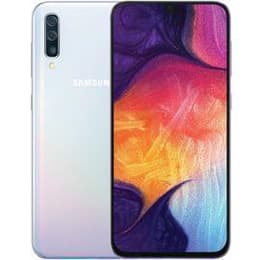
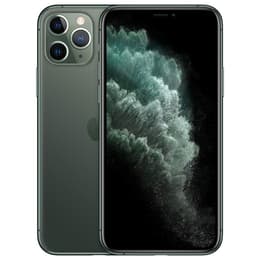


Galaxy A50 Vs iPhone 11 Pro

Galaxy A50
Galaxy A50
Starting at

Refurbished price:107.00

Versus €349.00 new

See options
iPhone 11 Pro
iPhone 11 Pro
Starting at

Refurbished price:181.00

Versus €809.00 new

See options

Ratings

The Samsung Galaxy A50 and the iPhone 11 Pro are smartphones released in 2019, offering distinct experiences within their respective ecosystems. The Galaxy A50, an Android device, launched in February 2019, while the iPhone 11 Pro, running iOS, followed in September 2019. These devices cater to different user preferences, primarily differing in their operating systems, display technologies, and camera capabilities.

Scores

Durability

When considering the long-term usability of these devices, several factors contribute to their expected lifespan.

  • Release Timeline and Software Support: The Samsung Galaxy A50, released in early 2019, typically received major Android updates for about two to three years, reaching Android 11. The iPhone 11 Pro, launched later in 2019, benefits from Apple's generally longer software support, often receiving iOS updates for five to six years from its release. This means the iPhone 11 Pro is likely to receive software updates for a longer period, extending its functional life for users who prioritize the latest features and security patches.
  • Repairability and Build Materials: The Galaxy A50 features a plastic build, which can be more resistant to certain types of drops compared to glass, though it is prone to scratches. It uses Gorilla Glass 3 for its display, an older version of strengthened glass. The iPhone 11 Pro incorporates a glass front and back with a stainless steel frame, and Apple claimed it featured the toughest glass in a smartphone at its release. While glass can be more susceptible to shattering, the iPhone 11 Pro also boasts an IP68 rating for water and dust resistance, offering better protection against environmental elements than the A50, which lacks official water resistance.
  • Practical Lifespan: User reports suggest that while the Galaxy A50 can still function for daily tasks years after its release, its performance and battery life show signs of aging, particularly with heavier use or newer software. The iPhone 11 Pro, despite its age, is often praised by users for its continued smooth performance and robust build, with many expecting to use it for several more years, though battery health naturally degrades over time.

Year of Release

2019

2019

Compatible with latest Update

No

Yes

OS

Android

iOS

Foldable

No

No

Performance

The performance of a smartphone is crucial for daily operations, from app usage to multitasking.

  • Processing Power: The Galaxy A50 is equipped with an Exynos 9610 processor, which handles everyday tasks and moderate gaming smoothly. Users generally find it responsive for navigation and common applications. The iPhone 11 Pro features Apple's A13 Bionic chip, which was considered a leading mobile processor at its release. This allows the iPhone 11 Pro to manage demanding applications, complex games, and intensive multitasking with notable fluidity and efficiency.
  • Storage and Multitasking: Both devices offer various storage configurations, with the Galaxy A50 providing 64GB or 128GB, expandable via microSD, and the iPhone 11 Pro offering 64GB, 256GB, or 512GB options without expansion. The Galaxy A50 comes with 4GB or 6GB of RAM, while the iPhone 11 Pro has 4GB of RAM. Despite the similar RAM figures, the iPhone 11 Pro's optimized software and powerful processor often result in a more consistent and responsive multitasking experience, with apps remaining active in the background for longer.
  • Battery Behavior: The Galaxy A50 houses a 4000mAh battery, which users report can last a full day with moderate use, and even into the next day with lighter usage. The iPhone 11 Pro has a 3046mAh battery, but its efficient hardware and software optimization contribute to excellent battery life, with many users reporting it comfortably lasts a full day, and sometimes even a day and a half, depending on usage patterns.

Memory (GB)

4 GB

4 GB

Screen quality

The display is a primary interface for smartphone interaction, influencing overall user satisfaction.

  • Display Technology and Clarity: The Samsung Galaxy A50 features a 6.4-inch Super AMOLED display with a resolution of 2340x1080 pixels, resulting in vibrant colors, deep blacks, and good clarity for its class. The iPhone 11 Pro comes with a 5.8-inch Super Retina XDR OLED display, offering a higher resolution of 2436x1125 pixels and a greater pixel density. This results in exceptionally sharp text and images, with precise color accuracy and contrast.
  • Brightness and Viewing Experience: Both phones offer good brightness levels. The Galaxy A50's AMOLED screen provides good visibility outdoors, though some users note it might not be as bright as flagship displays. The iPhone 11 Pro's Super Retina XDR display is known for its high peak brightness, making it very comfortable to view content even under direct sunlight. The smaller screen size of the iPhone 11 Pro might be preferred by users seeking a more compact device for one-handed use, while the larger display of the Galaxy A50 offers more screen real estate for media consumption.
  • Refresh Rate: Both the Galaxy A50 and the iPhone 11 Pro feature a standard 60Hz refresh rate. This provides a smooth visual experience for most everyday tasks, but neither offers the higher refresh rates found in some newer devices that provide an even smoother scrolling and gaming experience.

Resolution

1080 x 2340

1125 x 2436

Screen type

Super AMOLED

Super Retina XDR OLED

Audiovisual

Camera capabilities are a significant consideration for many smartphone users, impacting how they capture and share moments.

  • Rear Camera Systems: The Galaxy A50 features a triple rear camera setup, including a 25MP main sensor, an 8MP ultrawide lens, and a 5MP depth sensor. It performs well in good lighting conditions, capturing detailed and colorful photos, and its ultrawide lens offers a broader perspective. The iPhone 11 Pro also has a triple 12MP camera system, consisting of wide, ultrawide, and telephoto lenses. This setup is praised for its consistency across all three lenses, producing high-quality images with excellent detail, dynamic range, and color accuracy.
  • Low-Light and Video Performance: In low-light conditions, the Galaxy A50's camera performance is generally considered average, with noticeable noise and softer details. The iPhone 11 Pro excels in low-light photography, thanks to its dedicated Night Mode, which captures bright and detailed images with natural colors. For video recording, the iPhone 11 Pro offers superior quality, with excellent stabilization and detail across all lenses, including the front camera, making it a strong choice for users who frequently record videos. The Galaxy A50's video quality is decent in good light but can struggle with dynamic range and stabilization.
  • Front Camera and Additional Features: The Galaxy A50 has a 25MP front camera that takes good selfies in bright light, with a software-based portrait mode. The iPhone 11 Pro features a 12MP TrueDepth front camera, which also delivers high-quality selfies and supports advanced features like Face ID and cinematic video effects. Both devices offer portrait modes, with the iPhone 11 Pro generally providing more refined edge detection.

Main camera

25 megapixels

12 megapixels

Front camera

25 megapixels

12 megapixels

Miscellaneous

Beyond core features, several practical elements contribute to the daily usability and convenience of a smartphone.

  • Connectivity and Ports: Both devices support modern connectivity standards like Wi-Fi and Bluetooth 5.0. The Galaxy A50 includes a USB-C port for charging and data transfer, along with a 3.5mm headphone jack, offering versatility for accessories. The iPhone 11 Pro uses Apple's proprietary Lightning port and does not include a headphone jack, requiring adapters for wired audio. The iPhone 11 Pro also supports Wi-Fi 6 (802.11ax) for potentially faster wireless speeds and offers dual SIM capabilities (Nano-SIM + eSIM).
  • Biometric Security and Sensors: The Galaxy A50 features an in-display fingerprint sensor, which some users have found to be inconsistent in reliability. It also includes standard sensors like an accelerometer, ambient light sensor, gyroscope, and proximity sensor. The iPhone 11 Pro relies on Face ID for biometric authentication, offering secure and convenient facial recognition. It also incorporates a comprehensive suite of sensors, including an accelerometer, ambient light sensor, barometer, gyroscope, proximity sensor, and compass.
  • Design and Handling: The Galaxy A50 has a plastic back with an iridescent finish, giving it a sleek appearance, and weighs 166g. Its dimensions are 158.5 x 74.7 x 7.7 mm. The iPhone 11 Pro features a more premium build with a glass back and stainless steel frame, weighing 188g, and measuring 144 x 71.4 x 8.1 mm. The iPhone 11 Pro's slightly smaller form factor and premium materials contribute to a different in-hand feel, often described as more compact and substantial.

Weight

166 g

188 g

Screen size (in)

6.4

5.8

Network

4G

4G

SIM card

Dual Physical SIM

Physical SIM + eSIM

Carrier compatibility

Unlocked

Unlocked

Connector

USB-C + Jack 3.5mm

Lightning

The Samsung Galaxy A50 and iPhone 11 Pro, both released in 2019, offer distinct advantages depending on user priorities. The Galaxy A50 is often praised for its vibrant Super AMOLED display and solid battery life, making it suitable for users who prioritize a larger screen for media consumption and extended usage without frequent charging. Its inclusion of a 3.5mm headphone jack and expandable storage are also frequently highlighted as practical benefits by users. However, common criticisms include its less reliable in-display fingerprint sensor and camera performance that struggles in low-light conditions.

The iPhone 11 Pro, on the other hand, receives consistent acclaim for its powerful performance, exceptional camera system with strong low-light capabilities, and a premium build quality. Users frequently commend its long-lasting battery life and the overall smooth and responsive iOS experience. Its more compact size is also a significant draw for those who prefer a device that is easier to handle with one hand. Some users, however, note that the base storage option of 64GB can be limiting over time, and the lack of a headphone jack requires reliance on adapters or wireless audio.

Users prioritizing a robust camera for both photos and videos, consistent high performance for demanding applications, and a longer software support window may find the iPhone 11 Pro well-suited to their needs. Conversely, those who value a larger, vibrant display, expandable storage, and the convenience of a traditional headphone jack, along with the flexibility of the Android ecosystem, might lean towards the Galaxy A50. Both devices can be excellent choices, especially as quality-assured refurbished options, providing a sustainable choice for consumers.


See all articles

Our recent comparisons