

iPhone 11 Pro Vs iPhone 13 Pro

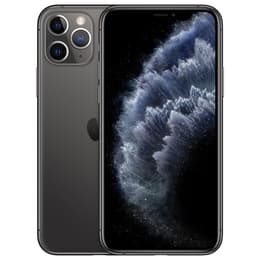
iPhone 11 Pro
iPhone 11 Pro
Starting at

Refurbished price:189.00

Versus €809.00 new

See options
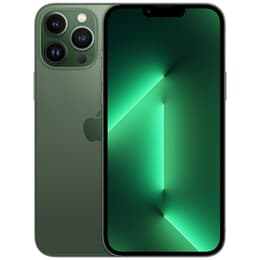
iPhone 13 Pro
iPhone 13 Pro
Starting at

Refurbished price:326.00

Versus €1,159.00 new

See options

Ratings

The iPhone 11 Pro, released in September 2019, and the iPhone 13 Pro, launched in September 2021, represent two generations of Apple's professional-grade smartphones. While both devices offer a premium iOS experience, the iPhone 13 Pro introduces notable advancements in display technology, camera capabilities, and overall performance. Both operate on Apple's iOS ecosystem, providing a consistent user experience across their respective software lifecycles.

Scores

Durability

When considering the longevity of these devices, their release timelines and Apple's software support policies are key factors. The iPhone 11 Pro, released in 2019, is estimated to receive major iOS updates until approximately 2026, with security patches potentially extending beyond that. The iPhone 13 Pro, launched two years later in 2021, is expected to receive major iOS updates until around 2028, offering a longer period of new features and software enhancements.

  • Software Longevity: The iPhone 13 Pro offers an extended software support window, likely receiving major iOS updates for a few more years compared to the iPhone 11 Pro.
  • Repairability: The iPhone 11 Pro received a repairability score of 6 out of 10 from iFixit, indicating that critical display and battery repairs are prioritised. The iPhone 13 Pro received a score of 5 out of 10, with some components like the display and battery being relatively accessible, but third-party repairs can be complicated by software limitations that may disable features like Face ID.
  • Expected Lifespan: Both models are built with durable materials like stainless steel frames and glass backs. Users report the iPhone 11 Pro holding up well over several years of daily use, with good screen durability. The iPhone 13 Pro also features a robust build, though its 'double glass' design means potential for damage to both front and back.

Year of Release

2019

2021

Compatible with latest Update

Yes

Yes

OS

iOS

iOS

Foldable

No

No

Performance

The performance of these two iPhone models reflects the advancements made over two generations of Apple's internal hardware. While both are capable devices, the iPhone 13 Pro offers a more responsive and efficient experience.

  • Processor Capabilities: The iPhone 13 Pro features a newer, more advanced processor that provides faster CPU and GPU speeds. This translates to smoother operation for demanding applications, quicker app loading times, and enhanced performance in graphics-intensive tasks like gaming. The iPhone 11 Pro, with its earlier generation processor, still handles everyday tasks efficiently, but the 13 Pro offers more headroom for future software and complex operations.
  • Battery Behavior: The iPhone 13 Pro delivers significantly improved battery life, often lasting comfortably through a full day of heavy use, with some users reporting up to two days under lighter usage. The iPhone 11 Pro also offered good battery life at its release, often lasting a full day for many users.
  • Storage and Multitasking: The iPhone 13 Pro offers a wider range of storage options, including a 1TB variant, and comes with 6GB of RAM, which aids in smoother multitasking and handling more applications simultaneously. The iPhone 11 Pro was available with up to 512GB of storage and 4GB of RAM, providing ample space and capable multitasking for its time.

Memory

4 GB

6 GB

Screen quality

The display is a key area where the iPhone 13 Pro introduces a significant upgrade, offering a more fluid and brighter visual experience compared to the iPhone 11 Pro.

  • Display Technology and Refresh Rate: Both devices feature OLED displays, known as Super Retina XDR, which provide deep blacks and vibrant colors. However, a major differentiator is the iPhone 13 Pro's ProMotion technology, which enables an adaptive refresh rate up to 120Hz, resulting in noticeably smoother scrolling and more responsive interactions. The iPhone 11 Pro has a standard 60Hz refresh rate.
  • Brightness and Clarity: The iPhone 13 Pro offers a higher typical maximum brightness of 1000 nits, peaking at 1200 nits for HDR content, which enhances visibility in bright outdoor conditions. The iPhone 11 Pro has a typical maximum brightness of 800 nits, also peaking at 1200 nits for HDR content. Both displays offer high resolution and pixel density for clear viewing.
  • Screen Size and Design: The iPhone 11 Pro features a 5.8-inch display, while the iPhone 13 Pro has a slightly larger 6.1-inch screen. The notch housing the Face ID sensors is also 20% smaller on the iPhone 13 Pro, providing a slightly larger usable screen area.

Resolution

1125 x 2436

1170 x 2532

Screen type

Super Retina XDR OLED

Super Retina XDR OLED

Audiovisual

Both the iPhone 11 Pro and iPhone 13 Pro feature versatile triple-camera systems, but the newer model brings substantial enhancements in sensor technology and computational photography.

  • Camera System Capabilities: Both phones are equipped with a triple 12MP camera setup, including Wide, Ultra Wide, and Telephoto lenses. The iPhone 13 Pro enhances the telephoto lens with 3x optical zoom in and 2x optical zoom out, offering a greater optical zoom range compared to the iPhone 11 Pro's 2x optical zoom in and out. The iPhone 13 Pro also includes a LiDAR scanner, which assists with low-light focusing and enables advanced augmented reality experiences.
  • Photography and Video Performance: The iPhone 13 Pro introduces features like Cinematic Mode for video, which creates a depth effect with automatic focus transitions, and Macro Mode for close-up photography. Its larger sensors and improved computational photography lead to better low-light performance and overall image quality. The iPhone 11 Pro was praised for its camera system at launch, particularly its Night Mode and video stabilization.
  • Audio Experience: Both devices offer a good audio experience with stereo speakers. Users have noted the iPhone's strong audio output for media consumption.

Main camera

12 megapixels

12 megapixels

Front camera

12 megapixels

12 megapixels

Miscellaneous

Beyond core features, several practical elements differentiate the iPhone 11 Pro and iPhone 13 Pro, impacting daily usability and future compatibility.

  • Connectivity Options: A key difference is 5G support, which is present in the iPhone 13 Pro for faster cellular data speeds, while the iPhone 11 Pro is limited to 4G LTE. Both support Wi-Fi 6 and Bluetooth 5.0.
  • Physical Design and Handling: Both models feature a premium build with a stainless steel frame and a matte glass back. The iPhone 11 Pro measures 144 x 71.4 x 8.1 mm and weighs 188g. The iPhone 13 Pro is slightly larger and heavier at 146.7 x 71.5 x 7.65 mm and 204g, partly due to its larger battery and camera module.
  • Ports and Sensors: Both devices utilize the Lightning port for charging and data transfer and rely on Face ID for secure authentication. Neither includes a traditional headphone jack.

Weight

188 g

203 g

Screen size (in)

5.8

6.1

Network

4G

5G

SIM card

Physical SIM + eSIM

Physical SIM + eSIM

Carrier compatibility

Unlocked

Unlocked

Connector

Lightning

Lightning

The iPhone 11 Pro and iPhone 13 Pro both offer a robust smartphone experience, but cater to slightly different user priorities due to their generational differences. The iPhone 11 Pro, while older, is still praised by users for its durable build, capable camera, and reliable performance for everyday tasks. Its battery life was considered excellent at its release, and many users find its compact size appealing.

Conversely, the iPhone 13 Pro receives frequent praise for its significantly improved battery life, the fluid 120Hz ProMotion display, and its advanced camera system, which includes features like Cinematic Mode and Macro Mode. Users appreciate its enhanced performance for demanding applications and the overall responsiveness of the device. Some common criticisms for the 13 Pro include its increased weight and the continued presence of the notch, though it is smaller.

Users prioritizing a more compact device with solid performance for general use and photography may find the iPhone 11 Pro well-suited to their needs. It remains a capable device for those who value a slightly smaller form factor and a reliable iOS experience. Users who prioritize the latest display technology, superior battery endurance, advanced camera features, and future-proof connectivity like 5G will likely lean towards the iPhone 13 Pro. Its enhanced processing power also makes it a better choice for mobile gaming and intensive applications.

For those considering either model, exploring quality-assured refurbished options can provide an eco-friendly alternative to extend the life cycle of these devices.


See all articles

Our recent comparisons