

Compare models
Galaxy A35 Vs Galaxy S26 Ultra
- 1-year minimum warranty
- Free delivery on all orders
- Free 30-day returns
Differences at a glance
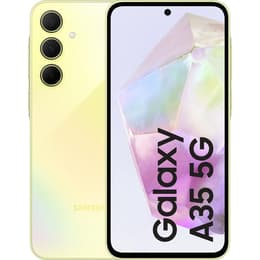
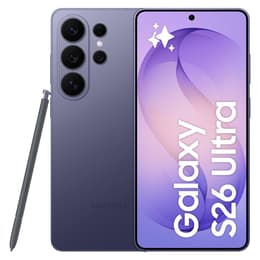
The Samsung Galaxy A35 (2024) and the Samsung Galaxy S26 Ultra (2026) represent different tiers of Samsung's smartphone lineup, catering to distinct user expectations and functional demands. While both devices run on the Android operating system with Samsung's custom interface, they diverge significantly in release timing, processing capability, and overall hardware sophistication. Choosing between these models depends on evaluating practical requirements rather than direct equivalence.
Available Models
Colour
Storage (GB)
Scores
Durability
When examining longevity and physical construction, both smartphones utilize robust materials, though their timelines for software support and hardware endurance differ notably.
- Release timeline and software support: The Galaxy A35 debuted in 2024 with standard mid-range software backing, whereas the Galaxy S26 Ultra launched in 2026 with an extended support commitment spanning multiple major operating system upgrades.
- Repairability and build: Both handsets feature sealed glass-and-frame constructions carrying formal water and dust resistance ratings, though specialized flagship materials on the newer model offer distinct scratch-reduction properties.
- Expected practical lifespan: Users tracking long-term utility will find that the newer flagship's extended update schedule helps maintain security compliance further into the future than the mid-range alternative.
Year of Release
2024
2026
Compatible with latest Update
Yes
Yes
OS
Android
Android
Foldable
No
No
Performance
Underneath the surface, these devices handle daily workloads and intensive applications through very different hardware configurations, impacting multitasking and system responsiveness.
- Storage and memory configurations: The Galaxy A35 relies on standard internal capacities paired with expandable storage slots, while the Galaxy S26 Ultra offers higher baseline storage tiers and generous memory allocations without expandable card slots.
- Everyday responsiveness and multitasking: Basic tasks like web browsing and messaging run fluidly on both devices, but the Galaxy S26 Ultra handles heavy applications, extensive multitasking, and demanding 3D games with significantly shorter loading times and smoother frame rates.
- Battery behavior: Both models integrate large internal batteries designed to navigate a full day of typical use, though charging speeds and power management efficiency favor the advanced flagship model.
Screen quality
Viewing media and interacting with interface elements involves high-refresh-rate technology on both options, yet panel specifications create distinct visual experiences.
- Display technology: Both devices utilize vibrant OLED panels that deliver deep contrast levels and rich color reproduction, though the Galaxy S26 Ultra employs advanced low-temperature panel technology for greater efficiency.
- Brightness and outdoor visibility: Maximum peak brightness on the Galaxy S26 Ultra exceeds that of the mid-range model, allowing for clearer legibility under direct sunlight.
- Resolution and physical dimensions: The Galaxy S26 Ultra provides a larger canvas with higher pixel density and sharper text rendering, while the Galaxy A35 offers a flat 6.6-inch display surface that some users find easier to manage with one hand.
Resolution
1080 x 2340
1440 x 3120
Audiovisual
Imaging hardware and media playback features span standard capture needs up to specialized multi-lens configurations suitable for diverse photography styles.
- Camera versatility: The Galaxy A35 features a reliable primary sensor complemented by basic ultra-wide and macro lenses, whereas the Galaxy S26 Ultra includes a comprehensive quad-camera array featuring high-resolution main sensors and multiple telephoto lenses for distant subjects.
- Low-light and video performance: The advanced processing power and larger sensors on the Galaxy S26 Ultra yield sharper details in dim environments and support higher-resolution video recording modes.
- Audio output: Both handsets incorporate stereo speakers that deliver clear sound for hands-free calls and casual video viewing, though the flagship model offers a wider soundstage.
Front camera
13 megapixels
12.0
Miscellaneous
Connectivity standards, physical handling characteristics, and auxiliary features shape how each phone integrates into daily routines.
- Connectivity and ports: Both models support current mobile network standards and modern wireless protocols, utilizing reversible USB Type-C ports for data transfer and charging.
- Security and sensors: Fast biometric authentication is available on both via secure facial recognition and integrated display fingerprint sensors.
- Dimensions and handling: The Galaxy A35 is slightly heavier with a distinct flat frame, whereas the Galaxy S26 Ultra distributes its weight efficiently while incorporating an integrated stylus for note-taking and precision tasks.
Weight
209 g
214 g
Screen size (in)
6.6
6.9
Network
5G
5G
SIM card
Dual Physical SIM
Physical SIM + eSIM
Carrier compatibility
Unlocked
Unlocked
Connector
USB-C
USB-C
What the community thinks
User discussions across online communities highlight distinct preferences for each device based on everyday practicality. Owners of the Galaxy A35 frequently praise its reliable battery longevity, dependable screen quality, and expandable storage capabilities for daily tasks. Conversely, users of the Galaxy S26 Ultra often emphasize satisfaction with its expansive display, robust processing headroom, and versatile camera array for creative projects.
Users prioritizing straightforward daily communication, media viewing, and expandable storage may prefer the practical approach of the Galaxy A35. Meanwhile, users prioritizing advanced photographic flexibility, maximum processing capability, and integrated stylus support will lean toward the Galaxy S26 Ultra. For those seeking a sustainable choice, a quality-assured refurbished option provides a reliable path to acquiring either device while supporting eco-friendly purchasing habits.