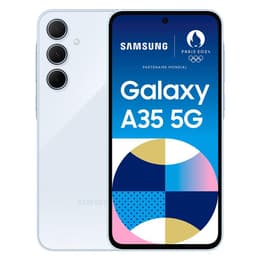
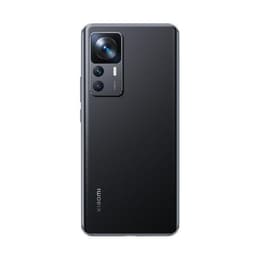


Galaxy A35 Vs Xiaomi 12T

Galaxy A35
Galaxy A35
Starting at

Refurbished price:206.00

Versus €431.43 new

See options
Xiaomi 12T
Xiaomi 12T
Starting at

Refurbished price:134.00

Versus €649.00 new

See options

Ratings

The Samsung Galaxy A35, released in March 2024, and the Xiaomi 12T, launched in October 2022, are both Android smartphones designed to offer a comprehensive mobile experience. While the Galaxy A35 focuses on extended software support and enhanced durability, the Xiaomi 12T emphasizes rapid charging capabilities and a higher-resolution display. Both devices operate on the Android platform, but they differ in their initial software versions and update policies.

Scores

Durability

The longevity of a smartphone is influenced by its release timeline, software support, and physical durability features.

  • Software Support: The Samsung Galaxy A35 launched with Android 14 and is promised four major Android OS updates and five years of security updates, extending its software relevance significantly. The Xiaomi 12T, released with Android 12, is slated to receive three major Android OS updates (up to Android 15) and four years of security patches. This means the Galaxy A35 will likely receive software support for a longer duration.
  • Physical Durability: The Galaxy A35 features an IP67 rating for dust and water resistance, indicating protection against immersion in water up to 1 meter for 30 minutes, and uses Gorilla Glass Victus+ for screen protection. The Xiaomi 12T offers an IP53 rating, providing basic splash and dust resistance, and has Gorilla Glass 5 on its display.
  • Repairability: The Samsung Galaxy A35 has a repairability score of 8.4 out of 10, suggesting a design that facilitates easier repairs and better availability of spare parts. Specific repairability scores for the Xiaomi 12T are not as widely published, but its construction is generally considered to be in line with typical smartphone repair challenges.

Year of Release

2024

2022

Compatible with latest Update

Yes

Yes

OS

Android

Android

Foldable

No

No

Performance

Evaluating the performance of these devices involves looking at their internal components and how they translate to daily usage, including storage, battery behavior, and overall system responsiveness.

  • Storage and Multitasking: The Samsung Galaxy A35 is available with 6GB or 8GB of RAM and 128GB or 256GB of internal storage, with the added benefit of expandable storage via a microSD card. The Xiaomi 12T comes with 8GB of RAM and storage options of 128GB or 256GB, but it does not offer expandable storage. For users who require significant storage for media or applications, the A35's expandable storage is a notable advantage.
  • Everyday Responsiveness: The Galaxy A35 is powered by an Exynos 1380 processor, which handles daily tasks and moderate gaming smoothly, though some users have noted occasional minor stutters in the user interface. The Xiaomi 12T features a MediaTek Dimensity 8100-Ultra processor, which provides robust performance for demanding applications and gaming, offering a responsive experience.
  • Battery Usage: Both devices are equipped with a 5000mAh battery, designed to provide a full day of use for most users. The Galaxy A35 supports 25W wired charging, taking approximately 1 hour and 30 minutes for a full charge, but does not include a charger in the box. The Xiaomi 12T stands out with its 120W fast charging capability, allowing it to reach a full charge in around 20 minutes, and includes the fast charger in the box.

Memory (GB)

6 GB

8 GB

Screen quality

The visual experience on a smartphone is largely determined by its display technology, resolution, and brightness levels.

  • Display Technology and Clarity: Both the Samsung Galaxy A35 and the Xiaomi 12T feature AMOLED displays, known for their vibrant colors and deep blacks. The Galaxy A35 has a 6.6-inch Super AMOLED display with a Full HD+ resolution (1080x2340 pixels). The Xiaomi 12T offers a slightly larger 6.67-inch AMOLED display with a higher resolution of 1220x2712 pixels, providing a sharper visual experience.
  • Brightness and Outdoor Visibility: The Galaxy A35's display can reach a peak brightness of 1000 nits, enhanced by Vision Booster technology for improved outdoor visibility. The Xiaomi 12T has a peak brightness of 900 nits, which also ensures good visibility in various lighting conditions.
  • Smoothness and Responsiveness: Both devices offer a 120Hz refresh rate, contributing to smoother scrolling and a more fluid user interface experience. The Xiaomi 12T also boasts a touch sampling rate of up to 480Hz, which can translate to more responsive interactions, particularly beneficial for gaming.

Resolution

1080 x 2340

1220 x 2712

Screen type

Super AMOLED

AMOLED

Audiovisual

Camera capabilities are a significant factor for many users, encompassing the quality of photos, videos, and audio capture.

  • Rear Camera System: The Samsung Galaxy A35 features a triple rear camera setup with a 50MP main sensor (with OIS), an 8MP ultrawide lens, and a 5MP macro lens. The Xiaomi 12T also has a triple rear camera system, highlighted by a 108MP main sensor (with OIS), an 8MP ultrawide lens, and a 2MP macro lens. Both main cameras are capable of capturing detailed images, with the A35 often producing vibrant, slightly saturated colors typical of Samsung, and the 12T offering high-resolution shots that allow for significant cropping.
  • Low-Light and Video Performance: The Galaxy A35's main camera performs well in daylight, with acceptable low-light performance when using night mode, and records video up to 4K at 30fps. The Xiaomi 12T's main camera also performs well in various conditions, including low light, and supports 4K video recording at 30fps. The ultrawide and macro cameras on both devices are generally considered less capable than their main sensors, especially in challenging lighting.
  • Front Camera and Audio: For selfies, the Galaxy A35 has a 13MP front camera. The Xiaomi 12T is equipped with a 20MP front camera. Both devices offer dual speakers for media consumption, with the Xiaomi 12T supporting Dolby Atmos audio.

Main camera

50 megapixels

108 megapixels

Front camera

13 megapixels

20 megapixels

Miscellaneous

Beyond core features, practical elements like connectivity, physical design, and security options contribute to the overall user experience.

  • Connectivity and Ports: Both smartphones support 5G connectivity, Wi-Fi, and GPS. The Galaxy A35 includes USB Type-C for charging and data transfer. The Xiaomi 12T also features USB Type-C, along with Wi-Fi 6, Bluetooth 5.3, NFC, and an infrared blaster.
  • Biometric Security: Both devices incorporate an in-display fingerprint sensor for secure unlocking. The Xiaomi 12T also offers face unlock functionality.
  • Design and Handling: The Samsung Galaxy A35 measures 161.7 x 78.0 x 8.2mm and weighs 209 grams, featuring a glass front (Gorilla Glass Victus+), a plastic frame, and a plastic back. The Xiaomi 12T has dimensions of 163.1 x 75.9 x 8.6mm and weighs 202 grams, with a Gorilla Glass 5 front, a glass back, and a plastic frame. The A35's design is noted for its premium appearance despite its plastic frame, while the 12T's all-glass build contributes to a sleek aesthetic.

Weight

209 g

220 g

Screen size (in)

6.6

6.67

Network

5G

5G

SIM card

Dual Physical SIM

Dual Physical SIM

Carrier compatibility

Unlocked

Unlocked

Connector

USB-C

USB-C

The Samsung Galaxy A35 and Xiaomi 12T cater to slightly different user priorities, reflecting their respective release timelines and design philosophies. Users often praise the Galaxy A35 for its commitment to long-term software support, its durable build with an IP67 rating, and its vibrant Super AMOLED display. Its main camera is also frequently highlighted for producing good quality photos in daylight. Some criticisms include its charging speed not being the fastest and the absence of an included charger.

The Xiaomi 12T, on the other hand, receives commendation for its exceptionally fast 120W charging, which includes the charger in the box, and its higher-resolution AMOLED display. Its powerful processor also makes it a strong contender for demanding tasks and gaming. Common points of concern for the Xiaomi 12T include its less extensive software update policy compared to newer devices and its lower IP rating.

Users prioritizing extended software longevity, enhanced water and dust resistance, and expandable storage may find the Samsung Galaxy A35 to be a more suitable choice. Conversely, individuals who value extremely rapid charging, a sharper display resolution, and robust performance for intensive applications might lean towards the Xiaomi 12T. Both devices offer a compelling experience, and considering a quality-assured refurbished option for either model can be an eco-friendly alternative for consumers.


See all articles

Our recent comparisons