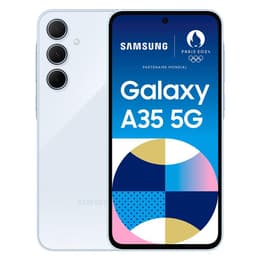
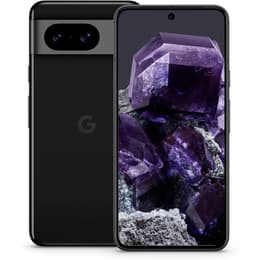


Galaxy A35 Vs Google Pixel 8

Galaxy A35
Galaxy A35
Starting at

Refurbished price:206.00

Versus €431.43 new

See options
Google Pixel 8
Google Pixel 8
Starting at

Refurbished price:244.00

Versus €819.97 new

See options

Ratings

The Samsung Galaxy A35, released in March 2024, and the Google Pixel 8, launched in October 2023, are both Android smartphones offering distinct experiences. While the Galaxy A35 focuses on delivering a balanced feature set with a large display and robust battery life, the Pixel 8 emphasizes advanced camera capabilities, extensive software support, and integrated artificial intelligence features. Both devices run on the Android operating system, providing a familiar user interface with their respective customisations.

Scores

Durability

When considering the long-term usability of these devices, their release timelines and software support policies are key differentiators.

  • Release Timeline & Software Support: The Google Pixel 8, released in October 2023, benefits from an industry-leading commitment of seven years of operating system, security, and feature updates. The Samsung Galaxy A35, launched in March 2024, offers four years of OS updates and five years of security updates. This means the Pixel 8 is designed to receive software enhancements for a significantly longer period. [1, 3, 5, 9, 14, 21, 28, 36]
  • Durability & Protection: The Pixel 8 features an IP68 rating for dust and water resistance, indicating a high level of protection against immersion. The Galaxy A35 comes with an IP67 rating, offering good protection against dust and temporary immersion. For screen protection, the Galaxy A35 uses Gorilla Glass Victus+, while the Pixel 8 is equipped with Gorilla Glass Victus. [5, 10, 14, 20, 42]
  • Repairability: The Samsung Galaxy A35 generally shows a higher repairability score, often rated around 8.4 to 8.5 out of 10, suggesting easier access to spare parts and repair manuals. The Google Pixel 8 typically receives repairability scores ranging from 5.5 to 7 out of 10, indicating that while self-repairs are possible, they might be more challenging for inexperienced users due to factors like adhesive use and soldered components. [11, 12, 13, 16, 18, 24, 25, 30, 38]

Year of Release

2024

2023

Compatible with latest Update

Yes

Yes

OS

Android

Android

Foldable

No

No

Performance

The performance of a smartphone is crucial for daily tasks, app usage, and multitasking, with both devices offering capable internal components.

  • Processing Power: The Google Pixel 8 is powered by a processor designed for advanced computational tasks and artificial intelligence features, resulting in smooth operation for demanding applications and efficient on-device AI processing. The Samsung Galaxy A35 features a processor that handles everyday applications and general multitasking effectively, providing a responsive user experience for typical smartphone activities. [3, 4, 9, 14, 26, 28, 37]
  • Memory & Storage: The Pixel 8 comes with 8GB of RAM and uses faster UFS 3.1 storage, contributing to quicker app loading and data transfer speeds. The Galaxy A35 is available with 6GB or 8GB of RAM and utilises UFS 2.2 storage, which is suitable for most users but may offer slightly slower performance compared to the Pixel 8's storage technology. Neither device offers expandable storage via microSD card, though the Galaxy A35 does. [3, 4, 8, 14, 17, 28]
  • Battery Behavior: The Galaxy A35 is equipped with a 5000mAh battery, often reported to last a full day or even up to 1.5 days with moderate use, providing extended usage times. The Pixel 8 has a 4575mAh battery, which typically offers reliable all-day power for most users, though heavy usage might require more frequent charging. The Galaxy A35 supports 25W wired charging, while the Pixel 8 supports 27W wired charging and also includes wireless charging capabilities. [3, 4, 5, 6, 7, 10, 14, 17, 22]

Memory (GB)

6 GB

8 GB

Screen quality

The visual experience is a significant aspect of smartphone usage, and both devices offer vibrant displays with distinct characteristics.

  • Display Technology & Size: The Samsung Galaxy A35 features a larger 6.6-inch Super AMOLED display, known for its vibrant colors and deep blacks, providing an expansive viewing area. The Google Pixel 8 has a more compact 6.2-inch OLED display, referred to as an 'Actua display,' which also delivers rich colors and strong contrast. [1, 2, 3, 14, 15, 19, 26, 31, 42]
  • Resolution & Clarity: Both smartphones offer Full HD+ resolution (1080x2340 pixels for the A35 and 2400x1080 pixels for the Pixel 8), ensuring sharp and clear visuals for everyday content consumption, web browsing, and app usage. [1, 2, 3, 14, 15, 17, 19, 26, 31, 42]
  • Brightness & Refresh Rate: The Pixel 8's display can reach a peak brightness of up to 2000 nits, making it highly visible even in bright outdoor conditions. The Galaxy A35 offers a high brightness mode of 1000 nits, which provides good outdoor visibility. Both devices feature a 120Hz refresh rate, contributing to smoother scrolling and a more fluid visual experience. [1, 2, 4, 9, 14, 15, 17, 19, 31, 42]

Resolution

1080 x 2340

1080 x 2400

Screen type

Super AMOLED

OLED

Audiovisual

For many users, the camera system is a primary consideration, and both the Galaxy A35 and Pixel 8 offer capable photography and videography features.

  • Rear Camera System: The Google Pixel 8 features a dual-camera setup with a 50MP main sensor (f/1.68 aperture, OIS) and a 12MP ultrawide sensor (f/2.2 aperture, 125.8-degree field of view). The Samsung Galaxy A35 has a triple-camera system, including a 50MP main sensor (f/1.8 aperture, OIS), an 8MP ultrawide sensor (f/2.2 aperture), and a 5MP macro lens. The Pixel 8's main sensor is physically larger, which can contribute to better light gathering. [2, 3, 4, 5, 14, 15, 17, 26, 28]
  • Photography Performance: The Pixel 8 is known for its advanced computational photography and AI-driven features, which enhance image quality, particularly in challenging lighting conditions and for natural-looking photos. The Galaxy A35 delivers detailed images with vibrant, often saturated, colors, performing well in good lighting and offering decent low-light performance for its category. The A35's dedicated macro lens allows for close-up shots, while the Pixel 8 relies on its main camera for similar tasks. [1, 3, 5, 6, 29, 32]
  • Video Recording & Front Camera: The Pixel 8 supports video recording up to 4K at 60 frames per second, providing smoother footage. The Galaxy A35 records video at up to 4K at 30 frames per second. Both devices feature capable front-facing cameras: a 10.5MP ultrawide on the Pixel 8 and a 13MP sensor on the Galaxy A35, both capable of 4K video recording. [1, 2, 4, 5, 12, 14, 15, 17, 28, 29]

Main camera

50 megapixels

50 megapixels

Front camera

13 megapixels

10.5 megapixels

Miscellaneous

Beyond the core features, several practical elements contribute to the overall user experience and daily convenience of these smartphones.

  • Connectivity & Ports: The Google Pixel 8 offers more advanced connectivity with support for Wi-Fi 7 and a USB-C 3.2 port, enabling faster wireless speeds and quicker data transfer over a wired connection. The Samsung Galaxy A35 supports Wi-Fi 6 and features a USB-C 2.0 port. Both devices include 5G cellular connectivity and Bluetooth 5.3. [2, 5, 14, 17, 26, 28]
  • Biometric Security: Both smartphones incorporate an in-display fingerprint scanner for secure unlocking. The Pixel 8 additionally offers a secure Face Unlock feature, utilising its front camera for biometric authentication. [1, 14, 19, 22]
  • Design & Handling: The Pixel 8 is generally more compact and lighter, measuring 150.5 x 70.8 x 8.9 mm and weighing 187 grams, making it easier for one-handed use. The Galaxy A35 is larger at 161.7 x 78 x 8.2 mm and weighs 209 grams, offering a more expansive screen experience. The A35 features a glass back and a flat side frame, while the Pixel 8 maintains its distinctive camera bar design. [1, 14, 17, 20, 26, 33]

Weight

209 g

187 g

Screen size (in)

6.6

6.2

Network

5G

5G

SIM card

Dual Physical SIM

Physical SIM + eSIM

Carrier compatibility

Unlocked

Unlocked

User feedback for the Samsung Galaxy A35 often highlights its vivid display, impressive battery life that can extend beyond a single day for many, and a durable build. Users appreciate its balanced performance for everyday tasks and its capable camera system for its segment. Some common criticisms include its slower charging speed compared to some competitors and occasional reports of heating under heavy load. [6, 7, 10, 22, 32]

The Google Pixel 8 receives praise for its exceptional camera capabilities, particularly its AI-enhanced image processing and natural-looking photos. Its commitment to seven years of software updates is a significant draw for users seeking long-term device support. The smooth performance and bright display are also frequently noted positives. Some users have mentioned that while battery life is generally good, it might not be as extended as some larger-battery rivals for very heavy users, and its charging speed, while faster than the A35, isn't the quickest available. [1, 4, 9, 14, 20]

Users prioritizing a larger display, extended battery life, and a robust, balanced feature set for general use may find the Samsung Galaxy A35 well-suited to their needs. Its higher repairability score also makes it an appealing choice for those who value ease of maintenance. Conversely, users who place a premium on cutting-edge camera technology, advanced AI features, a more compact form factor, and unparalleled long-term software support will likely lean towards the Google Pixel 8. Both devices offer compelling options, and considering a quality-assured refurbished option can be a sustainable choice for either model.


See all articles

Our recent comparisons