

Xiaomi Redmi Note 12 Pro Vs Xiaomi Redmi Note 13

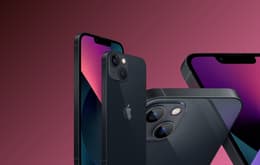
Xiaomi Redmi Note 12 Pro
Starting at

Refurbished price:114.00

Versus €399.00 new

See options
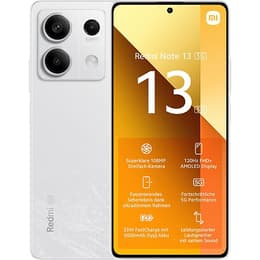
Xiaomi Redmi Note 13
Starting at

Refurbished price:135.00

Versus €340.00 new

See options

Ratings

The Xiaomi Redmi Note 12 Pro 5G, released in early 2023, and the Xiaomi Redmi Note 13 4G, launched globally in early 2024, represent successive generations within Xiaomi's popular mid-range smartphone series. While both devices offer a similar user experience with the Android operating system and Xiaomi's MIUI interface, they introduce distinct advancements in areas such as camera capabilities, display brightness, and processing power, catering to different user priorities.

Scores

Durability

The expected practical lifespan of a smartphone is influenced by its release timeline, software support, and physical durability features. The Redmi Note 12 Pro 5G and Redmi Note 13 4G offer varying levels of longevity in these aspects.

  • Release Timeline and Software Support: The Redmi Note 12 Pro 5G was released in January 2023, initially running Android 12 with MIUI 13. The Redmi Note 13 4G, launched globally in January 2024, ships with Android 13 and MIUI 14. The Redmi Note 13 series is expected to receive three major Android OS updates and four years of security updates, potentially extending its software relevance longer than its predecessor, which typically receives two to three major OS updates.
  • Physical Durability: The Redmi Note 12 Pro 5G features Corning Gorilla Glass 5 for screen protection, offering a good level of resistance against drops and scratches. The Redmi Note 13 4G, on the other hand, uses Corning Gorilla Glass 3 for its display. Both devices carry an IP rating for splash and dust resistance, with the Redmi Note 12 Pro 5G rated at IP53 and the Redmi Note 13 4G at IP54, indicating a slightly enhanced level of protection against dust and splashes for the newer model.
  • Repairability: While specific repairability scores can vary by region and model variant, both devices are designed with components that can be replaced by skilled technicians, contributing to their overall practical lifespan.

Year of Release

2022

2024

Compatible with latest Update

No

Yes

OS

Android

Android

Foldable

No

No

Performance

Performance in daily use is a key differentiator, with both devices offering capable hardware for general tasks, but with distinct characteristics impacting demanding applications and multitasking.

  • Processing Power: The Redmi Note 12 Pro 5G is equipped with a processor that handles demanding applications and multitasking smoothly, providing a responsive experience for gaming and content creation. The Redmi Note 13 4G features a processor that delivers reliable performance for everyday tasks, web browsing, and casual gaming. Users engaging in more intensive mobile gaming or heavy video editing may notice a difference in processing speed and efficiency between the two.
  • Storage and Multitasking: Both models offer various configurations of RAM and internal storage, typically ranging from 6GB to 8GB of RAM and 128GB to 256GB of internal storage, utilizing UFS 2.2 for storage speed. The Redmi Note 13 4G also supports expandable storage up to 1TB, which is a practical feature for users with extensive media libraries. The RAM configurations on both devices are generally sufficient for smooth app switching and running multiple applications concurrently.
  • Battery Behavior: Both smartphones house a 5000 mAh battery, providing a full day of use for many users. However, charging speeds differ significantly; the Redmi Note 12 Pro 5G supports 67W turbo charging, allowing for quicker recharges, while the Redmi Note 13 4G supports 33W fast charging.

Memory (GB)

8 GB

8 GB

Screen quality

The visual experience on both devices is delivered through vibrant AMOLED displays, though there are differences in protection, brightness, and advanced display features.

  • Display Technology and Clarity: Both the Redmi Note 12 Pro 5G and Redmi Note 13 4G feature 6.67-inch AMOLED displays with a resolution of 1080x2400 pixels, providing clear and detailed visuals. AMOLED technology ensures deep blacks and vibrant colors, enhancing the viewing experience for photos, videos, and general content.
  • Brightness and Refresh Rate: The Redmi Note 13 4G offers a significantly higher peak brightness of up to 1800 nits, making it more visible in bright outdoor conditions compared to the Redmi Note 12 Pro 5G's 900 nits peak brightness. Both devices support a 120Hz refresh rate, contributing to smoother scrolling and a more fluid user interface experience.
  • Advanced Display Features and Protection: The Redmi Note 12 Pro 5G includes support for Dolby Vision and HDR10+, offering an enhanced viewing experience for compatible HDR content. It also features Corning Gorilla Glass 5 for display protection. The Redmi Note 13 4G, while lacking HDR10+ and Dolby Vision, comes with Corning Gorilla Glass 3.

Resolution

1080 x 2400

1080 x 2400

Screen type

AMOLED

AMOLED

Audiovisual

Both smartphones offer multi-camera setups designed for versatile photography, but they differ in sensor capabilities and video recording options.

  • Main Camera System: The Redmi Note 12 Pro 5G features a 50 MP main camera with Optical Image Stabilization (OIS) and a capable sensor, which aids in capturing stable photos and videos, especially in challenging lighting conditions. The Redmi Note 13 4G boasts a higher resolution 108 MP main camera, but it lacks OIS. Both include an 8 MP ultrawide camera and a 2 MP macro camera for diverse shooting scenarios.
  • Photography and Video Performance: The presence of OIS on the Redmi Note 12 Pro 5G generally results in sharper images in low light and more stable video footage. It also supports 4K video recording at 30 frames per second. The Redmi Note 13 4G's video recording is limited to 1080p at 30 frames per second. For everyday photography, both devices are capable, but the Redmi Note 12 Pro 5G may offer an advantage in dynamic or low-light situations due to OIS and higher video resolution.
  • Front Camera and Audio: Both phones are equipped with a 16 MP front camera for selfies and video calls. For audio, both devices offer stereo speakers and a 3.5mm headphone jack, providing a good experience for media consumption and calls.

Main camera

50 megapixels

108 megapixels

Front camera

16 megapixels

16 megapixels

Miscellaneous

Beyond core performance and display, several practical elements contribute to the overall user experience, including connectivity, physical design, and additional features.

  • Connectivity and Ports: The Redmi Note 12 Pro 5G supports 5G connectivity and Wi-Fi 6, offering faster mobile data and wireless internet speeds. The Redmi Note 13 4G supports 4G LTE and Wi-Fi 5. Both devices include Bluetooth (5.2 for Note 12 Pro 5G, 5.1 for Note 13 4G) and a USB Type-C port for charging and data transfer. The Redmi Note 12 Pro 5G also features NFC for contactless payments.
  • Design and Handling: The Redmi Note 12 Pro 5G has dimensions of 162.9mm x 76mm x 7.9mm and weighs 187g. It features a glass back and a flat frame. The Redmi Note 13 4G is slightly different at 162.24mm x 75.55mm x 7.97mm and weighs 188.5g, with a glass front (Gorilla Glass 3), plastic frame, and a composite panel back. Both designs aim for a comfortable grip and a modern aesthetic.
  • Sensors and Other Features: Both phones include essential sensors such as an accelerometer, ambient light sensor, and proximity sensor. The Redmi Note 13 4G integrates an in-display fingerprint sensor, while the Redmi Note 12 Pro 5G typically features a side-mounted fingerprint sensor. Both also retain an IR blaster for controlling home appliances.

Weight

187 g

175 g

Screen size (in)

6.67

6.67

Network

5G

5G

SIM card

Dual Physical SIM

Dual Physical SIM

Carrier compatibility

Unlocked

Unlocked

Connector

USB-C

USB-C

User feedback on platforms like Reddit often highlights the Redmi Note 12 Pro 5G's strong camera performance, particularly its OIS and 4K video capabilities, as a significant advantage. Its faster charging speed and more robust display protection are also frequently praised. Some users, however, note that its software update longevity might be shorter compared to newer models.

The Redmi Note 13 4G receives positive remarks for its notably brighter display, which enhances outdoor visibility, and its slightly extended software update commitment. Its modern design and in-display fingerprint sensor are also appreciated. Criticisms sometimes point to the absence of OIS in its camera and the lack of 4K video recording, as well as slower charging compared to its predecessor.

Users prioritizing advanced camera features, especially OIS for stable photos and 4K video recording, along with faster charging, may find the Redmi Note 12 Pro 5G better suited to their needs. Conversely, users who value a brighter display for outdoor use, a slightly newer Android version out of the box, and a longer promised software support timeline may lean toward the Redmi Note 13 4G. Both devices offer a solid experience for general smartphone use, and choosing between them often comes down to these specific feature preferences. For those looking for an eco-friendly alternative, both models are available as quality-assured refurbished options, providing a sustainable choice for consumers.


See all articles

Our recent comparisons