


Galaxy A15 5G Vs iPhone 15

Galaxy A15 5G
Galaxy A15 5G
Starting at

Refurbished price:124.00

Versus €248.54 new

See options
iPhone 15
iPhone 15
Starting at

Refurbished price:394.00

Versus €879.00 new

See options

Ratings

The Samsung Galaxy A15 5G (released December 2023) and the iPhone 15 (released September 2023) are contemporary smartphones, each offering distinct experiences within their respective operating systems. While the Galaxy A15 5G runs on Android, providing extensive customization, the iPhone 15 operates on iOS, known for its integrated ecosystem. Key differentiators include their display technologies, camera capabilities, and overall performance, catering to different user preferences.

Scores

Durability

The longevity of a smartphone is influenced by its build, software support, and repairability. Both devices offer a reasonable practical lifespan, though their approaches to software updates differ.

  • Software Support: The iPhone 15 launched with iOS 17 and is expected to receive major iOS updates for approximately five to six years from its release, potentially extending its functional life. The Galaxy A15 5G, launched with Android 14, is promised four years of major OS updates and an additional year of security patches, which is notable for its category.
  • Physical Durability: The iPhone 15 features a Ceramic Shield front cover and an aluminum design with a color-infused glass back, offering enhanced resistance to drops and scratches. It also carries an IP68 rating for dust and water resistance, allowing submersion up to 6 meters for 30 minutes. The Galaxy A15 5G primarily uses a plastic build, which can be resilient to minor impacts, though it does not specify an IP rating in the provided information.
  • Repairability: While specific repairability scores are not detailed, Apple generally designs its devices with a focus on integrated components, which can sometimes make repairs more complex. Samsung's A-series phones often feature more modular designs, potentially simplifying certain repairs.

Year of Release

2023

2023

Compatible with latest Update

Yes

Yes

OS

Android

iOS

Foldable

No

No

Performance

Performance in smartphones dictates how smoothly applications run, how quickly tasks are completed, and the overall responsiveness of the user interface. Both devices offer capable performance for their intended users, though with different levels of processing power.

  • Processing Power: The iPhone 15 is equipped with a powerful processor that handles demanding applications, complex multitasking, and graphics-intensive games with fluidity. Users can expect quick app loading times and seamless transitions between tasks. The Galaxy A15 5G features a processor designed for efficient everyday use, capably managing common tasks like web browsing, email, and media playback. While it handles multitasking, users might notice occasional brief delays when switching between numerous applications or running very demanding software.
  • Storage and RAM: The iPhone 15 is available with 128GB, 256GB, or 512GB of internal storage, which is not expandable. The Galaxy A15 5G typically comes with 128GB or 256GB of internal storage and offers the flexibility of expandable storage via a microSD card, up to 1TB, providing ample space for media and files. The iPhone 15 includes 6GB of RAM, contributing to its smooth multitasking capabilities. The Galaxy A15 5G is available with 4GB, 6GB, or 8GB of RAM, which supports its performance for daily tasks.
  • Battery Behavior: The iPhone 15 offers up to 20 hours of video playback, providing reliable power for a full day of moderate to heavy use. The Galaxy A15 5G is equipped with a larger battery capacity, often translating to extended usage times, with many users reporting it comfortably lasts a full day on a single charge.

Memory (GB)

4 GB

6 GB

Screen quality

The display is a primary interface for smartphone interaction, and both devices offer vibrant and clear viewing experiences, albeit with different underlying technologies and characteristics.

  • Display Technology and Clarity: The iPhone 15 features a 6.1-inch Super Retina XDR OLED display, delivering deep blacks, high contrast, and vibrant colors with a resolution of 2556 by 1179 pixels at 460 pixels per inch. The Galaxy A15 5G sports a 6.5-inch Super AMOLED display with a resolution of 2340 by 1080 pixels, also providing rich colors and good clarity for media consumption and daily tasks.
  • Brightness and Refresh Rate: The iPhone 15 offers impressive brightness, reaching up to 1000 nits typical, 1600 nits peak for HDR content, and up to 2000 nits peak outdoors, ensuring excellent visibility even in bright sunlight. Its refresh rate is 60Hz. The Galaxy A15 5G has a maximum brightness of 800 nits, making it legible in fairly bright outdoor conditions, and features a smoother 90Hz refresh rate, which enhances the fluidity of scrolling and animations.
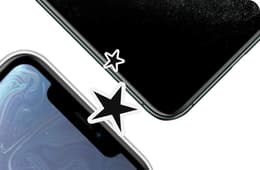
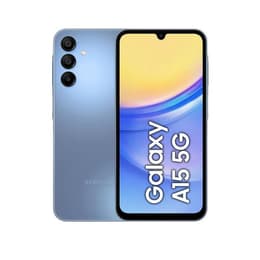
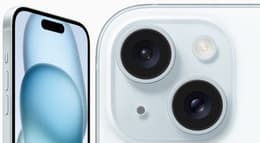
  • Screen Design: The iPhone 15 incorporates the Dynamic Island, an interactive area around the front camera and sensors. The Galaxy A15 5G has a noticeable bezel around its display and a U-shaped notch for the front camera.

Resolution

1080 x 2340

1179 x 2556

Screen type

Super AMOLED

Super Retina XDR OLED

Audiovisual

Camera capabilities are a significant factor for many users, and both smartphones offer systems designed to capture quality photos and videos, though with different strengths and features.

  • Rear Camera System: The iPhone 15 features an advanced dual-camera system with a 48MP main sensor (f/1.6 aperture) and a 12MP ultra-wide camera (f/2.4 aperture). The main camera uses pixel binning to produce detailed 24MP photos by default and can achieve a 2x optical-quality telephoto zoom by cropping the main sensor. The Galaxy A15 5G has a triple-camera setup, including a 50MP main camera (f/1.8 aperture), a 5MP ultra-wide camera, and a 2MP macro camera. The main camera captures detailed 12MP images by default.
  • Photography Performance: The iPhone 15 excels in capturing accurate colors and offers strong low-light performance, producing images with good detail and reduced noise. It also features next-generation portraits with Focus and Depth Control, allowing users to adjust focus after taking a photo. The Galaxy A15 5G's primary camera performs well in bright conditions, producing sharp images with slightly oversaturated but vibrant colors. Its ultra-wide and macro cameras are suitable for specific shots but offer less detail than the main sensor.
  • Video Recording: The iPhone 15 supports 4K video recording at up to 60 frames per second, including Cinematic mode for depth-of-field effects and HDR video with Dolby Vision. The Galaxy A15 5G records video at Full HD (1920 x 1080) at 30 frames per second.
  • Front Camera: Both devices feature a 12MP front-facing camera. The iPhone 15's TrueDepth camera has an f/1.9 aperture with autofocus, supporting advanced portrait features and 4K video recording. The Galaxy A15 5G has a 13MP front camera, suitable for selfies and video calls.

Main camera

50 megapixels

48 megapixels

Front camera

13 megapixels

12 megapixels

Miscellaneous

Beyond core specifications, several practical elements contribute to the overall user experience, from how devices connect to other peripherals to their physical design.

  • Connectivity: Both the iPhone 15 and Galaxy A15 5G support 5G cellular networks, Wi-Fi 6 (802.11ax for iPhone 15, 802.11a/b/g/n/ac for Galaxy A15 5G), and Bluetooth 5.3, ensuring fast and reliable wireless connections. The iPhone 15 also includes a second-generation Ultra Wideband chip for enhanced spatial awareness.
  • Ports and Sensors: The iPhone 15 features a USB-C port, marking a transition from the proprietary Lightning connector, and supports USB 2.0 transfer speeds. It relies on Face ID for secure facial recognition. The Galaxy A15 5G includes a USB-C 2.0 port and notably retains a 3.5mm headphone jack, a feature less common in modern smartphones. It uses a side-mounted fingerprint sensor for biometric authentication.
  • Design and Handling: The iPhone 15 has an aluminum design with a color-infused glass back, weighing 171 grams and measuring 147.6 x 71.6 x 7.8 mm. The Galaxy A15 5G has a plastic build, weighing 200 grams and measuring 160.1 x 76.8 x 8.4 mm, offering a slightly larger form factor.

Weight

200 g

171 g

Screen size (in)

6.5

6.1

Network

5G

5G

SIM card

Dual Physical SIM

eSIM

Carrier compatibility

Unlocked

Unlocked

User feedback for the iPhone 15 frequently praises its significantly improved camera system, particularly the 48MP main sensor and the effective 2x telephoto zoom, which delivers sharp and vibrant images. Users also appreciate the adoption of the USB-C port for broader compatibility and the integration of the Dynamic Island, previously a Pro-exclusive feature. Common criticisms often revolve around the 60Hz refresh rate, which some users find less fluid compared to devices with higher refresh rates, and the lack of a dedicated telephoto lens. For the Galaxy A15 5G, users consistently highlight its excellent Super AMOLED display with a 90Hz refresh rate and its impressive battery life as major advantages. The commitment to four years of software updates is also a strong positive. However, some users note that its performance can feel less responsive during heavy multitasking or demanding applications, and the mono speaker is often cited as a drawback.

Users prioritizing a highly integrated ecosystem, advanced computational photography features, and a compact, premium build will find the iPhone 15 well-suited to their needs. Its robust performance ensures a smooth experience across all tasks, and its durability features offer peace of mind. Conversely, users who value a larger, smoother display for media consumption, expandable storage, and a longer-lasting battery for extended use may lean toward the Galaxy A15 5G. Its Android operating system also offers greater customization options. Both devices represent solid choices within their respective categories, and opting for a quality-assured refurbished option can be a sustainable choice for either model.

See all articles

Our recent comparisons