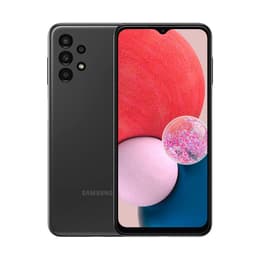
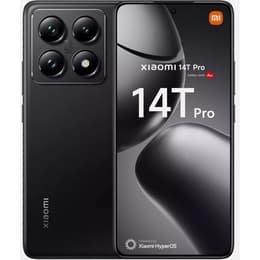


Galaxy A13 Vs Xiaomi 14T Pro

Galaxy A13
Galaxy A13
Starting at

Refurbished price:97.00

Versus €249.00 new

See options
Xiaomi 14T Pro
Xiaomi 14T Pro
Starting at

Refurbished price:395.00

Versus €1,500.00 new

See options

Ratings

The Samsung Galaxy A13, released in March 2022, and the Xiaomi 14T Pro, launched in September 2024, represent different generations and market segments within the Android smartphone ecosystem. While both devices operate on the Android platform, the Xiaomi 14T Pro introduces significant advancements in processing power, display technology, and camera capabilities, reflecting its more recent development and higher-tier positioning. This comparison will explore the practical differences between these two phones to help users understand which device aligns best with their daily needs.

Scores

Durability

The longevity of a smartphone is influenced by its release timeline, software support, and physical durability. These factors determine how long a device remains functional and secure for everyday use.

  • Release Timeline: The Samsung Galaxy A13 was released in March 2022, making it an older model compared to the Xiaomi 14T Pro, which launched in September 2024. This age difference impacts the remaining period of software support and the relevance of its hardware.
  • Software Support: The Galaxy A13 launched with Android 12 and has received updates up to Android 14, with major OS updates likely concluded. It continues to receive security updates. The Xiaomi 14T Pro, launching with Android 14 and Xiaomi HyperOS, is expected to receive a longer duration of major Android and security updates, aligning with more recent flagship-tier support policies.
  • Physical Durability: The Galaxy A13 features a plastic build with Corning Gorilla Glass 5 protecting its display. The Xiaomi 14T Pro, with its glass and aluminum construction and IP68 water and dust resistance rating, offers a more robust build designed to withstand environmental elements.

Year of Release

2022

2024

Compatible with latest Update

No

Yes

OS

Android

Android

Foldable

No

No

Performance

Performance is a key differentiator, affecting how smoothly applications run, how quickly tasks are completed, and the overall responsiveness of the user experience.

  • Processing Power: The Galaxy A13 is equipped with a processor suitable for essential daily tasks like messaging, browsing, and light social media use. Users may experience slower app loading times and occasional stutters during multitasking or with more demanding applications. The Xiaomi 14T Pro features a current-generation processor designed for high-performance tasks, enabling rapid app launches, seamless multitasking, and smooth operation of graphically intensive games and advanced AI features.
  • Memory and Storage: The Galaxy A13 offers various configurations, typically with 3GB to 6GB of RAM and 32GB to 128GB of internal storage, expandable via a microSD card. The Xiaomi 14T Pro comes with significantly more RAM, starting at 12GB and going up to 16GB, paired with faster internal storage options from 256GB to 1TB, without microSD expansion. This larger and faster memory configuration contributes to its superior multitasking and data handling capabilities.
  • Battery Behavior: Both devices feature a 5000mAh battery capacity. The Galaxy A13 provides over a day of use with moderate activity and supports 15W wired charging. The Xiaomi 14T Pro also offers extended battery life, often lasting 1.5 to 2 days, but distinguishes itself with 120W wired HyperCharge, allowing for a full charge in approximately 23-25 minutes, and 50W wireless charging.

Memory (GB)

4 GB

12 GB

Screen quality

The display is the primary interface for user interaction, and its quality significantly impacts the viewing experience for media, browsing, and daily tasks.

  • Display Technology and Resolution: The Samsung Galaxy A13 features a 6.6-inch PLS TFT LCD with a Full HD+ resolution (1080x2408 pixels). This display provides clear visuals for everyday content. The Xiaomi 14T Pro boasts a 6.67-inch AMOLED display with a higher 1.5K resolution (2712 x 1220 pixels), offering deeper blacks, more vibrant colors, and superior contrast.
  • Brightness and Refresh Rate: The Galaxy A13 has a standard 60Hz refresh rate, which is adequate for general use. The Xiaomi 14T Pro features an adaptive refresh rate of up to 144Hz, providing a noticeably smoother scrolling experience and more fluid animations, particularly beneficial for gaming and fast-paced content. It also offers a significantly higher peak brightness of 4000 nits, ensuring excellent visibility even in bright outdoor conditions.
  • Viewing Experience: While the Galaxy A13's display is functional for its segment, the Xiaomi 14T Pro's AMOLED panel with its higher resolution, faster refresh rate, and superior brightness provides a more immersive and visually rich experience, enhanced by support for Dolby Vision and HDR10+.

Resolution

1080 x 2408

1220 x 2712

Screen type

PLS LCD

AMOLED

Audiovisual

Camera capabilities are a significant consideration for many users, influencing the quality of photos and videos captured in various scenarios.

  • Rear Camera System: The Samsung Galaxy A13 includes a quad-camera setup with a 50MP main sensor, a 5MP ultrawide, and two 2MP sensors for macro and depth. The main camera performs adequately in good lighting conditions, but the auxiliary lenses offer more limited utility. The Xiaomi 14T Pro features a Leica co-engineered triple-camera system, including a 50MP main sensor with a larger aperture and optical image stabilization, a 50MP telephoto lens with 2.6x optical zoom, and a 12MP ultrawide lens. This setup is designed for enhanced detail, dynamic range, and low-light performance.
  • Photography Features: The Galaxy A13 offers basic photography modes. The Xiaomi 14T Pro provides advanced computational photography features, including improved low-light processing, enhanced dynamic range, and specialized Leica photographic styles (Authentic and Vibrant) for different aesthetic preferences. Its telephoto lens is particularly noted for capturing distant subjects and creating natural background blur in portraits.
  • Video Recording and Front Camera: The Galaxy A13 records video at 1080p at 30 frames per second and has an 8MP front camera. The Xiaomi 14T Pro supports video recording up to 8K at 30fps and 4K at 60fps, with advanced features like Director mode and LOG capture for more professional video production. Its 32MP front camera offers higher resolution for selfies and video calls.

Main camera

50 megapixels

50 megapixels

Front camera

8 megapixels

32 megapixels

Miscellaneous

Beyond core features, various practical elements contribute to the overall user experience, from connectivity to physical design.

  • Connectivity and Ports: The Samsung Galaxy A13 supports 4G LTE, Wi-Fi 5, and Bluetooth 5.0, and includes a 3.5mm headphone jack and a USB-C 2.0 port. The Xiaomi 14T Pro offers more advanced connectivity with 5G, Wi-Fi 7, and Bluetooth 5.4. It features a USB-C port but omits the 3.5mm headphone jack. It also includes an IR blaster for controlling home electronics.
  • Biometric Security: Both devices feature a side-mounted fingerprint sensor for secure unlocking.
  • Design and Handling: The Galaxy A13 has a plastic body, weighing 195g, with dimensions of 165.1 x 76.4 x 8.8 mm. The Xiaomi 14T Pro features a more premium glass and aluminum construction, weighing 209g, with dimensions of 160.4 x 75.1 x 8.39 mm. The Xiaomi device's IP68 rating provides enhanced protection against water and dust ingress.

Weight

195 g

209 g

Screen size (in)

6.6

6.67

Network

4G

5G

SIM card

Dual Physical SIM

Dual Physical SIM

Carrier compatibility

Unlocked

Unlocked

The Samsung Galaxy A13 and Xiaomi 14T Pro cater to distinct user needs, largely due to their generational difference and intended market segments. User feedback for the Galaxy A13 often praises its reliable battery life and expandable storage, making it a practical choice for those seeking a straightforward smartphone experience for essential communication and light media consumption. Criticisms frequently point to its slower performance and less impressive camera capabilities, especially in challenging lighting conditions.

Conversely, the Xiaomi 14T Pro receives acclaim for its powerful performance, vibrant and smooth display, and versatile camera system co-engineered with Leica, which excels in various photographic scenarios. Its rapid charging speeds are also a frequently highlighted positive. Some users might note the absence of a 3.5mm headphone jack or expandable storage as potential drawbacks, depending on their preferences.

Users prioritizing a device for everyday tasks, communication, and long battery life without demanding high-end performance or advanced camera features may find the Galaxy A13 suitable. It serves as a functional entry point into the Android ecosystem. For individuals who require a device capable of handling demanding applications, high-refresh-rate gaming, advanced photography, and rapid charging, the Xiaomi 14T Pro presents a compelling option. Its modern specifications and premium features are geared towards a more intensive and visually rich smartphone experience. Both devices, whether new or as a quality-assured refurbished option, offer pathways to informed and sustainable technology choices.


See all articles

Our recent comparisons