

Galaxy Z Fold4 Vs Xiaomi Redmi Note 12 Pro

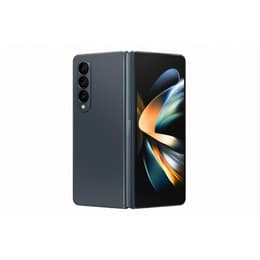
Galaxy Z Fold4
Galaxy Z Fold4
Starting at

Refurbished price:470.00

Versus €1,799.00 new

See options
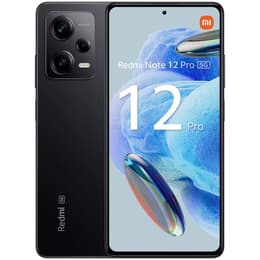
Xiaomi Redmi Note 12 Pro
Starting at

Refurbished price:112.00

Versus €399.00 new

See options

Ratings

The Samsung Galaxy Z Fold4, released in August 2022, and the Xiaomi Redmi Note 12 Pro, launched in late 2022/early 2023, represent distinct approaches to smartphone design and functionality. The Galaxy Z Fold4 stands out with its innovative foldable form factor, offering a large internal display for enhanced productivity and media consumption, while the Redmi Note 12 Pro provides a more traditional, yet feature-rich, smartphone experience. Both devices operate on the Android platform, but their core differentiators lie in their physical design, display technologies, and intended user experiences.

Scores

Durability

The longevity of a smartphone is influenced by its release timeline, software support, and physical durability. These two devices offer different expectations in terms of their practical lifespan and ongoing support.

  • Software Support: The Galaxy Z Fold4 launched with Android 12L and is eligible for four major Android OS updates and five years of security updates, extending its software support until approximately 2027. The Redmi Note 12 Pro, released with Android 12, typically receives fewer major OS updates compared to flagship devices, which may result in a shorter period of official software support.
  • Physical Durability: The Galaxy Z Fold4 features a premium construction with Gorilla Glass Victus+ on its cover screen and an IPX8 water resistance rating, offering protection against submersion. Its foldable design, while innovative, introduces a hinge mechanism that some users have noted as a potential point of concern over extended use, with reports of inner screen protector peeling or hinge issues after about a year. The Redmi Note 12 Pro utilizes Gorilla Glass 5 for screen protection and a plastic body, providing a solid build for a traditional smartphone.
  • Practical Lifespan: Users of the Galaxy Z Fold4 can expect a longer period of software relevance due to Samsung's update policy, making it a suitable choice for those who keep their devices for several years. The Redmi Note 12 Pro, while durable in its conventional design, may see its software support conclude sooner, potentially influencing its practical lifespan for users who prioritize the latest Android features.

Year of Release

2022

2022

Compatible with latest Update

Yes

No

OS

Android

Android

Foldable

Yes

No

Performance

Performance in smartphones is measured by how smoothly they handle daily tasks, demanding applications, and multitasking. The Galaxy Z Fold4 and Redmi Note 12 Pro offer distinct performance profiles tailored to their respective hardware and software optimizations.

  • Processing Power: The Galaxy Z Fold4 is equipped with a high-performance processor, enabling it to handle demanding applications, intensive gaming, and complex multitasking with fluidity. Users report a consistently smooth experience, even when running multiple apps simultaneously on its large internal display. The Redmi Note 12 Pro features a capable processor that provides solid performance for everyday use, including social media, web browsing, and moderate gaming, with good overall system responsiveness.
  • Multitasking and Responsiveness: With 12GB of RAM, the Galaxy Z Fold4 excels at multitasking, allowing users to switch between numerous applications without noticeable slowdowns. Its software is optimized for the foldable form factor, enhancing productivity with features like a customizable app dock. The Redmi Note 12 Pro offers various RAM configurations (6GB, 8GB, 12GB), which support smooth multitasking for typical smartphone usage, though it may exhibit slight pauses when switching between many demanding applications compared to the Fold4.
  • Storage and Battery Behavior: The Galaxy Z Fold4 comes with ample internal storage options (256GB, 512GB, 1TB) but lacks expandable storage. Its 4400 mAh battery, combined with an efficient processor, generally provides a full day of use for many users, with some reporting 10-12 hours of screen-on time. The Redmi Note 12 Pro offers 128GB or 256GB of non-expandable storage and a larger 5000 mAh battery, which typically delivers good battery life, often lasting a full day or more with moderate usage, and supports 67W fast charging for quick power replenishment.

Memory (GB)

12 GB

8 GB

Screen quality

The display is a primary interface for smartphone interaction, and both devices offer vibrant viewing experiences, though with significant differences in technology and form factor.

  • Display Technology and Size: The Galaxy Z Fold4 features two Dynamic AMOLED 2X displays: a 7.6-inch foldable inner screen and a 6.2-inch cover screen, both offering vibrant colors and deep blacks. The Redmi Note 12 Pro sports a single 6.67-inch AMOLED display, known for its rich colors and high contrast. The foldable nature of the Z Fold4 provides a much larger canvas for content consumption and productivity when unfolded.
  • Resolution and Clarity: The Z Fold4's inner display has a resolution of 2176 x 1812 pixels, offering exceptional clarity and detail, while its cover screen has a resolution of 2316 x 904 pixels. The Redmi Note 12 Pro's display features a 1080x2400 pixel (FHD+) resolution, providing sharp and clear visuals for its size. Both displays are well-suited for viewing high-definition content.
  • Brightness and Refresh Rate: Both devices offer smooth scrolling and responsive interactions with 120Hz refresh rates. The Z Fold4's displays are capable of high brightness levels, ensuring good visibility even in bright outdoor conditions. The Redmi Note 12 Pro's AMOLED display also achieves high peak brightness, making it comfortable to view in various lighting environments.

Resolution

1812 x 2176

1080 x 2400

Screen type

Foldable Dynamic AMOLED 2X

AMOLED

Audiovisual

Camera capabilities are a significant factor for many users, and both smartphones provide versatile camera systems designed for different photography needs.

  • Rear Camera System: The Galaxy Z Fold4 features a triple rear camera setup, including a 50MP main sensor with optical image stabilization (OIS), a 12MP ultra-wide camera, and a 10MP telephoto lens with 3x optical zoom. This system is praised for capturing detailed, vibrant photos in various conditions, including improved low-light performance over its predecessor. The Redmi Note 12 Pro also has a triple rear camera system, with a 50MP main sensor (Sony IMX766) that includes OIS, an 8MP ultra-wide lens, and a 2MP macro camera. Its main camera performs well in daylight and offers decent low-light results.
  • Front-Facing Cameras and Video: The Z Fold4 has a 10MP camera on its cover screen and a 4MP under-display camera on the main foldable screen, with the latter primarily intended for video calls. It supports video recording up to 8K at 24fps. The Redmi Note 12 Pro features a 16MP front-facing camera that delivers good detail and exposure for selfies. It can record videos up to 4K at 30fps.
  • Specialized Photography: The Z Fold4's telephoto lens provides greater versatility for zoomed shots, and its foldable form factor allows for unique shooting angles. The Redmi Note 12 Pro's ultra-wide and macro cameras, while present, are often noted by users as having lower image quality compared to the main sensor, particularly in challenging lighting conditions.

Main camera

50 megapixels

50 megapixels

Front camera

4 megapixels

16 megapixels

Miscellaneous

Beyond core performance and display, several practical elements contribute to the overall user experience, including connectivity, physical design, and additional features.

  • Connectivity and Ports: Both devices support 5G connectivity, Wi-Fi 6, and Bluetooth 5.2, ensuring fast wireless communication. The Galaxy Z Fold4 features a USB Type-C 3.2 port, while the Redmi Note 12 Pro also uses a USB Type-C port and notably includes a 3.5mm headphone jack, which is absent on the Fold4. The Redmi Note 12 Pro also incorporates an infrared (IR) blaster, a feature not found on the Z Fold4.
  • Physical Design and Handling: The Galaxy Z Fold4, weighing 263g, is a heavier device due to its foldable mechanism and dual-display setup. When folded, it is thicker than a standard smartphone but offers a more compact footprint. When unfolded, it provides a tablet-like experience. The Redmi Note 12 Pro is a lighter device at 187g and features a slimmer, more traditional smartphone design, making it comfortable for one-handed use.
  • Security and Audio: Both phones include a side-mounted fingerprint sensor for secure unlocking. The Galaxy Z Fold4 also offers face recognition. Both devices feature stereo speakers, providing a rich audio experience for media consumption. Users generally praise the Z Fold4's speakers for their loudness and clarity, while the Redmi Note 12 Pro also delivers solid audio output.

Weight

263 g

187 g

Screen size (in)

7.6

6.67

Network

5G

5G

SIM card

Dual Physical SIM + eSIM

Dual Physical SIM

Carrier compatibility

Unlocked

Unlocked

Connector

USB-C

USB-C

The Samsung Galaxy Z Fold4 and Xiaomi Redmi Note 12 Pro cater to different user needs and preferences, each offering a compelling set of features. User feedback for the Galaxy Z Fold4 often highlights its large, immersive display and multitasking capabilities as significant advantages, making it a strong contender for those who prioritize productivity and media consumption on a larger screen. Its camera system is also generally well-received, offering versatile photography options. However, some users express concerns about its weight and the long-term durability of the foldable screen and hinge mechanism.

Conversely, the Xiaomi Redmi Note 12 Pro is frequently praised for its vibrant AMOLED display, reliable battery life with fast charging, and solid performance for everyday tasks. Its main camera is noted for producing good results, especially in well-lit conditions. Common criticisms often point to the less impressive performance of its secondary cameras (ultra-wide and macro) and the fact that it launched with an older Android version.

Users prioritizing a cutting-edge, versatile device for productivity and a large screen experience may find the Galaxy Z Fold4 well-suited to their needs, especially if they value extended software support. Those seeking a dependable, feature-rich smartphone with a strong main camera, excellent battery life, and a more traditional form factor might lean towards the Redmi Note 12 Pro. Both devices are available as quality-assured refurbished options, providing an eco-friendly alternative for consumers looking to make informed and sustainable choices.


See all articles

Our recent comparisons