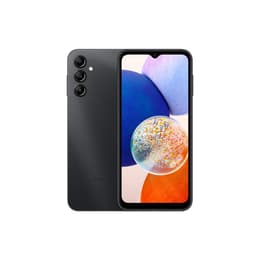
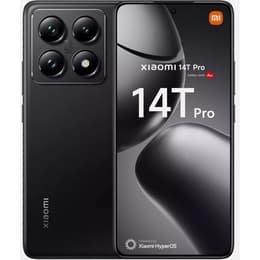


Galaxy A14 Vs Xiaomi 14T Pro

Galaxy A14
Galaxy A14
Starting at

Refurbished price:97.00

Versus €269.00 new

See options
Xiaomi 14T Pro
Xiaomi 14T Pro
Starting at

Refurbished price:395.00

Versus €1,500.00 new

See options

Ratings

The Samsung Galaxy A14, released in early 2023, and the Xiaomi 14T Pro, launched in late 2024, represent distinct segments within the smartphone market. While both are Android devices, the Galaxy A14 is positioned as an accessible option, offering essential smartphone functionalities. In contrast, the Xiaomi 14T Pro aims for a more advanced user experience, featuring a high-performance processor, a sophisticated camera system, and rapid charging capabilities. These differences cater to varying user needs and expectations from their mobile devices.

Scores

Durability

When considering the longevity of these devices, several factors come into play, primarily their release timelines and software support.

  • Release Timeline: The Samsung Galaxy A14 5G model was introduced in January 2023, making it an older device compared to the Xiaomi 14T Pro, which launched in September 2024. This age difference inherently means the Xiaomi 14T Pro will receive software updates for a longer period.
  • Software Longevity: The Galaxy A14 typically receives two major Android operating system updates, starting with Android 13, extending its support to Android 15. The Xiaomi 14T Pro, launching with Android 14 and Xiaomi's HyperOS, is expected to benefit from a longer software support window, aligning with its more recent release and higher-tier positioning.
  • Repairability and Build: The Galaxy A14 features a plastic construction for its back and sides, with an unspecified glass front. User reports suggest its battery is not excessively glued, potentially simplifying battery replacement. The Xiaomi 14T Pro, on the other hand, boasts an aluminum alloy frame and glass construction, along with an IP68 rating for dust and water resistance, indicating a more robust build designed for greater durability against environmental factors.

Year of Release

2023

2024

Compatible with latest Update

No

Yes

OS

Android

Android

Foldable

No

No

Performance

The performance capabilities of these two smartphones differ significantly, impacting how smoothly they handle various tasks.

  • Processor Capabilities: The Samsung Galaxy A14 5G is equipped with a MediaTek Dimensity 700 or Exynos 1330 processor, which provides a satisfactory experience for everyday tasks like browsing and social media. However, users may notice occasional lags or stutters with demanding applications or animations. The Xiaomi 14T Pro features a MediaTek Dimensity 9300+ processor, designed for high-performance tasks. This allows for an ultra-smooth experience with demanding apps, intensive multitasking, and graphic-heavy gaming.
  • Storage and RAM: The Galaxy A14 offers storage options of 64GB or 128GB, with the benefit of expandable storage via a microSD card up to 1TB. It comes with 4GB, 6GB, or 8GB of RAM. The Xiaomi 14T Pro provides higher base storage options, typically starting from 256GB and going up to 1TB, utilizing faster UFS 4.0 storage, but it does not support expandable storage. It is available with 12GB or 16GB of LPDDR5X RAM, contributing to its superior multitasking capabilities.
  • Battery Behavior: Both devices house a 5000 mAh battery, offering substantial power for daily use. The Galaxy A14 can last 1.5 to 2 days with moderate usage, providing around 8 to 9 hours of screen-on time. The Xiaomi 14T Pro also delivers excellent endurance, with reports of 13 to 14 hours of screen time and up to two days of moderate use, partly due to its efficient processor.

Memory (GB)

4 GB

12 GB

Screen quality

The visual experience offered by these two smartphones varies significantly due to their display technologies and specifications.

  • Display Technology and Clarity: The Samsung Galaxy A14 features a 6.6-inch PLS LCD display with a Full HD+ resolution (1080 x 2408 pixels). This technology provides improved viewing angles and color reproduction compared to traditional LCDs, offering a clear viewing experience for everyday content. The Xiaomi 14T Pro boasts a 6.67-inch AMOLED display with a higher 1.5K resolution (2712 x 1220 pixels). AMOLED technology delivers deep blacks, vibrant colors, and excellent contrast, enhancing the visual quality for media consumption and gaming.
  • Refresh Rate and Brightness: The Galaxy A14 5G model offers a 90Hz refresh rate, providing a smoother scrolling experience than a standard 60Hz display. Its brightness levels are suitable for indoor use but can be challenging to view clearly in direct sunlight. The Xiaomi 14T Pro features a higher 144Hz refresh rate, resulting in exceptionally fluid animations and responsiveness, particularly beneficial for gaming and fast-paced content. It also offers a significantly higher peak brightness of 4000 nits, ensuring excellent visibility even in bright outdoor conditions.
  • Viewing Experience: The Xiaomi 14T Pro's display supports Dolby Vision and HDR10+, further enhancing the viewing experience with a wider range of colors and improved contrast for compatible content. It also incorporates eye protection features like 3840 Hz PWM dimming.

Resolution

1080 x 2408

1220 x 2712

Screen type

PLS LCD

AMOLED

Audiovisual

The camera systems on the Galaxy A14 and Xiaomi 14T Pro cater to different levels of photography enthusiasts, with distinct capabilities.

  • Rear Camera System: The Samsung Galaxy A14 5G features a triple rear camera setup, including a 50MP main sensor, a 2MP macro lens, and a 2MP depth sensor. The 4G variant may include a 5MP ultrawide instead of a depth sensor. It performs well in bright daylight, capturing decent details and good portrait shots, but struggles in low-light conditions due to the absence of a dedicated night mode. The Xiaomi 14T Pro boasts a more advanced, Leica-tuned triple camera system, comprising a 50MP main sensor (LightFusion 900), a 50MP telephoto lens with 2.6x optical zoom, and a 12MP ultrawide lens. This setup excels in daylight photography with impressive dynamic range and detail, and offers good low-light performance, though not always class-leading. The telephoto lens is particularly effective for zoomed shots and portraits.
  • Front Camera and Video Recording: For selfies, the Galaxy A14 has a 13MP front camera, which captures sharp images in good lighting. Video recording on the A14 is limited to 1080p at 30 frames per second, without optical image stabilization (OIS). The Xiaomi 14T Pro features a higher-resolution 32MP front camera, capable of capturing detailed selfies and 4K video. Its rear camera system supports video recording up to 8K at 30 frames per second, with OIS and cinematic features, providing more versatile video creation options.
  • Audio Quality: The Galaxy A14 includes a 3.5mm headphone jack, offering traditional audio connectivity. The Xiaomi 14T Pro does not have a 3.5mm headphone jack but features stereo speakers for an enhanced media consumption experience.

Main camera

50 megapixels

50 megapixels

Front camera

13 megapixels

32 megapixels

Miscellaneous

Beyond core performance and display, several practical features differentiate these two devices.

  • Connectivity and Ports: Both phones support 5G connectivity, ensuring access to faster mobile networks. The Galaxy A14 includes a 3.5mm headphone jack and a USB Type-C 2.0 port. The Xiaomi 14T Pro uses a USB Type-C port but omits the 3.5mm headphone jack, though an adapter may be included. Both devices feature NFC for mobile payments. The Xiaomi 14T Pro also includes an infrared (IR) blaster, allowing it to function as a universal remote control.
  • Biometrics and Sensors: The Galaxy A14 incorporates a side-mounted fingerprint sensor for secure unlocking. The Xiaomi 14T Pro, with its AMOLED display, likely features an in-display fingerprint sensor, offering a more integrated design. Both include standard sensors like accelerometers and proximity sensors.
  • Design and Handling: The Galaxy A14 has dimensions of 167.7 x 78 x 9.1 mm and weighs around 201-202g, with a plastic build. The Xiaomi 14T Pro is slightly more compact at 160.4 x 75.1 x 8.39 mm and weighs 209g, featuring an aluminum alloy frame and glass construction. Its IP68 rating provides enhanced protection against dust and water.

Weight

201 g

209 g

Screen size (in)

6.6

6.67

Network

4G

5G

SIM card

Dual Physical SIM

Dual Physical SIM

Carrier compatibility

Unlocked

Unlocked

The Samsung Galaxy A14 and Xiaomi 14T Pro cater to different user priorities, as reflected in their design, performance, and feature sets. User feedback for the Galaxy A14 often highlights its long battery life, a decent display for its category, and Samsung's commitment to software updates as strong advantages. However, common criticisms point to its slower charging speeds, the absence of an ultrawide camera on the 5G model, and performance that can feel sluggish with more demanding use.

The Xiaomi 14T Pro generally receives praise for its vibrant AMOLED display, exceptional camera capabilities tuned by Leica, robust performance for gaming and multitasking, and remarkably fast wired and wireless charging. Some users have noted that its software experience might not be as refined as some competitors, and its AI features were still developing at launch. Additionally, while its battery life is strong, some users have questioned its drain rate despite the efficient processor.

Users prioritizing an eco-friendly and quality-assured refurbished option for essential daily tasks, long battery life, and expandable storage will find the Samsung Galaxy A14 well-suited to their needs. It offers a reliable smartphone experience without advanced features. Conversely, users who prioritize cutting-edge performance, a superior display for media and gaming, advanced photography and videography tools, and extremely fast charging will likely lean towards the Xiaomi 14T Pro. Its more recent release and higher-tier specifications make it a compelling choice for those seeking a more premium and future-ready device.


See all articles

Our recent comparisons