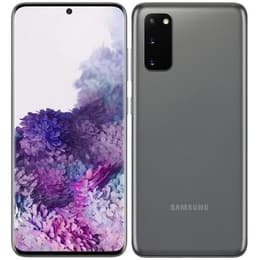
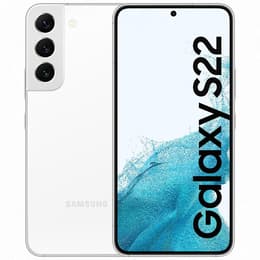


Galaxy S20 Vs Galaxy S22 5G

Galaxy S20
Galaxy S20
Starting at

Refurbished price:193.00

Versus €909.00 new

See options
Galaxy S22 5G
Galaxy S22 5G
Starting at

Refurbished price:174.00

Versus €851.00 new

See options

Ratings

The Samsung Galaxy S20, released in March 2020, and the Samsung Galaxy S22 5G, launched in February 2022, are both flagship Android smartphones from Samsung's popular S series. While they share the same operating system and a premium build, the S22 introduces advancements in camera technology, processing power, and a slightly refined design compared to its predecessor.

Scores

Durability

The practical lifespan of a smartphone is often influenced by its release timeline, software support, and physical durability. Both devices offer robust build quality, but their age and update policies present key differences.

  • Software Longevity: The Galaxy S20 series, launched in 2020, received its final official software updates in April 2025, concluding its update cycle with Android 13. In contrast, the Galaxy S22, released in 2022, has received four major Android OS updates (from Android 12 to Android 16) and is expected to receive security updates until early 2027, offering a longer period of official support.
  • Physical Durability: Both the Galaxy S20 and Galaxy S22 feature an IP68 rating for dust and water resistance, indicating protection against immersion in up to 1.5 meters of fresh water for 30 minutes. The Galaxy S20 utilizes Gorilla Glass 6 for screen protection, while the Galaxy S22 upgrades to Gorilla Glass Victus+ on both the front and back, offering enhanced resistance against drops and scratches.
  • Repairability: Both models present challenges for repair. Independent assessments by iFixit awarded the Galaxy S20 Ultra and the Galaxy S22 a low repairability score of 3 out of 10. This is primarily due to the extensive use of strong adhesive, which makes accessing and replacing components like the battery and screen a difficult and time-consuming process.

Year of Release

2020

2022

Compatible with latest Update

No

Yes

OS

Android

Android

Foldable

No

No

Performance

Performance in smartphones is crucial for daily tasks, from navigating apps to engaging in demanding activities like gaming. Both the Galaxy S20 and S22 were equipped with high-end processors for their respective release years, but the newer model benefits from generational improvements.

  • Processing Power: The Galaxy S22 features a newer generation processor, which translates to faster app loading times, smoother transitions between applications, and more efficient handling of graphically intensive games. Benchmarking tests indicate the S22's processor is significantly faster in both single-core and multi-core operations compared to the S20.
  • Multitasking and Responsiveness: Both devices typically come with 8GB of RAM, allowing for competent multitasking. However, the S22's more efficient processor and optimized software contribute to a slightly more responsive overall user experience, particularly when juggling multiple demanding applications simultaneously.
  • Battery Behavior: The Galaxy S20 is equipped with a 4000mAh battery, while the Galaxy S22 has a smaller 3700mAh battery. User reports and tests suggest that the S22's battery life can be a concern for heavy users, often requiring more frequent charging to last a full day, despite its more power-efficient processor. The S20 generally offers more consistent battery endurance.

Memory (GB)

8 GB

8 GB

Screen quality

The display is a primary interface for smartphone interaction, and both the Galaxy S20 and S22 offer high-quality viewing experiences with some notable distinctions.

  • Display Technology and Resolution: Both phones feature Dynamic AMOLED 2X displays, known for their vibrant colors, deep blacks, and excellent contrast. The Galaxy S20 boasts a 6.2-inch display with a Quad HD+ resolution (1440x3200 pixels), resulting in a very high pixel density. The Galaxy S22 has a slightly smaller 6.1-inch display with a Full HD+ resolution (1080x2340 pixels).
  • Brightness and Clarity: The Galaxy S22 offers a peak brightness of 1300 nits, making it slightly brighter than the S20's 1200 nits peak brightness. This can improve outdoor visibility in bright sunlight. Both displays support a 120Hz refresh rate, providing smooth scrolling and fluid animations, though the S20's 120Hz mode was initially limited to FHD+ resolution.
  • Viewing Experience: While the S20 offers a higher resolution, the practical difference in sharpness for most users on a screen of this size may be minimal. Both provide an immersive viewing experience for media consumption and daily use, with the S22's slightly higher brightness offering an edge in very bright environments.

Resolution

1440 x 3200

1080 x 2340

Screen type

Dynamic AMOLED 2X

Dynamic AMOLED 2X

Audiovisual

Camera capabilities are a significant factor for many smartphone users, and both the Galaxy S20 and S22 offer versatile camera systems with distinct strengths.

  • Rear Camera System: The Galaxy S20 features a triple camera setup with a 12MP wide-angle lens, a 64MP telephoto lens (offering 3x hybrid optical zoom), and a 12MP ultrawide lens. The Galaxy S22 also has a triple camera system, but with a 50MP wide-angle lens (featuring a larger sensor for improved light capture), a 10MP telephoto lens (with 3x optical zoom), and a 12MP ultrawide lens.
  • Photography Performance: The S22's larger main sensor generally leads to better low-light performance and improved detail in challenging lighting conditions compared to the S20. The S22's dedicated 3x optical telephoto lens also provides clearer zoomed-in shots than the S20's hybrid zoom at similar magnifications. Both phones offer features like Single Take and various shooting modes.
  • Video Recording and Selfie Camera: Both devices are capable of recording 8K video at 24fps from their main cameras. For selfies, both have a 10MP front-facing camera. The S22's selfie camera includes autofocus and can record 4K video, offering more flexibility and sharper results for video calls and self-portraits.

Main camera

12 megapixels

50 megapixels

Front camera

10 megapixels

10 megapixels

Miscellaneous

Beyond core features, several practical elements contribute to the overall user experience and daily usability of these smartphones.

  • Connectivity and Ports: Both the Galaxy S20 and S22 support 5G connectivity, along with modern Wi-Fi standards and Bluetooth for wireless connections. The S22 features Bluetooth 5.2, a slight upgrade from the S20's Bluetooth 5.0, potentially offering more stable connections and improved power efficiency with compatible accessories. Both utilize a USB-C port for charging and data transfer.
  • Biometric Security: Both phones incorporate an in-display ultrasonic fingerprint sensor for secure unlocking. User feedback suggests the S22's fingerprint sensor is generally quicker and more accurate. Both also support face recognition.
  • Design and Handling: The Galaxy S20 measures 151.7 x 69.1 x 7.9 mm and weighs 163g. The Galaxy S22 is slightly more compact at 146 x 70.6 x 7.6 mm and weighs 167g. The S22 features a more distinct camera module design that integrates into the frame, and its build materials include Gorilla Glass Victus+ on both the front and back, paired with an aluminum frame. The S20 also has an aluminum frame and glass body.

Weight

163 g

195 g

Screen size (in)

6.2

6.1

Network

4G

5G

SIM card

Dual Physical SIM

Physical SIM + eSIM

Carrier compatibility

Unlocked

Unlocked

Connector

USB-C

USB-C + Jack 3.5mm

The Samsung Galaxy S20 and Galaxy S22 5G both represent strong offerings in the premium smartphone segment, each with characteristics that appeal to different user priorities. The S20, released in 2020, was praised for its high-resolution display and capable camera system. However, its software support cycle has concluded, meaning it will no longer receive official Android version updates or security patches.

The Galaxy S22, launched two years later, brought improvements in processing power, a more advanced camera for low-light conditions and optical zoom, and enhanced display brightness. A common point of discussion among users for the S22 has been its battery life, which some heavy users found to be less robust compared to its predecessor, often requiring careful management or mid-day charging. Its more compact size was generally well-received by those preferring smaller devices.

Users prioritizing a device with a longer software support timeline and improved camera performance, particularly in challenging lighting or with optical zoom, may find the Galaxy S22 better suited to their needs. Its enhanced durability with Gorilla Glass Victus+ also offers a practical advantage. Conversely, those who value a higher-resolution display and potentially longer battery life from a slightly older flagship might lean towards the Galaxy S20, understanding that its software support has ended. For an eco-friendly alternative, both models are available as quality-assured refurbished options, providing a sustainable choice for consumers.

See all articles

Our recent comparisons