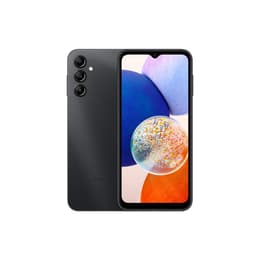
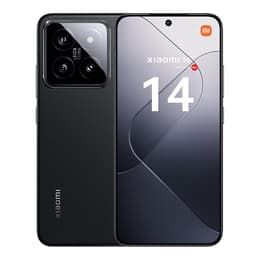


Galaxy A14 Vs Xiaomi 14

Galaxy A14
Galaxy A14
Starting at

Refurbished price:97.00

Versus €269.00 new

See options
Xiaomi 14
Xiaomi 14
Starting at

Refurbished price:384.00

Versus €1,099.00 new

See options

Ratings

The Samsung Galaxy A14 and the Xiaomi 14 are two distinct smartphones, released in different market segments. The Galaxy A14, launched in early 2023, is designed for essential smartphone functions, while the Xiaomi 14, introduced in late 2023 (China) and early 2024 (global), represents a flagship offering with advanced capabilities. Both devices operate on the Android platform, but they cater to different user expectations regarding performance, display quality, and camera systems.

Scores

Durability

The longevity of a smartphone is influenced by its build, software support, and ease of repair. These two models present different profiles in these areas.

  • Software Support: The Samsung Galaxy A14 (5G variant) typically receives two major Android operating system upgrades and four years of security updates, extending its functional life until approximately 2027. In contrast, the Xiaomi 14 offers a more extended commitment with four major Android updates and five to six years of security patches, providing a longer period of up-to-date software.
  • Repairability: The Galaxy A14 has a repairability score of 8 out of 10, noted for its relatively easy disassembly and a battery held by an adhesive pull pouch, simplifying replacement. The Xiaomi 14 also achieves a repairability score of 8 out of 10, featuring accessible internal components and battery pull tabs, though some adhesive is used for the back cover.
  • Practical Lifespan: Users can expect the Galaxy A14 to remain a reliable device for core tasks for several years, benefiting from its decent software support for its category. The Xiaomi 14, with its more robust software update policy and higher-end components, is designed for a longer period of optimal performance and feature relevance.

Year of Release

2023

2023

Compatible with latest Update

No

Yes

OS

Android

Android

Foldable

No

No

Performance

Performance varies significantly between these two devices, reflecting their different design philosophies and target users.

  • Processing Power: The Galaxy A14 is equipped with a processor suitable for everyday tasks, handling common applications and multitasking adequately. Users may occasionally notice slight delays when launching demanding apps or switching between multiple applications. The Xiaomi 14 features a current-generation, high-end processor, delivering fast and reliable performance for intensive applications, advanced gaming, and seamless multitasking.
  • System Responsiveness: The Xiaomi 14 offers a highly responsive user experience, with applications loading quickly and smooth transitions throughout the interface. The Galaxy A14 provides a functional experience, though it may not match the instantaneous feel of higher-tier devices.
  • Storage and Multitasking: The Galaxy A14 comes with various RAM and storage options, typically up to 8GB RAM and 128GB internal storage, with the benefit of expandable storage via a microSD card. The Xiaomi 14 offers more substantial configurations, ranging from 8GB to 16GB of RAM and 256GB to 1TB of internal storage, designed to support extensive multitasking and large file storage without expansion options.

Memory (GB)

4 GB

16 GB

Screen quality

The visual experience on these smartphones is a key differentiator, with distinct display technologies and capabilities.

  • Display Technology and Clarity: The Samsung Galaxy A14 features a 6.6-inch PLS LCD display with a Full HD+ resolution (1080x2408 pixels), offering clear visuals for general use. The Xiaomi 14 boasts a 6.36-inch LTPO AMOLED display with a higher 1200x2670 pixel resolution, providing vibrant colors, deep blacks, and exceptional clarity.
  • Brightness and Refresh Rate: The Galaxy A14 (5G model) has a 90Hz refresh rate, contributing to smoother scrolling, but its brightness levels can be a limitation in direct sunlight. The Xiaomi 14 features an adaptive refresh rate that can scale from 1Hz to 120Hz for optimal smoothness and power efficiency, alongside a peak brightness of up to 3000 nits, ensuring excellent visibility even in bright outdoor conditions.
  • Viewing Experience: The larger screen of the Galaxy A14 offers ample space for media consumption, while the Xiaomi 14's advanced display technology, including HDR10+ and Dolby Vision support, provides a more immersive and detailed viewing experience.

Resolution

1080 x 2408

1200 x 2670

Screen type

PLS LCD

LTPO OLED

Audiovisual

The camera systems on the Galaxy A14 and Xiaomi 14 are designed for different levels of photographic capability.

  • Rear Camera System: The Samsung Galaxy A14 includes a triple rear camera setup, featuring a 50-megapixel main sensor, complemented by 2-megapixel depth and macro lenses. It performs well in bright daylight conditions but lacks an ultrawide lens and may struggle in low-light environments. The Xiaomi 14 features a versatile triple 50-megapixel camera system, co-engineered with Leica, including a main lens with optical image stabilization, an ultrawide lens, and a telephoto lens with 3.2x optical zoom. This setup excels in various lighting conditions and offers advanced photographic capabilities.
  • Video Recording and Front Camera: The Galaxy A14 is capable of recording 1080p video at 30 frames per second, and has a 13-megapixel front camera for selfies and video calls. The Xiaomi 14 supports up to 8K video recording at 24 frames per second and features a 32-megapixel front camera, delivering high-quality selfies and video.
  • Audio Experience: The Galaxy A14 typically features a single loudspeaker, which provides functional audio output. The Xiaomi 14 offers a more refined audio experience, suitable for media consumption.

Main camera

50 megapixels

50 megapixels

Front camera

13 megapixels

32 megapixels

Miscellaneous

Beyond core features, several practical elements distinguish these two smartphones in daily use.

  • Connectivity and Ports: The Samsung Galaxy A14 (5G variant) supports 5G connectivity, Wi-Fi 5, Bluetooth 5.1, and includes a USB Type-C port along with a 3.5mm headphone jack. It also offers NFC for contactless payments on some models. The Xiaomi 14 supports advanced connectivity standards such as 5G, Wi-Fi 6, Bluetooth 5.4, and features a USB Type-C port, NFC, and an infrared blaster.
  • Biometrics and Build: The Galaxy A14 incorporates a side-mounted fingerprint sensor for secure unlocking and features a plastic back and frame. The Xiaomi 14 utilizes an under-display optical fingerprint sensor and boasts a more premium construction with metal and glass, along with an IP68 rating for dust and water resistance.
  • Dimensions and Handling: The Galaxy A14 is slightly larger and heavier, measuring around 167.7 x 78 x 9.1 mm and weighing approximately 201-202g. The Xiaomi 14 is more compact and lighter, with dimensions of 152.8 x 71.5 x 8.3mm and a weight of 188-193g, contributing to easier one-handed use.

Weight

201 g

188 g

Screen size (in)

6.6

6.36

Network

4G

5G

SIM card

Dual Physical SIM

Dual Physical SIM

Carrier compatibility

Unlocked

Unlocked

User feedback indicates that the Samsung Galaxy A14 is praised for its strong battery life, often lasting a day and a half or more with moderate use, and its decent display quality for its category. Common criticisms include its slower processor, which can lead to occasional delays, a display that struggles in bright outdoor conditions, and the absence of an ultrawide camera. The Xiaomi 14 receives acclaim for its compact design, flagship-level performance, and its exceptional Leica-engineered camera system, which performs well across various lighting scenarios. Its stunning display and rapid charging capabilities are also frequently highlighted. Some users note that the device can experience performance throttling during extended demanding tasks like gaming, and it lacks expandable storage.

Users prioritizing extended battery life, a larger screen for general media consumption, and expandable storage for photos and apps may find the Samsung Galaxy A14 well-suited to their needs. It serves as a reliable option for essential smartphone functions. Conversely, users who prioritize a premium and compact design, top-tier performance for demanding applications and gaming, a superior camera system, and a vibrant, high-resolution display will likely lean towards the Xiaomi 14. Both devices are available as quality-assured refurbished options, providing an eco-friendly alternative for consumers.


See all articles

Our recent comparisons