

Galaxy A14 Vs Xiaomi 13T

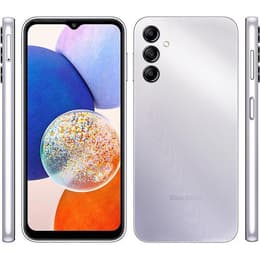
Galaxy A14
Galaxy A14
Starting at

Refurbished price:97.00

Versus €269.00 new

See options
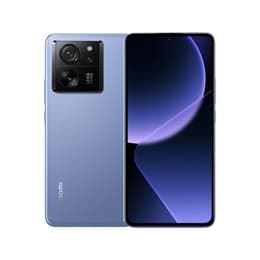
Xiaomi 13T
Xiaomi 13T
Starting at

Refurbished price:183.00

Versus €630.00 new

See options

Ratings

The Samsung Galaxy A14, released in early 2023, and the Xiaomi 13T, launched in late 2023, are both Android smartphones designed for different user priorities. While the Galaxy A14 focuses on essential smartphone functions with a robust battery, the Xiaomi 13T offers a more advanced experience with a focus on display quality, performance, and camera capabilities. Both devices run on the Android operating system, providing access to a wide ecosystem of applications and services, and are available as quality-assured refurbished options.

Scores

Durability

The longevity of a smartphone is influenced by its release timeline, software support, and physical durability.

  • Release and Software Support: The Galaxy A14 (5G variant) was released in January 2023, while the Xiaomi 13T followed in September 2023. The Galaxy A14 was promised two major Android OS updates and four years of security updates, meaning its OS update cycle concluded with Android 15, and security patches are expected until early 2027. The Xiaomi 13T, however, benefits from a more extended policy, offering four major Android OS updates and five years of security patches, extending its OS support to Android 17 and security updates until late 2028.
  • Physical Durability: The Galaxy A14 features a plastic build for its frame and back, offering a practical and resilient construction without an official IP rating for water and dust resistance. The Xiaomi 13T, on the other hand, incorporates more premium materials like glass or vegan leather for its back and boasts an IP68 rating, indicating strong resistance to dust and water immersion.
  • Practical Lifespan: Users prioritizing long-term software updates and enhanced protection against environmental elements may find the Xiaomi 13T offers a longer practical lifespan. The Galaxy A14 remains a durable choice for those who value a straightforward device with solid battery life.

Year of Release

2023

2023

Compatible with latest Update

No

Yes

OS

Android

Android

Foldable

No

No

Performance

Performance differences between these two devices are notable, impacting how smoothly they handle various applications and multitasking.

  • Processing Power: The Galaxy A14 (5G variant) is equipped with a processor that capably handles everyday tasks such as web browsing, social media, and light applications. The Xiaomi 13T features a more powerful current-generation processor, designed to deliver a significantly smoother experience with demanding applications, graphic-intensive games, and extensive multitasking.
  • Multitasking and Storage: The Galaxy A14 typically comes with 4GB or 6GB of RAM and offers expandable storage via a microSD card, which is beneficial for users who need to store many photos, videos, or documents. The Xiaomi 13T offers higher RAM configurations, usually 8GB or 12GB, contributing to more fluid app switching and background process management. Its internal storage options are also larger, starting at 256GB, though it lacks a microSD card slot.
  • Battery Behavior: Both devices house a 5000 mAh battery, providing ample power for a full day of moderate use. The Xiaomi 13T supports faster wired charging, allowing for quicker replenishment of its battery compared to the Galaxy A14's standard charging speed.

Memory (GB)

4 GB

8 GB

Screen quality

The visual experience on these smartphones differs significantly due to their display technologies and specifications.

  • Display Technology and Clarity: The Galaxy A14 features a 6.6-inch PLS LCD panel with a Full HD+ resolution, providing clear visuals for general content consumption. The Xiaomi 13T boasts a 6.67-inch AMOLED display with a higher resolution, offering deeper blacks, more vibrant colors, and superior contrast, which enhances the viewing experience for multimedia and detailed content.
  • Refresh Rate and Smoothness: The Galaxy A14 5G model offers a 90Hz refresh rate, resulting in smoother scrolling and a more responsive feel compared to the 60Hz of the 4G variant. The Xiaomi 13T elevates this with a 144Hz refresh rate, providing exceptionally fluid animations and a highly responsive touch experience, particularly noticeable during gaming or fast-paced content.
  • Brightness for Outdoor Use: The Xiaomi 13T's AMOLED display also achieves significantly higher peak brightness levels, making it easier to view content clearly in bright outdoor conditions compared to the Galaxy A14's LCD panel.

Resolution

1080 x 2408

1220 x 2712

Screen type

PLS LCD

AMOLED

Audiovisual

The camera systems on the Galaxy A14 and Xiaomi 13T cater to different photography needs and expectations.

  • Rear Camera Versatility: The Galaxy A14 includes a 50-megapixel main camera, accompanied by a 2-megapixel macro and a 2-megapixel depth sensor (on the 5G model), or a 5-megapixel ultrawide on the 4G model. This setup is suitable for capturing everyday moments in good lighting. The Xiaomi 13T offers a more comprehensive system, featuring a 50-megapixel main camera with optical image stabilization, a 50-megapixel telephoto lens for 2x optical zoom, and a 12-megapixel ultrawide camera, often enhanced by Leica-tuned optics for improved image processing.
  • Low-Light and Video Performance: While the Galaxy A14 can produce decent photos in well-lit environments, its performance in low-light conditions is more limited, and video recording is typically capped at Full HD resolution. The Xiaomi 13T's camera system, particularly its main sensor with optical image stabilization and advanced processing, generally performs better in challenging lighting and offers higher quality video recording capabilities.
  • Front Camera and Audio: Both devices feature capable front-facing cameras for selfies and video calls, with the Galaxy A14 having a 13-megapixel sensor and the Xiaomi 13T a 20-megapixel sensor. For audio, the Xiaomi 13T includes stereo speakers for a more immersive media consumption experience, while the Galaxy A14 typically features a single loudspeaker.

Main camera

50 megapixels

50 megapixels

Front camera

13 megapixels

20 megapixels

Miscellaneous

Beyond core specifications, several practical elements differentiate the user experience of these two smartphones.

  • Connectivity and Ports: Both devices support 5G connectivity (for the A14 5G variant) and modern Wi-Fi standards. The Xiaomi 13T supports newer Wi-Fi 6E and Bluetooth 5.4, offering potentially faster and more stable wireless connections compared to the Galaxy A14's Wi-Fi 5 and Bluetooth 5.2 (5G) or 5.1 (4G). The Galaxy A14 retains a 3.5mm headphone jack, a feature absent on the Xiaomi 13T, which relies solely on its USB-C port for wired audio and charging.
  • Biometric Security and Build: The Galaxy A14 incorporates a side-mounted fingerprint sensor for secure unlocking. The Xiaomi 13T features an under-display optical fingerprint sensor. In terms of build, the Galaxy A14 has a plastic construction, while the Xiaomi 13T offers a more refined feel with options for glass or vegan leather backs and an IP68 rating for dust and water resistance.
  • Dimensions and Handling: The Galaxy A14 is slightly thicker and heavier than the Xiaomi 13T, though both are large devices. The Xiaomi 13T's design, with its slightly slimmer profile and IP rating, may offer a more premium in-hand feel and greater peace of mind regarding accidental splashes.

Weight

201 g

193 g

Screen size (in)

6.6

6.67

Network

4G

5G

SIM card

Dual Physical SIM

Dual Physical SIM

Carrier compatibility

Unlocked

Unlocked

User feedback often highlights the Galaxy A14's strong battery life and the inclusion of a headphone jack as significant advantages, making it a reliable choice for essential communication and media consumption. Criticisms sometimes point to its average performance for more demanding tasks and its LCD display. Conversely, the Xiaomi 13T receives praise for its vibrant AMOLED display, powerful performance, versatile camera system, and fast charging capabilities. Some users note the absence of a headphone jack and wireless charging as potential drawbacks.

Users prioritizing a long-lasting battery, a traditional headphone jack, and a straightforward smartphone experience for daily tasks may find the Samsung Galaxy A14 well-suited to their needs. It serves as a dependable device for communication, social media, and light content consumption. For individuals who require a more advanced device with a superior display, robust performance for gaming and demanding applications, and a versatile camera system for photography enthusiasts, the Xiaomi 13T presents a compelling option. Its extended software support also appeals to those seeking a device with a longer update lifespan. Both models are available as quality-assured refurbished alternatives, offering a sustainable choice for consumers.


See all articles

Our recent comparisons