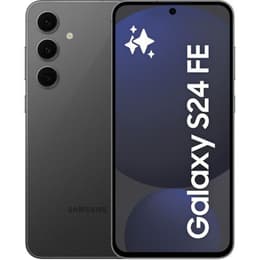



Compare models

Galaxy S24 FE Vs iPhone Air

  • 1-year minimum warranty
  • Free delivery on all orders
  • Free 30-day returns
Galaxy S24 FE
Starting at

Refurbished price:€327.00

Versus €889.00 new

See options
iPhone Air
Starting at

Refurbished price:€693.00

Versus €1,339.00 new

See options

Differences at a glance

The Samsung Galaxy S24 FE (2024) and the Apple iPhone Air (2025) represent two distinct approaches to modern smartphone engineering, balancing high-end capabilities with unique form factors. While the Galaxy S24 FE focuses on delivering a balanced feature set inside a robust everyday chassis, the iPhone Air prioritizes an ultra-slim profile and lightweight build. Operating on Android and iOS respectively, these devices cater to users seeking refined performance packaged quite differently.

Available Models

Colour

Storage

Scores

Durability

Both smartphones provide robust long-term utility, though they differ in release timelines and software support frameworks that influence their overall operational lifespan.

  • Software update schedules: The Galaxy S24 FE benefits from multi-year operating system and security patch commitments, while the iPhone Air utilizes Apple's extended support window for sustained software longevity.
  • Build durability: The Samsung model relies on reinforced glass and aluminum framing for physical resilience, whereas the Apple model features a titanium structure paired with scratch-resistant display protection.
  • Repairability: Both manufacturers provide structured service channels, ensuring components like batteries and screens can be serviced to extend practical usability over several years.

Year of Release

2024

2025

Compatible with latest Update

Yes

Yes

OS

Android

iOS

Foldable

No

No

Performance

System responsiveness and daily multitasking capabilities are handled efficiently on both devices, adapting well to heavy application usage and demanding workflows.

  • App execution and switching: Both models handle intensive gaming, split-screen multitasking, and resource-heavy software smoothly without noticeable stuttering or lag.
  • Memory and storage management: Generous RAM configurations allow background applications to remain active seamlessly, supported by varied internal storage tiers for media and documents.
  • Energy efficiency: Power management systems optimize battery consumption during standard daily tasks, though intensive tasks result in different discharge rates depending on battery capacity and thermal design.

Screen quality

Visual immersion is a priority for both devices, featuring high-contrast display panels designed for clear visibility across varied lighting conditions.

  • Display technology: Both phones utilize advanced OLED panels that deliver deep black levels, high contrast ratios, and vivid color reproduction for media consumption.
  • Brightness and outdoor clarity: High peak brightness levels ensure that content remains legible under direct sunlight, adjusting dynamically to ambient lighting.
  • Refresh rate smoothness: Adaptive refresh rates scaling up to 120Hz provide fluid scrolling through web pages and responsive touch feedback during gaming.

Resolution

1080x2340

2736x1260

Audiovisual

Imaging hardware and computational photography features allow both smartphones to capture detailed photos and stable video in diverse environments.

  • Main camera performance: High-resolution primary sensors excel at capturing sharp everyday images and maintaining clarity in challenging low-light settings.
  • Video recording: Both devices support high-definition video capture equipped with robust stabilization features to minimize shake during movement.
  • Audio and media output: Integrated microphone arrays capture clear voice audio for calls, complemented by balanced stereo or mono speaker setups for casual media playback.

Front camera

10 megapixels

18 megapixels

Miscellaneous

Physical dimensions and connectivity standards define the practical handling characteristics and ecosystem integration of each device.

  • Connectivity standards: Both options support high-speed 5G networks, advanced Wi-Fi protocols, and Bluetooth for reliable peripheral pairing.
  • Physical footprint: The Galaxy S24 FE offers a traditional, substantial hand feel, while the iPhone Air emphasizes a remarkably thin and light profile that reduces pocket bulk.
  • Security and biometrics: Secure authentication is handled via fast facial recognition or under-display biometric sensors tailored to each operating system.

Weight

213 g

165 g

Screen size (in)

6.7

6.5

Network

5G

5G

SIM card

Physical SIM + eSIM

eSIM

Carrier compatibility

Unlocked

Unlocked

Connector

USB-C

USB-C

What the community thinks

User discussions across community platforms highlight distinct preferences for each device. Owners of the Galaxy S24 FE frequently praise its reliable battery performance, comprehensive feature set, and sturdy build, though some note its heavier weight compared to modern alternatives. Conversely, iPhone Air users frequently commend its exceptionally thin design and fluid ecosystem integration, while occasionally pointing out trade-offs regarding thermal management during extended high-intensity tasks.

Users prioritizing a lightweight physical profile and long-term software continuity within the Apple ecosystem may prefer the iPhone Air. Meanwhile, users looking for an all-rounded multimedia device with a traditional build will find the Galaxy S24 FE well-suited to their needs. For those exploring sustainable purchasing routes, opting for a quality-assured refurbished option provides an eco-friendly alternative to brand-new hardware without compromising on functional capability.









