

Compare models

Galaxy A14 Vs iPhone Air

  • 1-year minimum warranty
  • Free delivery on all orders
  • Free 30-day returns
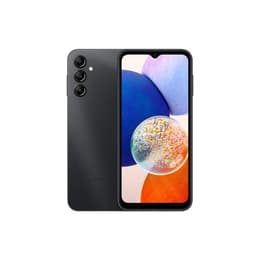
Galaxy A14
Starting at

Refurbished price:€133.00

Versus €269.00 new

See options
iPhone Air
Starting at

Refurbished price:€717.00

Versus €1,339.00 new

See options

Differences at a glance

The Samsung Galaxy A14 (2023) and the Apple iPhone Air (2025) are distinct smartphones catering to different market segments and technical approaches. While the Galaxy A14 is an entry-level Android device focused on everyday reliability, the iPhone Air is a flagship-tier iOS device emphasizing an ultra-slim profile and advanced hardware.

These models differ fundamentally in their operating systems, build philosophies, and hardware sophistication, making them suitable for completely different user expectations.

Available Models

Colour

Storage

Scores

Durability

The two devices differ significantly in their release timelines, software longevity, and long-term hardware durability frameworks.

  • Software Support: The iPhone Air receives extended operating system updates typical of high-end Apple hardware, whereas the Galaxy A14 has a more limited software update lifecycle corresponding to its entry-level classification.
  • Build Integrity: The iPhone Air utilizes a rigid titanium frame and reinforced glass materials, while the Galaxy A14 relies on a standard plastic back and frame construction.
  • Practical Lifespan: Users seeking multi-year software relevance and long-term security patches will find the iPhone Air provides a more extended support window compared to the Galaxy A14.

Year of Release

2023

2025

Performance

System responsiveness, multitasking capabilities, and battery endurance vary markedly due to the generation gap and internal component differences between the two devices.

  • Multitasking and Responsiveness: The iPhone Air handles demanding apps, heavy multitasking, and complex gaming smoothly with its high-end processor and generous RAM allocation, while the Galaxy A14 manages basic daily tasks like web browsing and messaging reliably with its entry-level processor.
  • Storage and Battery: The Galaxy A14 features expandable storage via a microSD slot alongside a large capacity battery designed for extended single-day use, whereas the iPhone Air offers fixed high-capacity internal storage configurations and a streamlined battery tailored for a very thin chassis.

Screen quality

Display technology, visual clarity, and outdoor legibility present distinct viewing experiences on each smartphone.

  • Display Technology: The iPhone Air features a vibrant OLED display with deep contrast levels and an adaptive high refresh rate for smooth scrolling, while the Galaxy A14 employs a standard LCD panel with a fixed 60Hz or 90Hz refresh rate depending on the variant.
  • Brightness and Clarity: The iPhone Air achieves significantly higher peak brightness levels for outdoor readability and supports rich color profiles, whereas the Galaxy A14 delivers adequate high-definition resolution suitable for standard indoor viewing.

Audiovisual

Multimedia capabilities, photo capture quality, and audio output differ substantially based on the engineering choices of each model.

  • Camera Systems: The iPhone Air relies on a single high-resolution rear camera paired with advanced image processing for detailed everyday and low-light photography, whereas the Galaxy A14 utilizes a multi-lens budget array featuring a primary sensor alongside macro and depth options.
  • Media and Sound: The iPhone Air delivers crisp media playback, though it utilizes a simplified speaker configuration to accommodate its slim profile, while the Galaxy A14 provides standard mono audio output adequate for routine calls and video watching.

Miscellaneous

Physical dimensions, connectivity standards, and daily handling characteristics set these two smartphones apart.

  • Design and Portability: The iPhone Air introduces an exceptionally thin and lightweight titanium build that prioritizes minimal pocket footprint, whereas the Galaxy A14 features a thicker, heavier plastic profile designed for a traditional grip.
  • Connectivity and Ports: The iPhone Air supports modern wireless standards like Wi-Fi 7 and utilizes a USB-C port alongside eSIM technology, while the Galaxy A14 includes traditional physical SIM slots, a standard headphone jack on certain variants, and standard 4G or 5G connectivity.

Screen size (in)

6.6

6.5

Network

4G

5G

SIM card

Dual Physical SIM

eSIM

Carrier compatibility

Unlocked

Unlocked

What the community thinks

User discussions and community feedback indicate that the Samsung Galaxy A14 is frequently praised for its dependable daily battery life and straightforward functionality, though users note limitations in processing speed and screen brightness. Conversely, the Apple iPhone Air receives recognition for its breakthrough lightweight geometry and fluid display performance, though some users point out trade-offs regarding speaker output and the absence of multiple physical camera lenses.

Users prioritizing long-term processing power, high refresh rate viewing, and an ultra-portable footprint may prefer the iPhone Air, while users focusing on expandable storage, basic everyday tasks, and straightforward utility will find the Galaxy A14 matches their requirements. Exploring a quality-assured refurbished option can also provide a sustainable choice for acquiring either device.