

Compare models
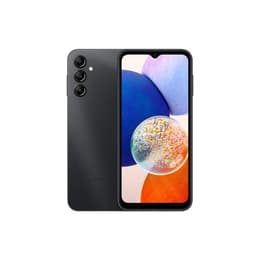
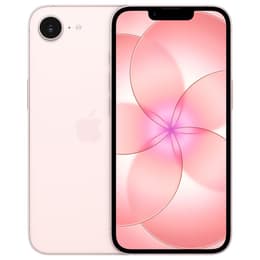
Galaxy A14 Vs iPhone 17e
- 1-year minimum warranty
- Free delivery on all orders
- Free 30-day returns
Differences at a glance
The Samsung Galaxy A14 (2023) and the Apple iPhone 17e (2026) are distinct smartphones catering to different segments of the mobile market. While the Galaxy A14 provides an entry-level Android experience with a focus on core functionality, the iPhone 17e serves as a modern, streamlined iOS device equipped with advanced processing power. These two models differ significantly in their release timelines, operating systems, and overall hardware capabilities.
Available Models
Colour
Storage
Scores
Durability
The Samsung Galaxy A14 and the iPhone 17e approach hardware longevity and software support from distinct timelines, reflecting their respective release years and platform ecosystems.
- Software Support Window: The iPhone 17e benefits from a modern release year and extended operating system update commitments, whereas the Galaxy A14 has a shorter remaining active software support lifecycle due to its earlier launch.
- Repairability and Build: Both devices utilize durable outer shells designed for everyday wear, though parts availability and structural resilience vary based on manufacturer service networks and protective glass standards.
Year of Release
2023
2026
OS
Android
iOS
Foldable
No
No
Performance
The Samsung Galaxy A14 and the iPhone 17e deliver widely different levels of system speed, multitasking readiness, and general day-to-day responsiveness.
- App Loading and Multitasking: The iPhone 17e handles demanding applications, heavy background tasks, and high-end gaming smoothly, whereas the Galaxy A14 is better suited for basic daily tasks like web browsing, messaging, and media streaming.
- Storage and Memory Configurations: The iPhone 17e provides higher baseline RAM and spacious internal storage options for data-heavy users, while the Galaxy A14 offers modest built-in storage paired with expandable memory card support.
Screen quality
The viewing experiences on the Samsung Galaxy A14 and the iPhone 17e differ notably in panel technology, visual clarity, and brightness delivery.
- Display Technology: The iPhone 17e features an advanced OLED screen delivering deep contrast levels and rich colors, while the Galaxy A14 utilizes a standard LCD panel that meets basic viewing requirements.
- Outdoor Usability: The iPhone 17e achieves higher peak brightness levels for clear outdoor visibility under direct sunlight, whereas the Galaxy A14 requires manual shade adjustments in bright environments.
Resolution
1080 x 2408
2532 x 1170
Audiovisual
Photography and media consumption capabilities vary notably between the single-lens imaging setup of the iPhone 17e and the multi-lens configuration of the Galaxy A14.
- Photo and Video Capture: The iPhone 17e utilizes a high-resolution primary sensor combined with advanced image processing to deliver sharp details and stable video recording, while the Galaxy A14 relies on a multi-lens layout focused on basic snapshots.
- Audio and Media Playback: The iPhone 17e offers balanced stereo sound output for media consumption, whereas the Galaxy A14 features a standard single-speaker configuration suited for casual listening and calls.
Front camera
13 megapixels
12 megapixels
Miscellaneous
Practical day-to-day usability factors, including physical dimensions, security features, and connectivity standards, set these two smartphones apart.
- Security and Biometrics: The iPhone 17e utilizes facial recognition for device unlocking and authentication, while the Galaxy A14 integrates a side-mounted physical fingerprint sensor into its power button.
- Connectivity and Ports: The iPhone 17e adopts a universal USB-C port alongside modern wireless standards and wireless charging support, whereas the Galaxy A14 includes a traditional physical headphone jack alongside its charging port.
Weight
201 g
169 g
Screen size (in)
6.6
6.1
Network
4G
5G
SIM card
Dual Physical SIM
eSIM
Carrier compatibility
Unlocked
Unlocked
What the community thinks
Choosing between the Samsung Galaxy A14 and the Apple iPhone 17e depends heavily on individual user priorities and preferred software ecosystems. Users prioritizing a streamlined operating system, high-end processing speeds, and long-term software readiness will find the iPhone 17e well-suited to their needs. Conversely, users seeking an accessible Android device with expandable storage capacity and everyday utility may lean toward the Galaxy A14. Exploring a quality-assured refurbished option provides a sustainable choice for acquiring either model while reducing electronic waste. Ultimately, evaluating daily workflow requirements ensures a well-informed decision that matches personal usage habits.